31.01.2017

Onbegrensd Nederland & Suriname I: postzegeldeelafbeeldingen

Onbegrensd Nederland & Suriname I: postzegeldeelafbeeldingen

24
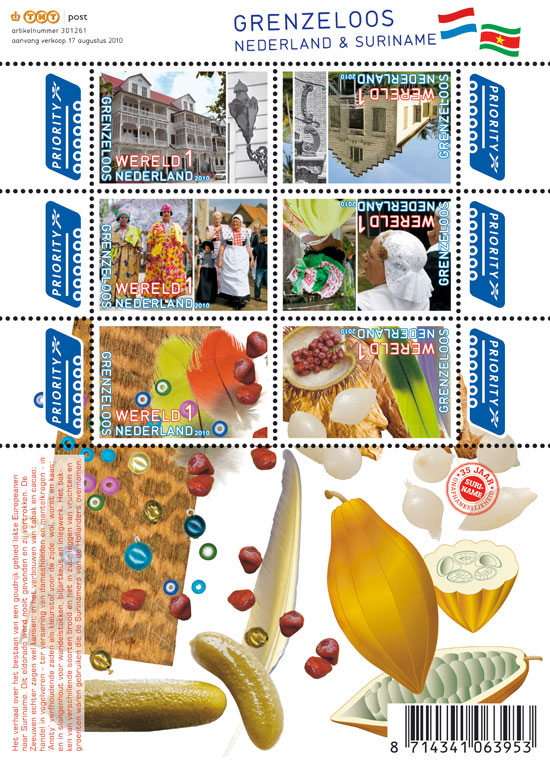
Met hulp, steun en medewerking van de ontwerpster Ariënne Boelens van deze emissie kan ik informatieve en inzichtgevende aanvullingen (geruime tijd vóór de uitgiftedatum) geven op de bijdrage ‘Onbegrensd Nederland & Suriname’ van 7 juli 2010.
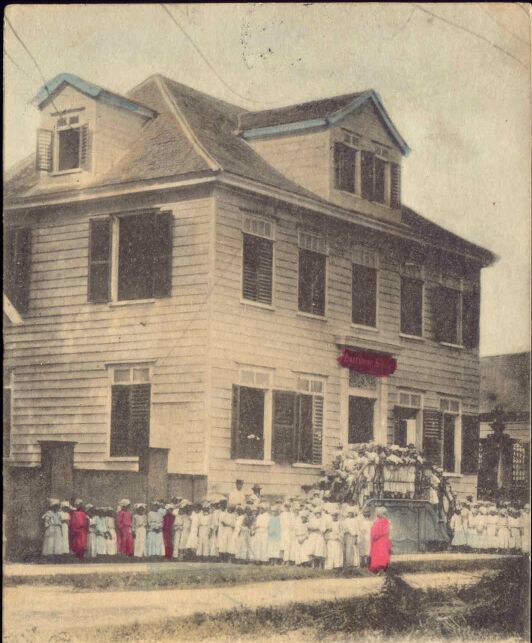
Het bestaan van een goudrijk gebied in Suriname lokte veel Europeanen. Het eldorado werd niet gevonden, velen vertrokken in tegenstelling tot de Zeeuwen. Zij zagen mogelijkheden in het verbouwen van tabak, cacao en orleaan (een rode vrucht, waarvan de kleurstof voor veel doelen (o.a. make-up) kon worden gebruikt); handel in vogelveren (ter versiering van dameshoeden en mantelkragen), handel in anoty-verfhoudende zaden als kleurstof voor de zijde. Handel in worst, kaas en het extreem dure slangenhout voor wandelstokken, biljartkeus en inlegwerk.

1) Agricultuur

Bijgaand postzegelvelletjes is ontdaan van de vier ballast-postzegels, zodat er inhoudelijk tussen de twee postzegels en de velrand een meer uitgebalanceerde, aanvaardbare én harmonische eenheid ontstaat.
Het bakken van brood, pannenkoeken en koekjes en het zuur inleggen van vruchten (augurkjes en uitjes) en groenten waren gebruiken, die de Surinamers hoogstwaarschijnlijk van de Nederlanders hebben overgenomen. Overigens is ‘zuurgoed’ niet alleen vanuit Nederland ontstaan, maar er is ook sprake van Indonesische invloed. Denk hierbij bijvoorbeeld aan atjar.
De Surinaamse producten gaan als beelddoorlopers naadloos van beide postzegels over in de velrand. Op de plank (letter-/slangenhout) op de linker postzegel én velrand liggen twee veertjes, kralen en orleaanzaden. Op de rechter postzegel bevinden zich tabaksbladeren, orleaanvrucht, een tweetal zure uitjes (zich voortzettend op de velranden), een groene en paarsblauwe vogelveer.
Op de ondervelrand liggen (gedeeltelijk op de plank) uitgespreid (links) kralen, orleaanzaden, twee augurken en een vogelveer. Rechts liggen uitjes en een gele cacaovrucht (in een ‘geopende’ lengte- en dwarsdoorsnede).

2) Streekdracht

Bijgaand postzegelvelletje is ontdaan van de vier ballast-postzegels, zodat er inhoudelijk tussen de twee postzegels en de velrand een meer uitgebalanceerde, aanvaardbare én harmonische eenheid ontstaat.

Kotomisi en angisa uit Suriname

De kotomisi (gelaagde jurk) is tijdens de slavernij ontstaan. Vrouwelijke rondingen van de Creoolse jongedames verdwijnen in deze verhullende kleding geheel. Plantage-eigenaren met begerige blikken kwamen door deze onaantrekkelijk makende ‘camouflagekleding’ (kuisheidversterkende kleding) minder gauw in de verleiding deze vrouwen te benaderen. ‘Koto’ betekent rok en ‘misi’ betekent juffrouw.
De kotomisi bestaat uit een wijd uitstaande rok met een groot aantal onderrokken, zo hard gesteven dat ze (op de grond neergezet) blijven staan. De rok reikt van de grond tot de oksel en wordt omgeslagen en opgehouden met een band om het middel. De kotomisi wordt nog steeds gedragen. Er bestaan verschillende koto’s voor verschillende gelegenheden als verjaardagskoto, werkkoto, rouwkoto, trouwkoto en danskoto.
Bij de schematische gevouwen angisa’s zijn (eigentijdse) ‘boodschappen’ afgedrukt als “laat ze maar praten”, “wacht op mij op de hoek” en “ik heb geen beltegoed (zij- en achteraanzicht). Overigens is de ‘r’ van het woord ‘achteraanzicht’ niet aanwezig!

30.01.2017

Die vergessenen weißen Sklaven aus Irland

von Bürgender · 26. Dezember 2015
Im Jahr 1839 wurde Großbritanniens erste Menschenrechtsorganisation gegründet. Damit endete der dortige, Jahrhunderte dauernde Sklavenhandel. Wenig bekannt ist: Viel billiger als afrikanische Sklaven waren jene irischen Ursprungs.


HMS Owen Glendower“ by Unknown, Royal Naval Museum. Lizenz: Public Domain via Wikimedia Commons.

Die Geschichte des afrikanischen Sklavenhandels ist sehr gut dokumentiert und wird insbesondere in den USA umfangreich an Schulen gelehrt. Weniger bis überhaupt nicht bekannt ist jedoch die Geschichte der irischen Sklaven, die laut verschiedenen Quellen keineswegs besser behandelt wurden als ihre afrikanischen Leidensgenossen. John Martin vom Center for Research and Globalization in Montreal schrieb in einem Beitrag, dass der irische Sklavenhandel begann, als Jakob II von England 30.000 irische Gefangene als Sklaven in die Neue Welt verkauft hatte. Gemäß seiner Proklamation von 1625 wurden irische politische Gefangene nach Übersee geschickt, um diese an englische Siedler in die Karibik zu verkaufen. Bereits zuvor im Jahr 1619 um die Osterzeit, rund vier Monate bevor die ersten afrikanischen Sklaven verschifft wurden, wurden rund 100 Kinder als „Vertragsknechte“ unfreiwillig in die nordamerikanische Kolonie transportiert.
Von nun an wurden Zehntausende Sträflinge, Bettler, Straßenkinder und andere unerwünschte Personen aus der englischen, schottischen und irischen Unterschicht auf Sklavenschiffen abtransportiert. Bis Mitte des 17. Jahrhunderts waren die meisten gehandelten Sklaven irischen Ursprungs. In den 1650er Jahren wurden über 100.000 irische Kinder im Alter von 10 bis 14 Jahren ihren Eltern entrissen und als Sklaven nach Westindien, Virginia und New England verkauft. Im selben Zeitraum wurden weitere 52.000 Iren, meist Frauen und Kinder, nach Barbados und Virginia verschifft und weitere 30.000 irische Männer und Frauen wurden auf Auktionen an Höchstbietende verkauft. Im Jahr 1656 befahl Oliver Cromwell, Lordprotektor von England, Schottland und Irland, dass 2.000 Kinder aus Irland nach Jamaika verschifft werden sollten, um diese an englische Siedler zu verkaufen. Bis ins 18. Jahrhundert seien die irischen Sklaven „nicht mehr als menschliches Vieh“ für die Engländer gewesen, schreibt Martin weiter. In dieser Zeit begann auch der afrikanische Sklavenhandel und es wurde überliefert, so Martin weiter, dass die afrikanischen zunächst wesentlich besser behandelt worden seien, als ihre irischen „Kollegen“. Zudem habe man Afrikaner für rund 50 Pfund gehandelt, für einen Iren hingegen meistens nicht mehr als 5 Pfund.
Laut einer Niederschrift wurden in einem Fall 132 irische Sklaven, Männer, Frauen und Kinder, über Bord geworfen und ertranken, weil die Vorräte unterwegs knapp geworden waren. Die übliche Todesrate auf den Schiffen belief sich auf 37% bis 50%. Richard Ligon erlebte diese Zustände aus erster Hand, zeichnete diese auf und beschrieb sie im Jahr 1657 als „niemals dagewesene Grausamkeit“. Sean O’Callahan beschrieb die Situation der irischen Sklaven als „Hölle“, in der „irische Männer und Frauen wie Vieh“ behandelt wurden.
Findige Engländer begannen damit, Frauen und Mädchen ab 12 Jahren von afrikanischen Männern begatten zu lassen, um die Kinder später als afrikanische Sklaven handeln zu können. Diese Praxis der „Zucht“ zwischen irischen Frauen mit afrikanischen Männern dauerte mehrere Jahrzehnte an und war später so weit verbreitet, dass im Jahr 1681 ein Gesetz erlassen wurde, welches „die Paarung von Iren und Afrikanern zur Erzeugung neuer Sklaven“ verbot. Allerdings wurde dieses Gesetz nicht aus moralischen Gründen erlassen, sondern weil die Royal African Company durch die Zucht Geld verloren hatte.
Zuvor, im Jahr 1676, hatte es einen riesigen Sklavenaufstand in Virginia gegeben. Schwarze und weiße Sklaven kämpften gemeinsam gegen ihre Unterdrückung, Hunderte starben. Die Sklavenhändler befürchteten einen erneuten Aufstand. Ihre Lösung war, die Sklaven untereinander aufzuteilen (teile und herrsche). Weiße Sklaven erhielten neue Rechte und wurden beispielsweise nicht mehr ohne Gerichtsbeschluss ausgepeitscht, auch erhielten sie andere Kleidung als die Farbigen und die Unterkünfte wurden getrennt. Die meisten Sklaven wurden nach Amerika und Australien verschifft. Es ist nicht bekannt, dass jemals ein irischer Sklave nach Irland zurückkehrte. Viele starben, entweder beim Transport, oder durch Misshandlung oder Überlastung. Andere kamen frei und lebten von nun an in amerikanischen Kolonien. In den Westindischen Inseln gab es einen Bevölkerungsanteil namens „Black Irish“, Nachkommen der schwarzen und irischen Sklaven.
Am 17. April 1839 wurde die erste Menschenrechtsorganisation „British and Foreign Anti-Slavery Society“ gegründet. Im Jahr 1839 beendete England somit endgültig das „alptraumhafte irische Elend“, schreibt Martin abschließend.

26.01.2017

Fiona Tan: Nellie (2013)


Es ist eben der Wandschrank, in dem Tan die Uraufführung ihres Videos installierte. Das Zimmer befindet sich im Museum Van Loon, das heute die bürgerliche Wohnkultur des Goldenen Zeitalters ausstellt. Das Museum war das Wohn- und Geschäftshaus der Familie Van Loon, die im 18. Jahrhundert als Finanziers von den Handelsbeziehungen zu Batavia profitierten. Dieses Haus, dessen erster Bewohner Ferdinand Bol ausgerechnet ein Schüler Rembrandts war, diente Tan als Drehort. Hier inszenierte sie Nellies ewiges „Dazwischenleben“, ihre Situation, aus der heraus sie nur aus dem Fenster starren, mit Briefen korrespondieren oder in Fieberträume versinken konnte. In einer Sequenz zitiert Tan Jan Vermeers berühmtes, 1657 entstandenes Gemälde Briefleserin am offenen Fenster. Vermeer malte es, als Nellie noch ein kleines Kind war. Bei Tan ist es weniger ein kunstgeschichtliches Zitat als sozialgeschichtliche Information. Nellies Gefängnis ist real: „In Batavia, dem heutigen Jakarta“, sagt Tan, „litt sie wahrscheinlich an Malaria. Sie konnte bestimmt nicht alleine aus dem Haus, um auf den Markt zu gehen und ihre Nachbarschaft zu sehen.“


15.01.2017

LIDWIEN VAN DE VENFRAGMENTS [of a desire for revolution]


Lidwien van de Ven, Tanah Merah (Papua), 2016


LIDWIEN VAN DE VENFRAGMENTS [of a desire for revolution]
28/01/2017 - 09/04/2017
about the relationship between the Netherlands and Indonesia
Curators: Christiane Berndes

From 28 January 2017 the Project Room in the exhibition The Collection Nowwill be dedicated to FRAGMENTS [of a desire for revolution], a new work by Lidwien van de Ven, commissioned by the Van Abbemuseum. In 2014 the Van Abbemuseum invited Van de Ven to carry out research into the colonial history of the Netherlands in Indonesia. The result is FRAGMENTS, an ambitious installation comprising Van de Ven’s large format photographic works, alongside video and documentary material.
FRAGMENTS

During an exploratory visit in 2015 Van de Ven attended the 60th commemoration of the Konferensi Asia Afrika in Bandung, a meeting that in 1955 brought together 29 African-Asiatic countries to seek economic and cultural collaboration and to fight against colonial domination. One of the highlights in 1955 was President Sukarno’s opening speech. He raised questions, still relevant today, about identity and how we want to live together in a globalizing world. In 2015 the International People’s Tribunal took place in The Hague to examine the military coup in 1965 and the following mass murder of an estimated 500,000 to 1,000,000 communists, ethnic Chinese citizens and supporters of left-wing parties. This history remains sensitive and contested today.

Van de Ven explored the Dutch role in the history of communism in Indonesia and came across the inspirational role played by the Dutchman Henk Sneevliet who in 1914, founded the Indische Sociaal-Democratische Vereeniging, which later became the communist party in Indonesia, PKI. It was opposed by the Dutch colonial powers, which suppressed the development of communism and its aim for independence. When the communist uprisings of 1926/1927 against the colonial oppressors failed, the Netherlands responded by expelling the rebels to Boven Digoel (Upper Digul), a remote area, 500 kilometre up the Digul-river in Papua New-Guinea, where the Dutch founded the internment camps, Tanah Merah and Tanah Tinggi. Van de Ven’s presentation builds around this location.

In present-day Tanah Merah she looked for traces of the former internment camp, whose history for many has been virtually forgotten. She mapped its history with the help of different sources, like the publications by I.F.M. Salim, an exile who was interned in the camp from 1928 to 1943, and by L.J.A. Schoonheyt, who worked in the camp as a doctor from 1932 to 1934. Further archival research in the Netherlands and Jakarta provided additional perspectives. The first exiles were expelled using the so-called Exorbitant Rights of the Governor General to circumvent the judiciary, which also implied that appeal was not possible. Papua was infamous for the many diseases as malaria and black water fever, which were rampant, and for the presence of cannibals. Surviving there was a struggle. Although stories about the terrible living conditions in the camp reached the Netherlands in the late 1920s, the camp was not abolished. Only in 1943 were exiles evacuated to Australia, following the threat of the Japanese occupation and the fear of the Dutch authorities that the exiles might collude with the Japanese. A few of the remaining buildings were in the 90s designated as a historical monument to commemorate the struggle for independence.


LIDWIEN VAN DE VEN

Lidwien van de Ven is known above all as a photographer. She is interested in parts of the world where important social and political changes are taking place. These are also places in which often the complex reality is shunned and reduced to stereotypes. Van de Ven is curious to look into this process. She digs around for the meaning of traces of the past and the present, rather like an archaeologist. She looks for the almost invisible and intangible moment at which contemporary reality unfolds and tears appear in the fabric, which allow for new interpretations and perspectives. She translates this process into photographic works and installations with an extremely detailed composition. Lidwien van de Ven lives and works in Rotterdam and Berlin.

The Koninklijk Instituut voor Taal-, Land- en Volkenkunde / Royal Netherlands Institute of Southeast Asian and Caribbean Studies (KITLV)

http://www.kitlv.nl


The Koninklijk Instituut voor Taal-, Land- en Volkenkunde / Royal Netherlands Institute of Southeast Asian and Caribbean Studies (KITLV) aims to be a world-class research institute for the study of Southeast Asia and the Caribbean, with a focus on Indonesia and the ‘Dutch’ Caribbean, in an interdisciplinary and comparative perspective. Benefitting from the unrivalled collections offered on campus by Leiden University, KITLV researchers explore (dis)continuities between the (pre)colonial and postcolonial period, and articulate their research agendas empirically and theoretically in order to advance wider debates on the meandering paths of globalization. KITLV engages with the academic community across the world, as well as with (inter)national governmental organizations, NGOs, the media, and the interested general public. KITLV is an institute of the Royal Netherlands Academy of Arts and Sciences (KNAW).

Research at KITLV is interdisciplinary by nature and characterized by approaches including (1) a strong historical dimension exploring (dis)continuities from the (pre)colonial to the postcolonial period and (2) an anthropological perspective; both of which aim to bring human agency into focus and investigate questions concerning motivation and signification; while (3) a political approach focuses on broader frameworks of power that mediate between global forces and local actors. History, anthropology, and the study of politics and language all offer comparative approaches for opening windows to wider global connections. Archival research, field work and textual and visual analysis are vital to this enterprise. KITLV research is characterized by an ongoing reflection on the historical linkages between (post)colonial scholarship and collections policies. This implies methodological reflection on the uses of colonial archives, and on the meaning and impact of e-technologies in academic research and data management.


KITLV invests in two long-term research themes: State, Violence and Citizenship and Mobility and Identity. These themes, relevant to the processes of post-colonial state formation and globalisation in South East Asia and the Caribbean at large, are connected by interrelated questions concerning the dynamics of power, meaning and belonging. KITLV aims to translate these themes into agenda-setting projects conducted by research teams consisting of senior scholars, postdoctoral researchers, PhD candidates and visiting fellows.

Arnoldus Hyacinthus Aloysius Hubertus Maria Borret


bioportnummer39174235born28 oktober 1848
Maastrichtdied6 februari 1888
Paramaribo, Surinamegender
male
categories
Beeldende kunsten & vormgeving
Koloniale en overzeese betrekkingen en handel

The Dutch National Exhibition of Women’s Labor, 1898


In 1898, the year Queen Wilhelmina of the Netherlands was inaugurated, five hundred women organized an enormous public exhibition showcasing women’s contributions to Dutch society as workers in a strikingly broad array of professions. The National Exhibition of Women’s Labor, held in The Hague, was attended by more than ninety thousand visitors. Maria Grever and Berteke Waaldijk consider the exhibition in the international contexts of women’s history, visual culture, and imperialism.
A comprehensive social history, Transforming the Public Sphere describes the planning and construction of the Exhibition of Women’s Labor and the event itself—the sights, the sounds, and the smells—as well as the role of exhibitions in late-nineteenth-century public culture. The authors discuss how the 1898 exhibition displayed the range and variety of women’s economic, intellectual, and artistic roles in Dutch culture, including their participation in such traditionally male professions as engineering, diamond-cutting, and printing and publishing. They examine how people and goods from the Dutch colonies were represented, most notably in an extensive open-air replica of a “Javanese village.” Grever and Waaldijk reveal the tensions the exhibition highlighted: between women of different economic classes; between the goal of equal rights for women and the display of imperial subjects and spoils; and between socialists and feminists, who competed fiercely with one another for working women’s support. Transforming the Public Sphere explores an event that served as the dress rehearsal for advances in women’s public participation during the twentieth century.

08.01.2017

African women and the significance of a head-wrap (Dhuku)

By Elliot Siamonga - March 12, 2015


THE Africa woman head-wrap (dhuku) holds a distinctive position in the history of African dress both for its longevity and for its potent significations.
It endured the travail of colonialism and never passed out of fashion.
The dhuku represents far more than a piece of fabric wound around the head.
This distinct cloth head covering has been called variously ‘head rag’, ‘head-tie’, ‘head handkerchief’, ‘turban’, or ‘head-wrap’. The head-wrap usually completely covers the hair, being held in place by tying the ends into knots close to the skull. As a form of apparel in Zimbabwe, the head-wrap has been exclusive to women of African descent. The head-wrap originated in sub-Saharan Africa, and serves similar functions for both African and African-American women. In style, the African-American woman’s head-wrap exhibits the features of sub-Saharan aesthetics and worldview. In the United States, however, the head-wrap acquired a paradox of meaning not customary on the ancestral continent. During slavery, white overlords imposed its wear as a badge of enslavement! Later it evolved into the stereotype that whites held of the ‘Black Nammy’ servant.
The enslaved and their descendants, however, have regarded the head-wrap as a helmet of courage that evoked an image of true homeland – be that of ancient Africa or the ‘newer homeland’of America. The simple head rag worn by millions of enslaved women and their descendants has served as a uniform of communal identity; but at its most elaborate, the African American woman’s head-wrap has functioned as a ‘uniform of rebellion’ signifying absolute resistance to loss of self-definition. Tying a piece of cloth around the head is not specific to any one cultural group.
Men and women have worn and continue to wear some type of fabric head covering in many societies. What does appear to be culturally specific, however, is the way the fabric is worn.
In other words, the style in which the fabric is worn is the ultimate cultural marker.
To wrap her head, a European or white-American woman simply folds a square piece of fabric into a triangular shape and covers her hair by tying the fabric under her chin; or, less often, by tying it at the nape of the neck. In either case, the untied points of fabric are left to fall down over the back of the head. The Euro-American style results in a head covering which flattens against the head and encloses the face, and thus visually seems to pull the head down. The terms ‘scarf’ or ‘kerchief’ usually denote this type of head covering. Scarves are not particularly popular items of white-American women’s fashion today, but when they are worn, they consistently are arranged in the manner I just described above. By contrast, a woman of African ancestry folds the fabric into a rectilinear shape rather than into a triangle. The most significant difference between the Euro-American and Afro-centric manner of styling the cloth is that rather than tying the knot under her chin, the African American woman usually ties the knots somewhere on the crown of her head, either at the top or on the sides, often tucking the ends into the wrap.
Although the African-American woman sometimes ties the fabric at the nape of the neck, her form of styling always leaves her forehead and neck exposed; and, by leaving her face open, the head-wrap visually enhances the facial features.
The African head-wrap thus works as a regal coronet, drawing the onlooker’s gaze up, rather than down.

07.01.2017

Angisa: hoofddoeken uit Suriname

ANGISA: HOOFDDOEKEN AAN HET WOORD
“ Op een dag – ik woonde nog niet zo lang in Nederland – sprak een Surinaamse vrouw mij aan: “Ik kèn u ergens van, zei ze. U lijkt sprekend op mijn vroegere buurvrouw in Paramaribo…mevrouw Dankoor”. “Ik ben mevrouw Isselt”, antwoordde ik maar mijn meisjesnaam is Dankoor”. “Weet u nog” zei de vrouw, “alle dames uit de buurt kwamen bij jullie over de vloer om een mooie angisa te laten maken”.


Surinaamse vrouw met hoofddoek

Aan het woord is Mildred Isselt Dankoor. Wij ontmoetten haar vorige zomer in Turnhout waar haar collectie hoofddoeken onderdeel was van de tentoonstelling Het Geweven Woord. Wat zij toen vertelde over hoofddoeken, maakte ons zo nieuwsgierig dat wij haar gingen opzoeken in Haarlem. Mildred is een rasvertelster. Niet om een kwinkslag verlegen maar tegelijk zeer precies en zeer geloofwaardig. Alleen over haar leeftijd heb ik mijn twijfels. Wil zij – met haar rimpelloos voorhoofd en de gratie van een vrouw van vijftig – ons wijsmaken dat zij bijna 70 is!

Twee domme Surinaamse kinderen

Iemand uit het biotoop van je kinderjaren tegenkomen is fijn. Maar in dit geval was de ontmoeting een ommekeer. Plots realiseerde Mildred zich dat zij van hoofddoeken binden (op het binden van een Oto Baka na), niks afwist, en dàt terwijl er in heel Suriname niemand het haar beter had kunnen aanleren dan destijds haar eigen moeder.”Als je jong bent, heb je daarvoor geen belangstelling. Evenmin als het gros van Surinamers in Suriname trouwens. Maar naarmate je verder van je moederland leeft en wat wijzer wordt met de jaren, ga je de schat aan tradities meer en meer naar waarde schatten”. Mildred besloot de traditie die van mond tot mond overgeleverd wordt en van hand op hand aangeleerd, voor teloorgang te behoeden. Ze belde haar zus in Suriname:”Wij hebben ons niks van moeders kunst eigen gemaakt. Zijn wij niet de domste Surinaamse kinderen?” Beide zussen gingen lesnemen. Bij leraars én bij oudere Surinaamse vrouwen die ‘de knepen van het plooien’ nog beheersten. Vandaag geven Mildred in Nederland en haar zus in Suriname cursus angisabinden.


04.01.2017

“Le Rêve de la Malinche”


Antonio “El Corcito” Ruiz, “Le Rêve de la Malinche” (1939, oil on masonite, Mexico, Galería de Arte Mexicano (courtesy Galería de Arte Mexicano, © photo INBA/Museo Nacional de Arte)

hyperallergic


02.01.2017

manumissie

(rechtsgeschiedenis) "term voor het volgens bepaalde rechtsregels vrijgeven van slaven in Suriname van de 19e eeuw. Afgeleid van "manumissio", een begrip in het Romeinse recht, letterlijk vertaald: ?zending uit de hand [van de meester]?."

http://www.slavernijenjij.nl/de-aankomst/manumissies/

Manumissies


anno 1838
Jan Houthakker, alias Flink
PARAMARIBO – Flink is geboren in Afrika. Die naam heeft hij gekregen bij zijn aankomst als slaaf in Suriname. Wat zijn echte naam is weten we niet, wanneer hij in Suriname is aangekomen ook niet. We weten wel dat hij in 1838 het ‘eigendom’ is van Nathaniel Vollenbeek, Gregoris Carel de L’Isle en Johannes Zwiep.
Op 13 december 1838 laten zij hem namelijk vrij: ze manumitteren hem. Bij zijn vrijlating krijgt Flink de naam Jan Houthakker. Op 7 april 1841 wordt hij onder die naam in het burgerregister ingeschreven. Die inschrijving is belangrijk, want vanaf dat moment kan hij een huis kopen, een vrij beroep uitoefenen en slaven ‘bezitten’.
Met twee van zijn voormalige eigenaren, Nathaniel Vollenbeek en Johannes Zwiep, is iets bijzonders aan de hand. Zij zijn zelf ook slaven geweest. In 1833 zijn ze allebei gemanumitteerd. De voormalige eigenares van Vollenbeek is zelf ook weer een gemanumitteerde vrouw, Mary van McNiel. Jan Houthakker volgt hun voorbeeld. Hij gaat zijn best doen om zoveel mogelijk slaven te helpen om vrij te worden.

Wat is het verschil tussen manumissie en emancipatie?


23.12.2016

Our Tradition: Black Woman's Manifesto

05 Black Woman’s Manifesto by the Third World Women’s Alliance (1970)


Introduction by Gayle Lynch

Racism and capitalism have trampled the potential of black people in this country and thwarted their self-determination. Initially the physical characteristics of those of African descent were used to fit blacks into the lowest niche in the capitalist hierarchy - that of maintenance. Therefore, black women and men of today do not encourage division by extending physical characteristics to serve as a criterion for a social hierarchy. If the potential of the black woman is seen mainly as a supportive role for the black man, then the black woman becomes an object to be utilized by another human being. Her potential stagnates and she cannot begin to think in terms of self-determination for herself and all black people. It is not right that her existence should be validated only by the existence of the black man.

The black woman is demanding a new set of female definitions and a recognition of herself of a citizen, companion and confidant, not a matriarchal villain or a step stool baby-maker. Role integration advocates the complementary recognition of man and woman, not the competitive recognition of same.[113]

Role integration encourages a broader mental and emotional growth in black women and men as they share the responsibility of working towards liberation. Neither of them should be relegated to a narrow experience in life. Neither of them should have their potentiality for self-determination controlled and predetermined by the opposite sex. That is a type of slavery that will not deliver us as a people. That is a form of bondage which is an integral part of the racist and capitalist system which black women and black men must work to oppose and overthrow.

Black Woman's Manifesto


Third World Women's Alliance


The Third World Women's Alliance (TWWA) was a revolutionary organization of women of color active from 1968 to 1980[1] aimed at ending capitalism, racism, imperialism, and sexism. The TWWA was one of the earliest groups advocating an intersectional approach to women's oppression.
The Third World Women’s Alliance was founded in New York City in the summer of 1970.[2] Its origins lay in women's activism in Student Nonviolent Coordinating Committee. In December 1968, Black women in SNCC formed a Black women's liberation committee, but early in 1970, the women decided to expand their membership beyond SNCC and renamed their group the Black Women's Alliance.[3] In the Summer of 1970, the Black Women's Alliance joined with revolutionary Puerto Rican women activists to create the Third World Women’s Alliance.[4] A second chapter in Oakland/San Francisco formed in 1971.
The main focus of the Third World Women's Alliance was to unite women of color in struggle against racism, imperialism, and sexism, as the banner of their newspaper Triple Jeopardy (1971-1975) proclaimed.[3] The Third World Women's Alliance stressed the ideological connections between capitalist exploitation, global imperialism, and oppression of women of color.
The Alliance had many strategies to attack the threats of racism, imperialism, and sexism. A statement in the first issue of Triple Jeopardy proclaimed "the struggle against racism and imperialism must be waged simultaneously with the struggle for women's liberation" by "a strong independent socialist women's group."[5]

Das digitale Subjekt Matthew Fuller, Olga Goriunova

Wird unser reales Selbst immer mehr von einem dahinter verborgenen Datensubjekt bestimmt? Wie interagieren bzw. korrespondieren reales Ich und digitales Ich miteinander? Welche Einflussnahme ist in dieser Beziehung noch möglich, und welche Rolle spielt die Politik dabei? Matthew Fuller, Professor am Londoner Goldsmiths, hat dazu das folgende Gespräch mit Olga Goriunova, die Digitalkultur an der Royal Holloway University in London lehrt, geführt.

Matthew Fuller: Unlängst bin ich auf den von dir verwendeten Begriff des „digitalen Subjekts“ gestoßen. Vielleicht könntest du uns diesen Begriff kurz erklären und ein paar seiner Konsequenzen skizzieren.

Olga Goriunova: In meiner Sichtweise ist das digitale Subjekt eine lose Ansammlung von Mustern, die sich aus diversen Daten ergeben – unser Verhalten betreffend, unseren Standort, unsere Bankkonten, Suchanfragen, Posts in sozialen Netzwerken, E-Mails, alles eben, was wir wissentlich oder unwissentlich, indem wir überwacht werden, als Personen hinterlassen. Diese Daten werden korreliert, verarbeitet, analysiert, verglichen und gegenübergestellt, sodass sich Muster und Modelle ergeben, die in der Folge als „digitale Subjekte“ fungieren. Es handelt sich also nicht um den Subjektbegriff der Aufklärung oder gar das Subjekt des humanistischen Zeitalters. Digitale Subjekte haben keinen kohärenten Kern. Sie sind nicht „eins“ oder, schärfer noch, Kohärenz und Zusammenhang werden von der Datenverarbeitung nicht einmal intendiert. Wichtig ist nur, dass digitale Subjekte irgendwie strukturiert und hergestellt werden, um dann wieder aufgelöst und für neue Zwecke zu neuen Formationen zusammengebaut zu werden. Um 12 Uhr ist zum Beispiel dein digitales Subjekt eines, das im Internet von einer IP-Adresse in East London nach Designersesseln sucht, um 13 Uhr dann ein Liebhaber argentinischer Burger, der nicht U-Bahn fährt, immer mit Mastercard bezahlt und einer bestimmten Einkommensgruppe angehört. Einerseits handelt sich also um ein Subjekt im Sinne Foucaults, weil es das Produkt eines technischen Apparats, eines Machtapparats ist. Andererseits hat es aber auch noch gewisse Ähnlichkeiten mit dem Subjekt, das wir aus der humanistischen Tradition kennen.

Fuller: Was sind digitale Subjekte also wirklich? Auf welche Beobachtungen beziehst du sich und was konkret rechtfertigt diesen neuen Ausdruck?

Goriunova: Zu meinen Beobachtungen gehören natürlich die Überwachung sowie das massive Sammeln von Daten und deren rechnerische Verarbeitung und Speicherung, die absolut unkontrolliert, ungeprüft und unbemerkt vonstattengehen. Die Öffentlichkeit hat davon nicht den leisesten Schimmer. Konkreter Auslöser für mein Interesse an diesem Thema war, dass eine Doktorandin von mir, die zu digitalem Marketing arbeitet, von einem Vortrag der Vertreterin einer damals gerade auf den britischen Markt drängenden Werbeagentur für digitale Medien berichtete. Die Vortragende zeigte einen Stadtplan Londons, auf dem bestimmte digitale Häufungen eingezeichnet waren, die man „digitale Postleitzahlen“ nennt. Es handelt sich dabei um Aggregatdaten personenbezogener Merkmale je nach Wohngegend. Dann vergrößerte sie einen Planbereich und zeigt anonymisierte Datensätze, die dort gesammelt worden waren. Sie zoomte immer weiter, zuerst auf eine Straße, dann auf ein Haus – und schließlich beschrieb sie eine einzelne Person, die, wie die Vortragende meinte, wahrscheinlich eine Frau war, ein Kind hatte, Bücher und Biolebensmittel kaufte. Meine Dissertantin erzählte weiter, dass ab einem bestimmten Punkt der Datensatz genau nach mir aussah. Sie erkannte mich in dem Datensatz! Natürlich wusste sie schon vorher, wo ich wohne, und kannte ein paar private Dinge von mir, die mich kennzeichnen.
Jedenfalls war ich überrascht, dass diese Aggregatdaten mich zu beschreiben schienen, wo sie doch ganz eindeutig nicht „ich“ waren. Und dennoch waren sie „ich“. Es gibt einerseits das klassische „Ich“, wie es die geisteswissenschaftliche Tradition postuliert, und andererseits das auf Statistik und quantitative Analysen gegründete „Ich“. Außerdem ist das digitale Subjekt eine Folge der neuen „Big-Data-Maschinerie“, die sich nicht um traditionelle Statistik und die „Objektivitätskriterien“ der Wissenschaft schert. Wir befinden uns also an einem Kreuzungspunkt verschiedener Disziplinen, und niemand weiß so recht, wohin nun. Worin besteht eigentlich die Verbindung zwischen diesen Aggregatdaten und mir? Wie hängt das „Ich“, das die Marketingfrau in den Daten erkannte, mit dem „Ich“ zusammen, als das ich mich jeden Tag empfinde? Welche Verknüpfung besteht zwischen den beiden? Welche Art Frage ist das überhaupt? Eine philosophische? Eine wissenschaftstheoretische? Geht es nicht dabei um unser Verständnis von Wissenschaft überhaupt? Ist das überhaupt eine wissenschaftliche Frage, die mit dem Anspruch auf wissenschaftliche Wahrheit beantwortet werden kann? Oder ist diese Konstruktion eines „Daten-Ich“ bloß oberflächlich und frivol?
In allen Bereichen der Kultur feiert man noch immer die Freiheit des Internets. Im Internet kann man jemand anderer sein, neue Netzwerke knüpfen, sich weit von der Person entfernen, die man im wirklichen Leben ist. Andererseits kann dieses „wirkliche Leben“ aber online ganz leicht ausgeschnüffelt und manipuliert werden. So weit entfernt von uns kann unser virtuelles Ich also gar nicht sein.
Aus dem Blickwinkel von künstlicher Intelligenz und Machine-Learning, auf denen die Datenanalyse großteils beruht, rührt das ganze Dilemma von Google, aber auch die Angst vor der nahen Zukunft daher, dass man schlichtweg nicht weiß, was herauskommt, wenn man Daten aus sozialen Medien in Machine-Learning-Algorithmen füttert. Kommt dann irgendwann einmal eine „Persönlichkeit“ heraus, die die gleichen Aussagen wie jene Person treffen wird, die die Daten geliefert hat? Dann beträfe die Angst die Gefahr eines neuen „Frankenstein“. Wir sollten also zu verstehen versuchen, was es heißt, heute ein Mensch zu sein. Schließlich sind wir zutiefst technische Wesen. Um das Menschliche neu zu begreifen, darf man nicht einfach alles „Menschliche“ auf- und alles andere abwerten.

20.12.2016

"I am a Gold Coin" (Slideshow Gloria Wekker)

A Conversation with Gloria Wekker


The University of the West Indies Centre for Gender and Development Studies Issue 3 – 2009
Politics & Passion: A Conversation with Gloria Wekker by Andil Gosine

(Wekker 2006), anthropologist Gloria Wekker broke new ground in presenting an analysis of Mati Work, a surviving historical practice among Afro-Surinamese working-class women who create families from relationships that are not limited to blood ties, or a choice between heterosexuality or homosexuality. Her account offered a rare, thoughtful consideration of a complex Caribbean sexual culture, and continues to challenge conventional knowledges and practices of researchers, rights advocates and policy makers engaged in the struggle or sexual justice. In April 2009, Professor Wekker and I met at her home in Amsterdam—where she is both Chair in Gender and Ethnicity Studies at the Faculty of Arts at Utrecht University and Director of the Centre of Expertise on Gender, Ethnicity and Multiculturalism—and shared our thoughts about some contemporary debates and questions her work informs and inspires.

Sex and sexuality are still not easily spoken about in Caribbean Gender Studies, despite contributions like yours and M. Jacqui Alexander’s that have invigorated the field. Why do you think that there is still not a broad and engaged conversation about sex among Caribbean feminists—especially one about same-sex sexualities, heteronormativity and sexual rights?

GW:

I think it’s broader than just Caribbean feminists, because I think it’s also true for African-Americanfeminists. Hortense Spillers’ observation in the early 1980s that black women are like “the beached whales of the sexual universe”, that they’re not speaking, but awaiting their verb, still holdstrue. Since that time I really don’t think that we’ve had much scholarship filling in that huge gap. Recently, I was looking at the book Longing to Tell: Black women talk about Sexuality and Intimacy2004) by Tricia Rose. But this is a bunch of interviews with women of different ages talking about their sexual experiences but it doesn’t really theorize anything. The same is true for Tongues on Fire: Caribbean Lesbian Lives and Stories, edited by Rosamund Elwin (1997). However much I pain in them—but it doesn’t go very deep. I think Darlene Clark’s insights are correct when she talks about how come it became so important for black women to don a cloak of asexuality because of the history of black women being raped, black women being defined as unrape-able, always already ready to have sex. So black women decided they had to be asexual, to perform asexuality. I think

that has played a huge role for a long time.

When I think about the Caribbean specifically, I think there is also some of the same processes going on there. Religion also plays a part in making it not decent, not a decent topic to talk about it. There is still very much a sense that “nice girls don’t like sex, and nice girls don’t talk about sex.” We find moreof a sexual voice in literature, in fiction, but not so much in academic, scholarly work. The Politics of Passion provided a sexual voice for Afro-Surinamese women in academic literature, for the first time in this way.

GW:

And the book has sometimes been received in a hostile manner because of its representation ofsexuality. While Politics has been warmly and enthusiastically embraced by many different constituencies, I would say—in some of the talks I’ve given— for instance, for the Caribbean Studies

Association, some men have a very hard time dealing with the study because it depicts women in a way that doesn’t make them victims. Politicsgives agency to women, and describes how they ordered the world sexually. On some other occasions when I have given talks where the audiences largely were women, there has also been a hostile reaction. At one talk in Barbados, very religious women, middle-class women, for whom it was also very difficult to talk about sexuality, found it difficult to hear it addressed. In a limited sense, there’s truth in Peter Wilson’s thesis that “men go by reputation, and women go by respect.” And then there are, of course, the Afrocentric constituencies, who deny that same-sex sexualities are an African thing, so that all in all there are lots of different reasons for some hostile reactions to my book.

How were you able, then, to resist this contention, this pressure, in undertaking your own work?

GW:
First, I am coming from the Netherlands, coming from a sexual culture that has been very open in Amsterdam. I was socialized in this kind of cultural space in the 1970s and 1980s. Here, sex was very openly talked about and people were experimenting with new forms of being a sexual being. There was so much experimentation that jealousy was out of the question! When I then pursued my PhD in the United States, some people weren’t enthusiastic about my topic, and several people really implored me not to write so openly and centrally about sexuality—even some members of my committee. Rather than sex, they wanted me to focus my work on other ingredients that were also there, that I had collected data on: the economic side, howdid women survive, etc. But I felt like and insisted that sexuality iswhat I wanted to study. I came all this way to the United States because I couldn’t do it in the Netherlands, because there were no Black studies [t]here, and hardly any lesbian studies. But it’s this particular combination that enabled me to do this study, to produce a theory to think about black sexuality in the diaspora. I’m doubtful that I would have gotten the money and the mentorship that I got in the US. But the kinds of questions that I asked, and the fact that I was able to do that, put all the ins and outs of the issue on the table, so to speak—that is my Dutch background.

Your comfort with speaking about sex and sexuality is made known to readers quite early in The Politics of Passion, when you begin to describe your relationship with the text’s main subject, Juliette. Whenever I have used this book in graduate courses, students always linger on this aspect of your study, with some of them quite clearly anxious about it. Why do you think your frank and transparent explanation of your relationship generates this kind of response?


GW:

Well, a combination of reasons. One is of course there is still a positivistic atmosphere in which weoperate. We are still not supposed to have any personal biases, we are not supposed to show the “I” that is doing the research. The “I” should be bracketed, should be kept out of sight. In Politics, the “I” is not only showing herself but also really claiming that if you are transparent about the ways in which you position yourself, including the sexual positions you occupy, that you produce better knowledge. I think I’m showing that—that I couldn’t have known all the stuff that I’ve come to know about the Mati Work if I wouldn’t have had this relationship with Juliette.
It’s the positivistic climate that still surrounds us, and surrounds those students and produces us, but there is also a specific division of labour in which women anthropologists can talk about gender, but male anthropologists can talk about sex. So I’m breaking through those binaries in that I’mtalking about sex. Men have always been allowed to talk about sex that they’ve had in the field—starting with Malinowski, for instance. Other men have had the possibility to be sexual beings in the field. But when you look at some of the books that came out, let’s say, in the 80s about self and gender
and sex in the field—the books that anthropologists read toget to know more about how their colleagues act in the field, what it is like do field work, whether you are allowed to be a sexual being, this is the message thatyou get—you better not be sexual as a woman