Posts mit dem Label aktivismus werden angezeigt. Alle Posts anzeigen

23.12.2016

Our Tradition: Black Woman's Manifesto

05 Black Woman’s Manifesto by the Third World Women’s Alliance (1970)


Introduction by Gayle Lynch

Racism and capitalism have trampled the potential of black people in this country and thwarted their self-determination. Initially the physical characteristics of those of African descent were used to fit blacks into the lowest niche in the capitalist hierarchy - that of maintenance. Therefore, black women and men of today do not encourage division by extending physical characteristics to serve as a criterion for a social hierarchy. If the potential of the black woman is seen mainly as a supportive role for the black man, then the black woman becomes an object to be utilized by another human being. Her potential stagnates and she cannot begin to think in terms of self-determination for herself and all black people. It is not right that her existence should be validated only by the existence of the black man.

The black woman is demanding a new set of female definitions and a recognition of herself of a citizen, companion and confidant, not a matriarchal villain or a step stool baby-maker. Role integration advocates the complementary recognition of man and woman, not the competitive recognition of same.[113]

Role integration encourages a broader mental and emotional growth in black women and men as they share the responsibility of working towards liberation. Neither of them should be relegated to a narrow experience in life. Neither of them should have their potentiality for self-determination controlled and predetermined by the opposite sex. That is a type of slavery that will not deliver us as a people. That is a form of bondage which is an integral part of the racist and capitalist system which black women and black men must work to oppose and overthrow.

Black Woman's Manifesto


Third World Women's Alliance


The Third World Women's Alliance (TWWA) was a revolutionary organization of women of color active from 1968 to 1980[1] aimed at ending capitalism, racism, imperialism, and sexism. The TWWA was one of the earliest groups advocating an intersectional approach to women's oppression.
The Third World Women’s Alliance was founded in New York City in the summer of 1970.[2] Its origins lay in women's activism in Student Nonviolent Coordinating Committee. In December 1968, Black women in SNCC formed a Black women's liberation committee, but early in 1970, the women decided to expand their membership beyond SNCC and renamed their group the Black Women's Alliance.[3] In the Summer of 1970, the Black Women's Alliance joined with revolutionary Puerto Rican women activists to create the Third World Women’s Alliance.[4] A second chapter in Oakland/San Francisco formed in 1971.
The main focus of the Third World Women's Alliance was to unite women of color in struggle against racism, imperialism, and sexism, as the banner of their newspaper Triple Jeopardy (1971-1975) proclaimed.[3] The Third World Women's Alliance stressed the ideological connections between capitalist exploitation, global imperialism, and oppression of women of color.
The Alliance had many strategies to attack the threats of racism, imperialism, and sexism. A statement in the first issue of Triple Jeopardy proclaimed "the struggle against racism and imperialism must be waged simultaneously with the struggle for women's liberation" by "a strong independent socialist women's group."[5]

15.11.2016

Searching for a Global New Feminism / Feminism as Politics!

 
Installation view, Tanja Ostojić, Misplaced Women? (2009–16), mixed media (all photos by author for Hyperallergic)

Most people know the story by now: Feminism’s first wave came with the suffragettes; the second wave with women’s liberation in the 1970s; and the third wave crashed in with riot grrrls and zinesters. Today, a question is bubbling up of whether or not we’ve reached a new wave, a new era in feminism.
It’s certainly the case that there’s been a popular push across feminist media and arts in the US to spotlight the ongoing and long-overlooked contributions of women of color. And women of color–led efforts are rightly taking center stage of their own accord, in movements such as #BlackLivesMatter and the fight for immigrant rights. We’re also seeing a broader recognition that gender equality goes beyond the male/female binary and requires embracing trans and gender-nonconforming people. Which is to say, there’s a growing understanding at a mass scale that all oppressions are linked.

But even saying the above is tricky if you look at the history. Linear or unifying narratives of progress leave a lot out in the desire to preserve a clear story. While many white feminist leaders of the past had a fairly narrow focus, others, along with womanists, have long been looking at oppressions beyond the patriarchy. In the 1970s, for instance, queer women of color were already articulating an intersectional approach to their political work. In other words, the only new development is that intersectionality has moved into popular discourse. At the same time, the kinds of political battles being fought by women who call themselves feminists in the US today can feel worlds apart — from those fighting for access to CEO positions at Fortune 500 companies or to serve on the front lines in the military to women demanding a higher minimum wage or to be given legal status in their own country. If anything, the feminism of today seems more diffuse, varied, and subject to interpretation (or co-optation) than ever before. And that’s just feminism within the US.

Installation view, Mujeres Públicas, “Untitled” (2003–16), wallpaper and matchboxes

These kinds of complications are precisely why the exhibition Feminism as Politics!, curated by Olga Kopenkina and currently on view at the Pratt Manhattan Gallery, falls short. Comprised of work by 11 artists and collectives, the exhibition is compact, likely a limitation of both the space and the reality of funding feminist-focused projects. Spanning nine countries, the show centers primarily on works by European and Russian artists, but seems to gesture toward a global perspective with works by practitioners in the US, Guatemala, and Argentina. This tiny, scattered taste left me wondering what’s happening in unrepresented countries and why Kopenkina chose the places that she did. Why, for instance, have such a heavy showing from countries that were part of or adjacent to the USSR without focusing exclusively on that region? That might have allowed for a tighter show with a clearer sense of the worlds in which the artists are working.
Kopenkina’s essay doesn’t offer many ways to better understand her choices. She suggests that the artists in the exhibition are all working to “identify possibilities emerging from the ruins of the global status quo” and draws on the work of academics Stefano Harney and Fred Moten to reference an “undercommons,” or an “antipolitics that emerges from the outraged, endangered, indebted population.” But few of the artists seem to be addressing a global status quo or undercommons directly. She also draws on the work of Isabell Lorey and Jack Halbertstam in trying to define the New Feminism that she’s interested in; related conversations can be found in places like Dissent magazine and the Guardian. Yet her writing remains mostly academic and theory-bound, rather than focusing on how these ideas play out in the artwork itself.

All of which gets at the central contradiction of the show. On the one hand, in her essay, Kopenkina seems to argue against the drive to homogenize culture and political movements: “economic and political precarization has become a neoliberal instrument of governance that does not make any absolute separation between center and margin.” On the other hand, she presents this sampler of artworks with few meaningful insights into the unique political climates that gave rise to them, either assuming that the viewer knows this information or will look it up. Whether it’s intentional or not, by not providing context she ends up homogenizing the work to some extent, or at least obscuring its political specificity, which seems to defeat the purpose of the exhibition and clouds a potentially compelling argument about contemporary feminism no longer having a center or cohesive vision.


Installation view, Pauline Boudry/Renate Lorenz, “Toxic” (2012), film, featuring Ginger Brooks Takahashi and Werner Hirsch


This contradiction feels particularly evident in the film work “Toxic” by the Berlin-based duo Pauline Boudry/Renate Lorenz. In the video, artists Ginger Brooks Takahashi and Werner Hirsch perform dryly as a punk and a drag queen, playing reluctant, even antagonistic, parts for the camera. There are references to the work of queer art figures such as Jean Genet and Catherine Opie, as well as Basquiat, in the fantastical and uneasy mug shots and masks that populate much of the film. Watching it unfold without reading anything about it, you can assume that the work was shot somewhere in Europe (it was indeed shot in Paris) and is intended for those who have experience within Western universities, museums, and galleries. Certainly, that is its own specific context, but it is a liberalized one that aims to be highly transportable and legible to any arts audience. In that context, the terms “feminist” or “queer” become generic statements that don’t articulate the actual values or positions of the people laying claim to them. They become totalizing ambiguities to which viewers can ascribe a great deal of assumed meaning, nodding in presumed agreement, while knowing very little about what the people using the terms actually do in the world to assert their politics. Set within this exhibition,”Toxic” feels vague and, because of that, toothless.

27.05.2015

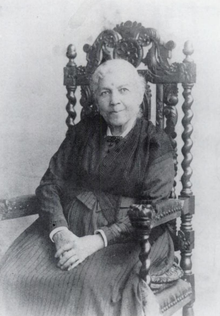
Harriet Ann Jacobs


Harriet Ann Jacobs

Jacobs in 1894
Born February 11, 1813
Edenton, North Carolina
Died March 7, 1897 (aged 84)
Washington, D.C.
Resting place Mount Auburn Cemetery
Occupation Writer, nurse and abolitionist speaker
Genre Autobiography
Subject Harriet Ann Jacobs
Notable works Incidents in the Life of a Slave Girl (1861)
Partner Samuel Sawyer
Children Joseph, Louisa


Harriet Ann Jacobs (February 11, 1813 – March 7, 1897) was an African-American writer who escaped from slavery and was later freed. She became an abolitionist speaker and reformer. Jacobs wrote an autobiographical novel, Incidents in the Life of a Slave Girl, first serialized in a newspaper and published as a book in 1861 under the pseudonym Linda Brent. It was a reworking of the genres of slave narrative and sentimental novel, and was one of the first books to address the struggle for freedom by female slaves, and to explore their struggles with sexual harassment and abuse, and their effort to protect their roles as women and mothers.

After being overshadowed by the Civil War, the novel was rediscovered in the late 20th century, when there was new interest in minority and women writers. One scholar researched the novel, identifying Harriet Jacobs as the author and documenting many events and people in her life that corresponded to this fictionalized, autobiographical account. The novel has been the subject of many academic studies, as Jacobs challenged prevailing ideas about slavery and womanhood in her work.


Reward notice issued for the return of Harriet Jacobs

Harriet Jacobs was born into slavery in Edenton, North Carolina, in 1813.[1] Her father was Elijah Knox, an enslaved biracial house carpenter owned by Andrew Knox. Elijah was said to be the son of Athena Knox, who was enslaved, and a white farmer, Henry Jacobs.[2] Harriet's mother was Delilah Horniblow, an enslaved black woman held by John Horniblow, a tavern owner. Under the principle of partus sequitur ventrem, both Harriet and her brother John were born into slavery, as their mother was enslaved. Their likely European-American paternity did not alter their status. Harriet lived with her mother until Delilah's death around 1819, when Harriet was six.[3] Then she lived with her mother's mistress, Margaret Horniblow, who taught Harriet to read, write and sew.