Posts mit dem Label sklavin werden angezeigt. Alle Posts anzeigen
Posts mit dem Label sklavin werden angezeigt. Alle Posts anzeigen


22.08.2015

06.08.2015
The 19th-Century Slave Sculpture that Exposed Americans to Nudity in Art
by Allison Meier on August 5, 2015

Hiram Powers, “The Greek Slave – Daguerreotype” (1848–49), daguerreotype (courtesy Smithsonian American Art Museum)
The first nude sculpture of a woman widely seen by the American public depicted a slave, just decades before the Civil War. Measured Perfection: Hiram Powers’ Greek Slave now at the Smithsonian American Art Museum in Washington, DC explores the artistic processes behind one of the most popular, and controversial, 19th-century sculptures.

Hiram Powers, “Greek Slave” (1843), plaster (courtesy Smithsonian American Art Museum) (click to enlarge)
“If you had access to private collections or went on a Grand Tour, you might have seen this kind of artwork, but not if you were an average American,” Karen Lemmey, curator of sculpture and organizer of the exhibition, told Hyperallergic. Hiram Powers replicated “The Greek Slave” (1840s) in marble several times due to its huge success, where on an American tour it inadvertently became an abolitionist icon.
Hiram Powers, “The Greek Slave – Daguerreotype” (1848–49), daguerreotype (courtesy Smithsonian American Art Museum)
The first nude sculpture of a woman widely seen by the American public depicted a slave, just decades before the Civil War. Measured Perfection: Hiram Powers’ Greek Slave now at the Smithsonian American Art Museum in Washington, DC explores the artistic processes behind one of the most popular, and controversial, 19th-century sculptures.
Hiram Powers, “Greek Slave” (1843), plaster (courtesy Smithsonian American Art Museum) (click to enlarge)
“If you had access to private collections or went on a Grand Tour, you might have seen this kind of artwork, but not if you were an average American,” Karen Lemmey, curator of sculpture and organizer of the exhibition, told Hyperallergic. Hiram Powers replicated “The Greek Slave” (1840s) in marble several times due to its huge success, where on an American tour it inadvertently became an abolitionist icon.
09.07.2015
Charles Cordier African Venus France (1851)


Charles Cordier : African Venus , France (1851) . Bronze, 39.5 cm.
The Walters Museum:
Cordier submitted a plaster cast of the bust of an African visitor to Paris to the Salon of 1848, and two years later he again entered it as a bronze (Walters 54.2664). A young African woman served as the model for this companion piece in 1851. Regarded as powerful expressions of nobility and dignity, these sculptures proved to be highly popular: casts were acquired by the Museum of National History in Paris and also by Queen Victoria. The Walters’ pair were cast by the Paris foundry Eck and Durand in 1852. These bronzes were esteemed by 19th-century viewers as expressions of human pride and dignity in the face of grave injustice. One of the things I love most about this piece is that you get something new from almost every single angle.
It is stunning, I wonder who the woman was, where she was from, what did she think of the world?
I’ve learned since that the woman who posed for this amazing work was named Seïd Enkess. She was a Frenchwoman originally from southern Sudan, who had been enslaved as a child, but worked as model in Paris as an adult.
According to Cordier: A superb Sudanese appeared in the studio. Within a fortnight, I made this bust. With a comrade, I carried it into my room, by my bed […] I coveted the artwork […] I had it cast and sent it to the Salon […]. It was a revelation for the whole artistic world. […] My genre had the novelty of a new subject, the revolt against slavery, anthropology at its birth…
08.07.2015
other portraits of black women

Wenceslas Hollar
Portrait of a Young Woman
Bohemia (c. 1645)
Etching, 62 x 47 mm.
The British Museum
Portrait of a Young Woman
Bohemia (c. 1645)
Etching, 62 x 47 mm.
The British Museum

Wenceslaus Hollar Head and Shoulders of a Black Woman
Bohemia/Czech Republic (1645)
Etching on paper, 60 mm. x 46 mm.
[source]
27.05.2015
Harriet Ann Jacobs
Harriet Ann Jacobs
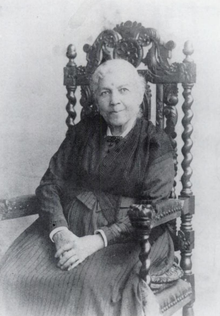
Jacobs in 1894
Born February 11, 1813
Edenton, North Carolina
Died March 7, 1897 (aged 84)
Washington, D.C.
Resting place Mount Auburn Cemetery
Occupation Writer, nurse and abolitionist speaker
Genre Autobiography
Subject Harriet Ann Jacobs
Notable works Incidents in the Life of a Slave Girl (1861)
Partner Samuel Sawyer
Children Joseph, Louisa
Harriet Ann Jacobs (February 11, 1813 – March 7, 1897) was an African-American writer who escaped from slavery and was later freed. She became an abolitionist speaker and reformer. Jacobs wrote an autobiographical novel, Incidents in the Life of a Slave Girl, first serialized in a newspaper and published as a book in 1861 under the pseudonym Linda Brent. It was a reworking of the genres of slave narrative and sentimental novel, and was one of the first books to address the struggle for freedom by female slaves, and to explore their struggles with sexual harassment and abuse, and their effort to protect their roles as women and mothers.
After being overshadowed by the Civil War, the novel was rediscovered in the late 20th century, when there was new interest in minority and women writers. One scholar researched the novel, identifying Harriet Jacobs as the author and documenting many events and people in her life that corresponded to this fictionalized, autobiographical account. The novel has been the subject of many academic studies, as Jacobs challenged prevailing ideas about slavery and womanhood in her work.

Reward notice issued for the return of Harriet Jacobs
Harriet Jacobs was born into slavery in Edenton, North Carolina, in 1813.[1] Her father was Elijah Knox, an enslaved biracial house carpenter owned by Andrew Knox. Elijah was said to be the son of Athena Knox, who was enslaved, and a white farmer, Henry Jacobs.[2] Harriet's mother was Delilah Horniblow, an enslaved black woman held by John Horniblow, a tavern owner. Under the principle of partus sequitur ventrem, both Harriet and her brother John were born into slavery, as their mother was enslaved. Their likely European-American paternity did not alter their status. Harriet lived with her mother until Delilah's death around 1819, when Harriet was six.[3] Then she lived with her mother's mistress, Margaret Horniblow, who taught Harriet to read, write and sew.
04.05.2014

Abonnieren
Posts (Atom)