Slavery was the flywheel on which America’s market revolution turned—not just in the United States, but in all of the Americas.
By Greg Grandin
February 24, 2014
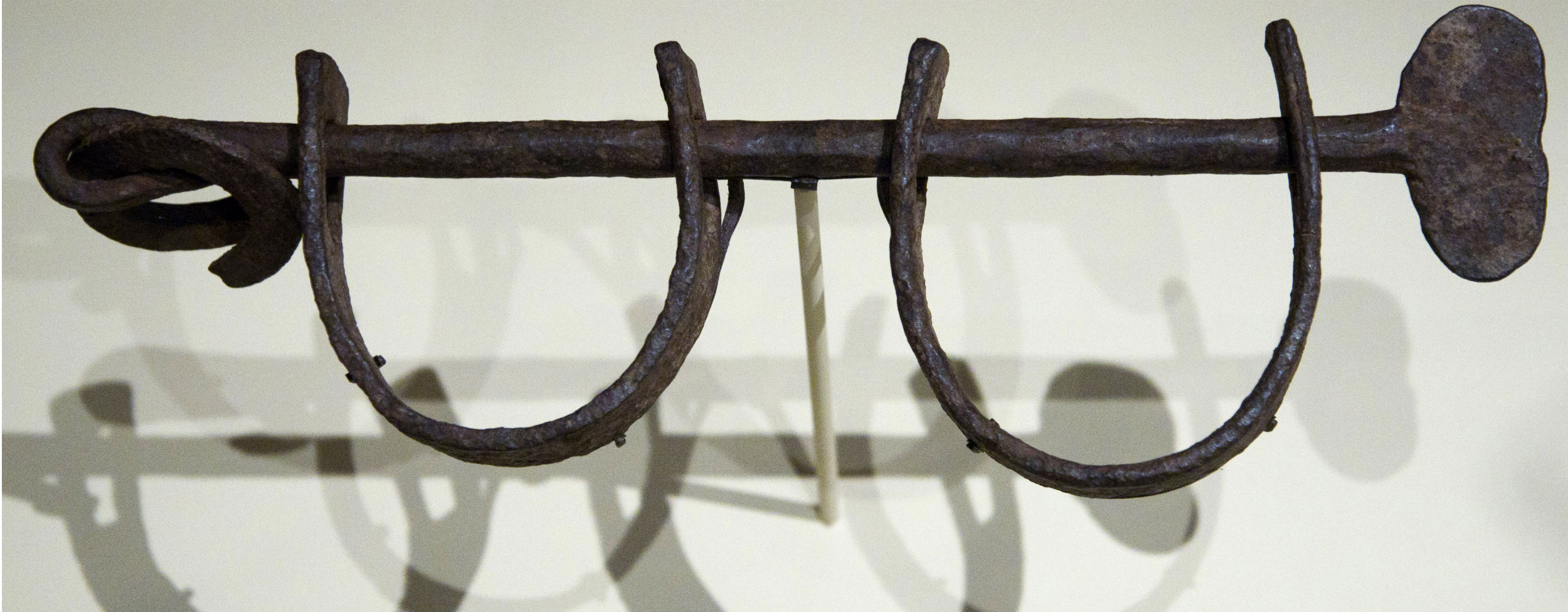
A nineteenth-century bilboes for an adult, typically found on slave ships. (AP Photo/Manuel Balce Ceneta)
Many in the United States were outraged by the remarks of conservative evangelical preacher Pat Robertson, who blamed Haiti’s catastrophic 2010 earthquake on Haitians for selling their souls to Satan. Bodies were still being pulled from the rubble—as many as 300,000 died—when Robertson went on TV and gave his viewing audience a little history lesson: the Haitians had been “under the heel of the French” but they “got together and swore a pact to the devil. They said, ‘We will serve you if you will get us free from the French.’ True story. And so, the devil said, ‘OK, it’s a deal.’”
A supremely callous example of right-wing idiocy? Absolutely. Yet in his own kooky way, Robertson was also onto something. Haitians did, in fact, swear a pact with the devil for their freedom. Only Beelzebub arrived smelling not of sulfur, but of Parisian cologne.
Haitian slaves began to throw off the “heel of the French” in 1791, when they rose up and, after bitter years of fighting, eventually declared themselves free. Their French masters, however, refused to accept Haitian independence. The island, after all, had been an extremely profitable sugar producer, and so Paris offered Haiti a choice: compensate slave owners for lost property—their slaves (that is, themselves)—or face its imperial wrath. The fledgling nation was forced to finance this payout with usurious loans from French banks. As late as 1940, 80 percent of the government budget was still going to service this debt.
In the on-again, off-again debate that has taken place in the United States over the years about paying reparations for slavery, opponents of the idea insist that there is no precedent for such a proposal. But there is. It’s just that what was being paid was reparations-in-reverse, which has a venerable pedigree. After the War of 1812 between Great Britain and the US, London reimbursed Southern planters more than a million dollars for having encouraged their slaves to run away in wartime. Within the United Kingdom, the British government also paid a small fortune to British slave owners, including the ancestors of Britain’s current Prime Minister, David Cameron, to compensate for abolition (which Adam Hochschild calculated in his 2005 book Bury the Chains to be “an amount equal to roughly 40 percent of the national budget then, and to about $2.2 billion today”).
By Greg Grandin
February 24, 2014
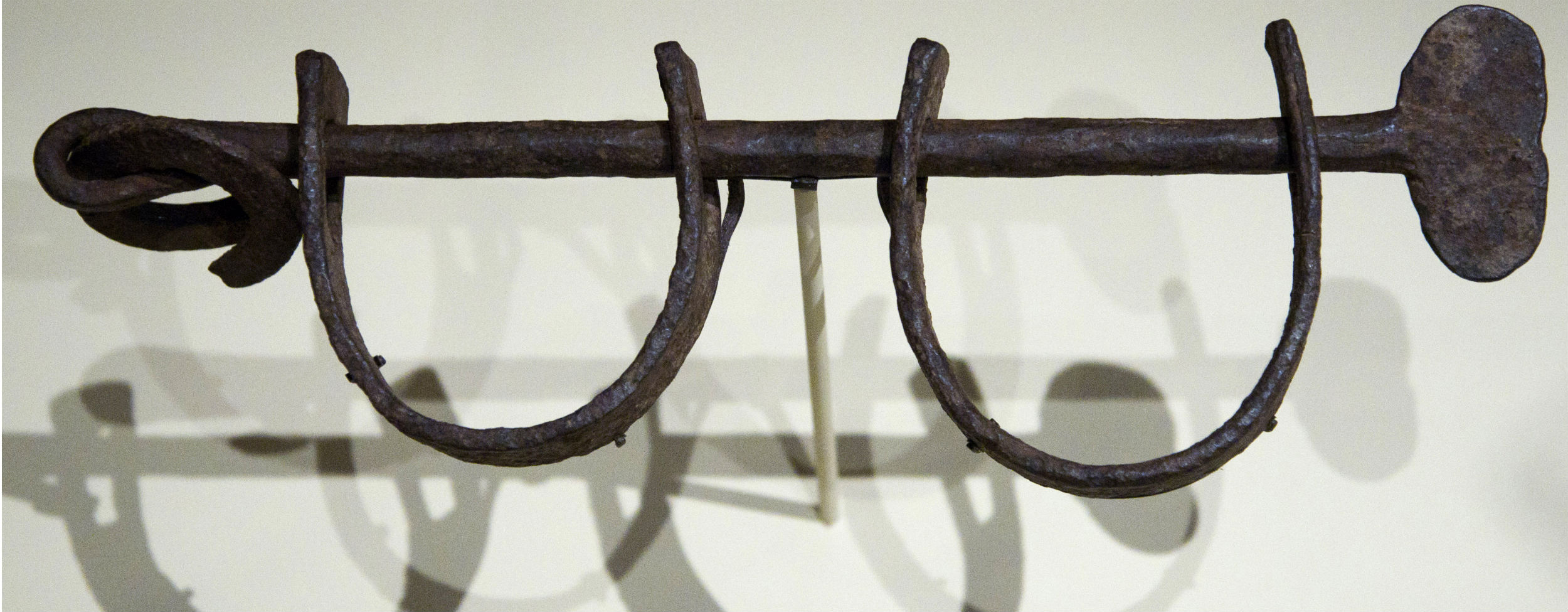
A nineteenth-century bilboes for an adult, typically found on slave ships. (AP Photo/Manuel Balce Ceneta)
Many in the United States were outraged by the remarks of conservative evangelical preacher Pat Robertson, who blamed Haiti’s catastrophic 2010 earthquake on Haitians for selling their souls to Satan. Bodies were still being pulled from the rubble—as many as 300,000 died—when Robertson went on TV and gave his viewing audience a little history lesson: the Haitians had been “under the heel of the French” but they “got together and swore a pact to the devil. They said, ‘We will serve you if you will get us free from the French.’ True story. And so, the devil said, ‘OK, it’s a deal.’”
A supremely callous example of right-wing idiocy? Absolutely. Yet in his own kooky way, Robertson was also onto something. Haitians did, in fact, swear a pact with the devil for their freedom. Only Beelzebub arrived smelling not of sulfur, but of Parisian cologne.
Haitian slaves began to throw off the “heel of the French” in 1791, when they rose up and, after bitter years of fighting, eventually declared themselves free. Their French masters, however, refused to accept Haitian independence. The island, after all, had been an extremely profitable sugar producer, and so Paris offered Haiti a choice: compensate slave owners for lost property—their slaves (that is, themselves)—or face its imperial wrath. The fledgling nation was forced to finance this payout with usurious loans from French banks. As late as 1940, 80 percent of the government budget was still going to service this debt.
In the on-again, off-again debate that has taken place in the United States over the years about paying reparations for slavery, opponents of the idea insist that there is no precedent for such a proposal. But there is. It’s just that what was being paid was reparations-in-reverse, which has a venerable pedigree. After the War of 1812 between Great Britain and the US, London reimbursed Southern planters more than a million dollars for having encouraged their slaves to run away in wartime. Within the United Kingdom, the British government also paid a small fortune to British slave owners, including the ancestors of Britain’s current Prime Minister, David Cameron, to compensate for abolition (which Adam Hochschild calculated in his 2005 book Bury the Chains to be “an amount equal to roughly 40 percent of the national budget then, and to about $2.2 billion today”).


