The leader of the most revolutionary women’s rights movement in the world talks to The Independent about how her ideals have found a home in the middle of the war on Isis
Bethan McKernan Beirut
@mck_beth
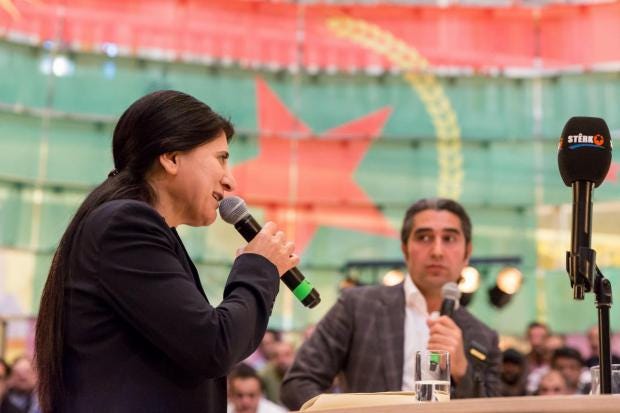
Asya Abdullah, co-chair of the Syrian Kurdish PYD, addresses delegates at the New World Summit Rojava in Oslo
In providing an effective ground force against Isis, the Kurds have completely changed the course of Syria’s war, and their role in the country’s future, whether embattled President Bashar al-Assad stays or goes, is crucial.
Despite this, the Rojava administration has been shut out of all peace talks at the request of Sunni rebel groups. The experiment also faces renewed hostility from Turkey - recently the YPG said a military base near Kobani had been targeted by Turkish artillery fire - and can no longer necessarily count on support from the US now that the incoming Trump administration has signalled it wants to work with Assad to defeat Isis.
Abdullah is stoic, however, about the Rojava experiment’s future.
“Our first responsibility is to protect our sisters, to protect all women. That’s why our revolution is working, why Arab women and Yazidi women join when they see us. You can’t have real change without putting women at the centre,” she said.
Kurdish women, of course, literally fight for their rights - they take on Assad’s army and allied militias, Turkish-backed forces, and Isis. The creation of the YPJ, or women’s fighting units, is a fascinating development in a region where women’s rights are often repressed.
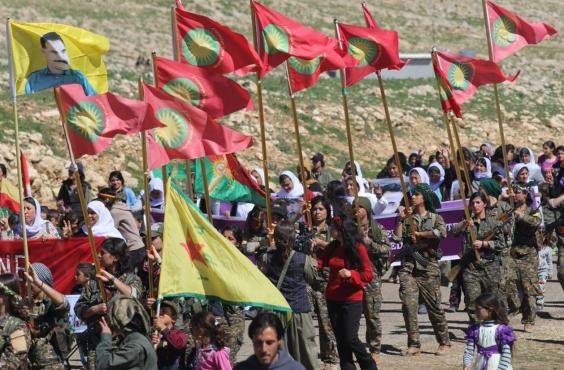
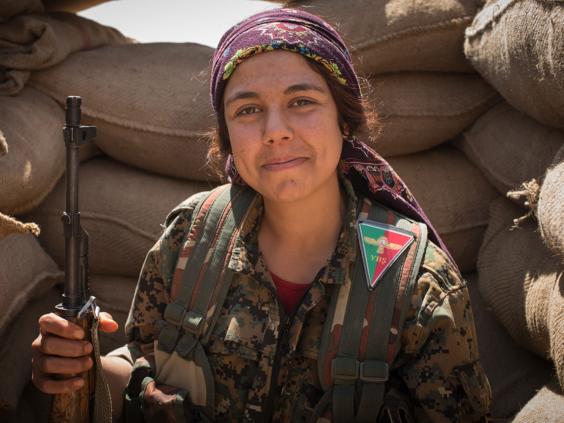
The Sinjar Women’s Units was formed with the help of Kurdish fighters in 2015 to protect the Yazidi community in the wake of attacks by Isis (YBS)
Bethan McKernan Beirut
@mck_beth
Female co-chair of the Syrian Democratic Union Party in Rojava, Asya Abdullah, addresses the New World Summit in Oslo City Hall on November 26, 2016 Jonas Staal/New World Summit
Asya Abdullah is not a polished politician. She speaks slowly and deliberately in Kurmanji in a tone which suggests she has had to practise her material many times.
But despite the reserved and careful exterior, Abdullah is one of the most radical and effective revolutionaries in the world today.
In the chaos of Syria’s civil war, the country’s Kurdish population has seized the chance to wrest their own destiny from the hands of others.
This is what it feels like to be an ordinary Kurd in Erdogan's Turkey
Syria war: Kurds stand ‘at the crossroads’ of hopes for lasting peace
Syrian Kurds to fight to death to stop Turkey 'invading their land'
Kurdish independence is coming – but the Kurds have to win it
Long marginalised by the Baathist regime in Damascus, after repelling government forces in 2012 Syria’s Kurds have managed to carve out a relatively peaceful and stable new societal order based in Rojava in the north, flourishing despite the presence of enemies such as Isis on all sides.
Abdullah has been a driving force in the battle for Kurdish freedom - but as the female co-chair of the Syrian Democratic Union Party, elected alongside male representative Salih Muslim in 2010, it is her particular role to safeguard women’s liberation.
“The hallmark of a free and democratic life is a free woman,” she said in her keynote speech at the Rojava New World Embassy in Oslo at the end of November.
“Isis would like to reduce women to slaves and body parts. We show them they’re wrong. We can do anything.”
Syria’s Kurds stand at a crossroads in the region’s history
The Rojava experiment is unlike any other. Coalitions between the local Assyrian, Arab and Kurdish populations have created a small society by and large run on the principles of a communal economy, harmony with the environment, and self governance.
It is also hard to conceive just how radically the Kurdish administration has overturned the existing state structures in Syria by putting women’s emancipation at the forefront of the the sociopolitical agenda.
Women in Rojava have equal status in property law, forced and underage marriage has been banned, quotas for women and ethnic groups ensure representation at all levels of politics - and of course, the armed women’s fighting units, known as the YPJ, have played a central role in the liberation of towns such as Kobani and Manbij.
What the Kurds broadly want, despite some infighting and extreme pushback from neighbouring Turkey, is ‘stateless democracy’ - the idea that in a federalised Syria, their autonomy can be maintained on a local level, with a focus on ‘bottom up’ power and little to no interference from the state.
Asya Abdullah is not a polished politician. She speaks slowly and deliberately in Kurmanji in a tone which suggests she has had to practise her material many times.
But despite the reserved and careful exterior, Abdullah is one of the most radical and effective revolutionaries in the world today.
In the chaos of Syria’s civil war, the country’s Kurdish population has seized the chance to wrest their own destiny from the hands of others.
This is what it feels like to be an ordinary Kurd in Erdogan's Turkey
Syria war: Kurds stand ‘at the crossroads’ of hopes for lasting peace
Syrian Kurds to fight to death to stop Turkey 'invading their land'
Kurdish independence is coming – but the Kurds have to win it
Long marginalised by the Baathist regime in Damascus, after repelling government forces in 2012 Syria’s Kurds have managed to carve out a relatively peaceful and stable new societal order based in Rojava in the north, flourishing despite the presence of enemies such as Isis on all sides.
Abdullah has been a driving force in the battle for Kurdish freedom - but as the female co-chair of the Syrian Democratic Union Party, elected alongside male representative Salih Muslim in 2010, it is her particular role to safeguard women’s liberation.
“The hallmark of a free and democratic life is a free woman,” she said in her keynote speech at the Rojava New World Embassy in Oslo at the end of November.
“Isis would like to reduce women to slaves and body parts. We show them they’re wrong. We can do anything.”
Syria’s Kurds stand at a crossroads in the region’s history
The Rojava experiment is unlike any other. Coalitions between the local Assyrian, Arab and Kurdish populations have created a small society by and large run on the principles of a communal economy, harmony with the environment, and self governance.
It is also hard to conceive just how radically the Kurdish administration has overturned the existing state structures in Syria by putting women’s emancipation at the forefront of the the sociopolitical agenda.
Women in Rojava have equal status in property law, forced and underage marriage has been banned, quotas for women and ethnic groups ensure representation at all levels of politics - and of course, the armed women’s fighting units, known as the YPJ, have played a central role in the liberation of towns such as Kobani and Manbij.
What the Kurds broadly want, despite some infighting and extreme pushback from neighbouring Turkey, is ‘stateless democracy’ - the idea that in a federalised Syria, their autonomy can be maintained on a local level, with a focus on ‘bottom up’ power and little to no interference from the state.
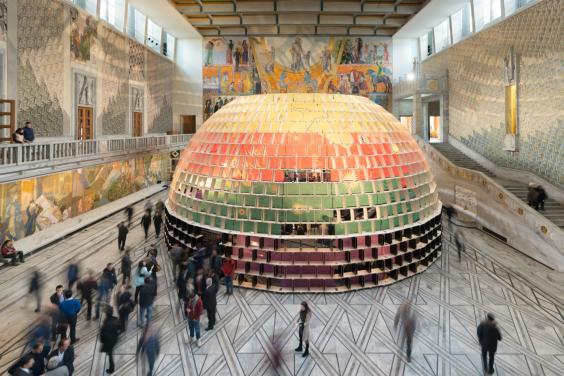
Artist Jonas Staal's temporary Rojava embassy inside Oslo's City Hall (Jonas Staal/New World Summit)
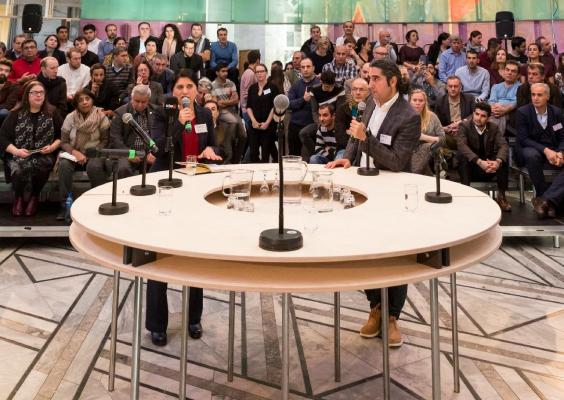
“This is the third way,” Abdullah told The Independent on the sidelines of the New World Embassy sessions. “We have been so busy working and sending representatives to spread the word around the world this is the first time many in the administration have been in the same room in years.”
The delegates were brought together by Dutch artist Jonas Staal as part of his ‘New World Summit’ project, a series designed to create “spaces of assembly that represent a new world and a new democratic ideal in the making.”
Blacklisted or otherwise marginalised independence movements, such as those in Rojava, Somaliland, Catalonia and the Azawad movement in Mali, have been invited to New World Summits to explore what ‘stateless democracy’ means in theory and practice.
Over the course of a weekend around 1,000 observers, democracy activists, politicians and journalists descended on Oslo’s City Hall, home of the Nobel Peace Prize, to see Staal’s temporary Rojava embassy - a circular construction designed to reflect the openness and dynamism of the new world the Kurds are seeking to create.
“This is the third way,” Abdullah told The Independent on the sidelines of the New World Embassy sessions. “We have been so busy working and sending representatives to spread the word around the world this is the first time many in the administration have been in the same room in years.”
The delegates were brought together by Dutch artist Jonas Staal as part of his ‘New World Summit’ project, a series designed to create “spaces of assembly that represent a new world and a new democratic ideal in the making.”
Blacklisted or otherwise marginalised independence movements, such as those in Rojava, Somaliland, Catalonia and the Azawad movement in Mali, have been invited to New World Summits to explore what ‘stateless democracy’ means in theory and practice.
Over the course of a weekend around 1,000 observers, democracy activists, politicians and journalists descended on Oslo’s City Hall, home of the Nobel Peace Prize, to see Staal’s temporary Rojava embassy - a circular construction designed to reflect the openness and dynamism of the new world the Kurds are seeking to create.
"We never played princesses as little girls," a 30-year-old YPG fighter jokes (Diego Cupolo)
The prevailing consensus on the political left is that the current crises in global democracy - the EU’s inability to combat the refugee crisis, the rise of right wing populism across Europe and the US - show that our post World War II models are failing, Staal says. His work is designed to open up the idea other democratic political models are possible.
“Contemporary parliamentary democracy is in itself not much more than a century old. In that sense, I don’t trust the stability of anything. Our political, economic and environmental crises have brought us to a crossroads,” he said.
“So, we have to ask ourselves: what kind of politics do we truly desire? Defending what we have is no longer enough, we must push forward.”
The war on terror, Staal and his colleagues argue, has emerged as the greatest threat to democracy in the 21st century. “Rojava is democracy with a vengeance,” he said. “The region, historically, has had types of government and statehood thrust upon it with little say in how to govern themselves. Now it is the Kurds and their allies that tell us what a genuine democracy actually looks like.”
It seems unthinkable - “Until you remember that the modern European continent - from the French to the Russian revolution - also emerged out of a revolutionary situation,” he added.
The prevailing consensus on the political left is that the current crises in global democracy - the EU’s inability to combat the refugee crisis, the rise of right wing populism across Europe and the US - show that our post World War II models are failing, Staal says. His work is designed to open up the idea other democratic political models are possible.
“Contemporary parliamentary democracy is in itself not much more than a century old. In that sense, I don’t trust the stability of anything. Our political, economic and environmental crises have brought us to a crossroads,” he said.
“So, we have to ask ourselves: what kind of politics do we truly desire? Defending what we have is no longer enough, we must push forward.”
The war on terror, Staal and his colleagues argue, has emerged as the greatest threat to democracy in the 21st century. “Rojava is democracy with a vengeance,” he said. “The region, historically, has had types of government and statehood thrust upon it with little say in how to govern themselves. Now it is the Kurds and their allies that tell us what a genuine democracy actually looks like.”
It seems unthinkable - “Until you remember that the modern European continent - from the French to the Russian revolution - also emerged out of a revolutionary situation,” he added.
Asya Abdullah, co-chair of the Syrian Kurdish PYD, addresses delegates at the New World Summit Rojava in Oslo
In providing an effective ground force against Isis, the Kurds have completely changed the course of Syria’s war, and their role in the country’s future, whether embattled President Bashar al-Assad stays or goes, is crucial.
Despite this, the Rojava administration has been shut out of all peace talks at the request of Sunni rebel groups. The experiment also faces renewed hostility from Turkey - recently the YPG said a military base near Kobani had been targeted by Turkish artillery fire - and can no longer necessarily count on support from the US now that the incoming Trump administration has signalled it wants to work with Assad to defeat Isis.
Abdullah is stoic, however, about the Rojava experiment’s future.
“Our first responsibility is to protect our sisters, to protect all women. That’s why our revolution is working, why Arab women and Yazidi women join when they see us. You can’t have real change without putting women at the centre,” she said.
Kurdish women, of course, literally fight for their rights - they take on Assad’s army and allied militias, Turkish-backed forces, and Isis. The creation of the YPJ, or women’s fighting units, is a fascinating development in a region where women’s rights are often repressed.
The Sinjar Women’s Units was formed with the help of Kurdish fighters in 2015 to protect the Yazidi community in the wake of attacks by Isis (YBS)
