Posts mit dem Label west indies Lobby werden angezeigt. Alle Posts anzeigen
Posts mit dem Label west indies Lobby werden angezeigt. Alle Posts anzeigen
09.07.2015


22.06.2015
Plantocracy
From Wikipedia, the free encyclopedia
Further information: Slave Power
A plantocracy, also known as a slavocracy,[1] is a ruling class, political order or government composed of (or dominated by) plantation owners.
A number of early European colonies in the New World were largely plantocracies, usually consisting of a small European settler population relying on a predominantly West African chattel slave population (as well as smaller numbers of indentured slaves, both European and non-European in origin), and later, "freed"-Black and poor-white sharecroppers for labour. These plantocracies proved to be a decisive force in the anti-abolitionist movement. One prominent organization largely representing (and collectively funded by) a number of plantocracies was the "West Indies Lobby" in the British Parliament. It is credited (or conversely, discredited) in constituting a significant impetus in delaying the abolition of the slave trade from taking place in the 1790s to being implemented in 1806-1808; and likewise, with respect to prospects of emancipation being proclaimed in the 1820s (instead, a policy known as "Amelioration" was formally adopted throughout 1823-1833), to it being implemented in 1834-1838.
References
Bicheno, Hugh (2003). Rebels and Redcoats: The American Revolutionary War. London: Harper Collins. pp. assim. ISBN 0-00-715625-1.
Sources
B.W. Higman. "The West India Interest in Parliament," Historical Studies (1967), 13: pp. 1-19.
See the historical journal: Plantation Society in the Americas for a host of pertinent articles.
Steel, Mark James (PhD Dissertation). Power, Prejudice and Profit: the World View of the Jamaican Slaveowning Elite, 1788-1834, (University of Liverpool Press, Liverpool 1988).
Luster, Robert Edward (PhD Dissertation). The Amelioration of the Slaves in the British Empire, 1790-1833 (New York University Press, 1998).
Pro-Slavery Lobby
Narratives from the Collection on the Pro-Slavery Lobby
"[This is] a trade to the most advantage to this kingdom of any we drive, and as it were all profit, the first cost being little more than small matters of our own manufactures, for which we have in return, gold, elephant’s teeth, wax and negroes, the last whereof is much better than the first, being indeed the best traffic the kingdom hath, as it doth occasionally give so vast an employment to our people both by sea and land."
John Cary, Bristol merchant
By the 18th century, slavery was seen as essential to Britain’s economy and power, and therefore accepted as the norm. The profits had given merchants and planters involved enough wealth and power to found banks and other financial institutions, and acquire immense political power. Between 1787 and 1807 all the Mayors of Liverpool were involved in the slave trade and 50 or 60 MPs represented slave plantations. They were able to build stately homes, marry into the aristocracy, and invest in industrial enterprises. William Beckford, twice Lord Mayor of London and owner of a 22,000 acre estate in Jamaica, left his son one million pounds and £100,000 a year in his will.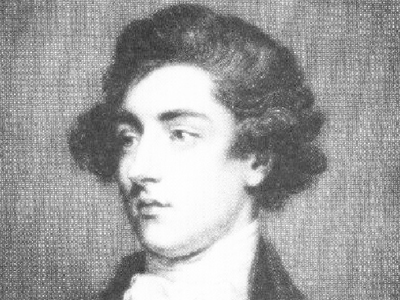
William Beckford by Sir Joshua Reynolds, engraved by T.A. Dean
The trade helped strengthen Britain’s domestic economy, with 150,000 guns each year being exported to Africa from Birmingham alone. As well as making a fortune in the trading of Africans, Birmingham also dominated copper manufacture, as this metal was highly valued by Africans and was used for trade. The custom duties on slave grown imports were an important source of government income. The Church also had plantations, for example the Society for the Propagation of the Gospel owned the Codrington estate in Barbados.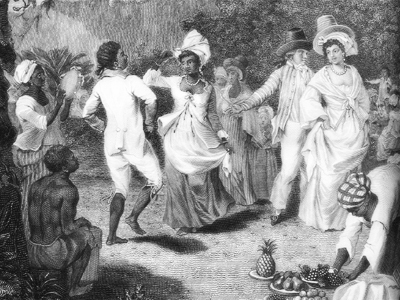
'A Negro Festival Drawn from Nature in the Island of St. Vincent', depicting slavery as a life of leisure, taken from the pro-slavery book
'The History of the British Colonies in the West Indies' by Bryan Edwards, 1797.
© Anti-Slavery International
"[This is] a trade to the most advantage to this kingdom of any we drive, and as it were all profit, the first cost being little more than small matters of our own manufactures, for which we have in return, gold, elephant’s teeth, wax and negroes, the last whereof is much better than the first, being indeed the best traffic the kingdom hath, as it doth occasionally give so vast an employment to our people both by sea and land."
John Cary, Bristol merchant
By the 18th century, slavery was seen as essential to Britain’s economy and power, and therefore accepted as the norm. The profits had given merchants and planters involved enough wealth and power to found banks and other financial institutions, and acquire immense political power. Between 1787 and 1807 all the Mayors of Liverpool were involved in the slave trade and 50 or 60 MPs represented slave plantations. They were able to build stately homes, marry into the aristocracy, and invest in industrial enterprises. William Beckford, twice Lord Mayor of London and owner of a 22,000 acre estate in Jamaica, left his son one million pounds and £100,000 a year in his will.
William Beckford by Sir Joshua Reynolds, engraved by T.A. Dean
The trade helped strengthen Britain’s domestic economy, with 150,000 guns each year being exported to Africa from Birmingham alone. As well as making a fortune in the trading of Africans, Birmingham also dominated copper manufacture, as this metal was highly valued by Africans and was used for trade. The custom duties on slave grown imports were an important source of government income. The Church also had plantations, for example the Society for the Propagation of the Gospel owned the Codrington estate in Barbados.
'A Negro Festival Drawn from Nature in the Island of St. Vincent', depicting slavery as a life of leisure, taken from the pro-slavery book
'The History of the British Colonies in the West Indies' by Bryan Edwards, 1797.
© Anti-Slavery International
Abonnieren
Posts (Atom)