Posts mit dem Label frauen werden angezeigt. Alle Posts anzeigen

30.10.2016

Readings from the Slave Narratives


Veröffentlicht am 23.09.2015
Unchained Memories is a 2003 documentary film about the stories of former slaves interviewed during the 1930s as part of the Federal Writers' Project and preserved in the WPA Slave Narrative Collection. This HBO film interpretation directed by Ed Bell and Thomas Lennon is a compilation of slave narratives, narrated by actors, emulating the original conversation with the interviewer. The slave narratives may be the most accurate in terms of the everyday activities of the enslaved, serving as personal memoirs of more than two thousand former slaves. The documentary depicts the emotions of the slaves and what they endured. The "Master" had the opportunity to sell, trade, or kill the enslaved, for retribution should one slave not obey.
Narrated by: Whoopi Goldberg
Sarah Gudger, North Carolina (Vol. 11)— read by LaTanya Richardson
Charley Williams, Oklahoma (Vol. 13) – read by Ruben Santiago-Hudson
Martin Jackson, Texas (Vol. 16) - read by Robert Guillaume
Henry Coleman, South Carolina (Vol. 14) – read byRoscoe Lee Browne
Jennie Proctor, Texas (Vol. 16) – read by Oprah Winfrey
Elizabeth Sparks, Virginia (Vol. 17) – read by Angela Bassett
Rosa Starke, South Carolina (Vol. 14) --
Cato Carter, Texas (Vol. 16) – read by Roger Guenveur Smith
Mary Reynolds, Texas (Vol. 16) – read by Angela Bassett
Rev. Ishrael Massie, Virginia –
Fannie Berry, Virginia – read by CCH Pounder
Mary Estes Peters, Arkansas (Vol. 2) – read by Jasmine Guy
Sarah Ashley, Texas (Vol. 16) – read by LaTanya Richardson
Charles Grandy, Virginia — read by Ruben Santiago-Hudson
William Colbert, Alabama (Vol. 1) – read by Courtney B. Vance
Katie Darling, Texas (Vol. 16) – read by Jasmine Guy Jasmine Guy
Vinnie Brunson, Texas (Vol. 3) – read by Vanessa L. Williams
Fannie Berry, read by CCH Pounder
Jack & Rosa Maddox, Texas (Vol. 7) – read by Ossie Davis and Ruby Dee
Mary Reynolds, Texas (Vol. 16) – read by Angela Bassett
Louisa Adams, North Carolina (Vol. 11) – read by LaTanya Richardson

14.08.2016

No Natural Hair Policy


ARENTS UPSET AFTER A KENTUCKY HIGH SCHOOL BANS NATURAL BLACK HAIRSTYLES
Posted by The Race Card on August 11, 2016 at 11:00am
View Blog


With a ban on cornrows ("cornrolls", wtf), dreads, twists, afros longer than two inches, and fade designs, a Louisville, Kentucky school (Butler Traditional High School) just became the latest example of institutionalized environmental hostility, in public education, towards black students. According to the high school, locs and fades are more detrimental to a student’s education than not being allowed to attend class.

The school’s ridiculous, culturally insensitive policy of forced assimilation went viral after a parent named Attica Scott (who has locs herself) tweeted a copy of the policy and expressed her daughter’s frustration over it. The policy itself policing many of the most popular protective hair styles in the black community, implying that they are too distracting and unkept to be in the classroom. Since then, the school district superintendent, Donna Hargens, has backtracked and expressed a desire to open up dialogue around the subject with parents. Butler Traditional High School has suspended the policy, for now.

By Erin White*, AFROPUNK contributor


PHOTOS BY NINA WESTERVELT

09.04.2016

Bananen in Suriname

door Carl Haarnack
Deze ansichtkaarten werden gemaakt door de fotograaf Eugen Klein. Hij werd geboren in Mannheim (Duitsland) in 1869. In de jaren ’90 van de 19e eeuw vestigde hij zich als fotograaf in Suriname. Aan de Domineestraat in Paramaribo opende hij zijn studio en winkel. Gedurende zo’n 30 jaar was hij een van de productiefste en bekendste fotografen van Suriname. Naast foto’s gaf hij ook honderden prentbriefkaarten uit. Hij overleed in Paramaribo in 1927. Zijn weduwe, Louise Schrader, heeft samen met haar kinderen de zaak tot de Tweede Wereldoorlog voortgezet.


Klein koos de onderwerpen voor zijn ansichtkaarten zorgvuldig uit. Behalve de vele stadsgezichten van Paramaribo lieten zijn ansichtkaarten ook vaak exotische vruchten zien. Deze kaarten waren natuurlijk vooral bestemd voor diegenen die familie of vrienden in Europa een indruk wilden geven van de vele vruchten die daar vrijwel onbekend waren. De banaan is een van de oudste geteelde gewassen ter wereld. De oorsprong van de banaan ligt in Zuid-oost Azië. Portugese handelaren zorgden er voor dat de bananen vanuit Afrika mee werden genomen naar het Caraïbisch gebied. Maria Sibylla Merian, die in 1699 vanuit Nederland in Suriname arriveerde, tekende de bananenplant in haar Metamorphosis insectorum Surinamensium (Verandering der Surinaamse Insecten, Amsterdam 1705). Dankzij haar werk kreeg men in het Europa voor het eerst exotische vruchten als cashew, marcusa, pepers en dus ook de banaan te zien.
Suriname lijkt onlosmakelijk verbonden te zijn met de banaan. Worden gerechten als heri heri nu met trots opgediend als een nationale Surinaamse schotel, de geschiedenis van de banaan in Suriname is minder heroïsch. De banaan diende tenslotte vooral als goedkoop voedsel voor de slaven. Van Hoëvell, een voorvechter van de afschaffing van de slavernij, schreef in Slaven en vrijen onder de Nederlandsche wet (1854): “De neger, aan wien niet veel keuze gelaten is omtrent hetgeen hij als spijs zal gebruiken, vindt zijn hoofdvoedsel in bananen, een aan eiwit en phosphaten hoogst armoedig voedsel. Het hem daarbij toegekende dierlijk voedsel, dat dan nog uit gezouten visch bestaat, is verreweg te gering, om het evenwigt van de verbruikt wordende stof te herstellen.” Ook de slavenkinderen leven volgens Van Hoëvell voornamelijk op bananen (-meel). Ook de ‘stadsdoctor en chirurgijn’ van Paramaribo, Kuhn, had al dertig jaar daarvoor opgemerkt dat het voedsel van ‘de negers’ bestaat uit taaie en zwaar te verteren meelachtige vruchten of wortels.


Op deze prachtige ingekleurde ansichten van Klein zien we twee meisjes die trossen bananen vasthouden. Het zijn hier duidelijk twee uit een serie. Eén meisje komt op beide afbeeldingen voor; ze heeft dezelfde kleding aan. Het andere meisje heeft tussen haar tanden alanya tiki geklemd. Deze kaarten werden vóór 1905 uitgegeven. Helaas kunnen we deze meisjes niet meer vragen hoe zij hun tijd beleefden. Maar zou het niet aardig zijn als nakomelingen van deze Surinaamse schonen hun oma’s zouden herkennen?

[Dit artikel werd eerder geplaatst in het blad Obsession]

04.04.2016

The Invisible Man (2015) sculpture and photo series


The Invisible Man by Zina Saro-Wiwa copyThe Invisible Man is a neo-Ogoni mask created by Zina Saro-Wiwa. Inspired by the newer “Ogele style” masquerade masks that have started appearing in Ogoniland in the late 1980s, the mask is one that depicts the men that have disappeared in Zina’s life through death or through their own design. Brother, father, lovers and illusive Ogele dancers feature on the Janus-faced mask. The black and white face representing the sadness of loss, the lined pink face the anger associated with abandonment. Worn by women only.


The Invisible Man: “The Weight of Absence” (2015) Video Triptych
The Invisible Man: “The Weight of Absence” (2015) 6 mins, video triptych, is the first video featuring and inspired by Zina’s Invisible Man mask commissioned by Seattle Art Museum for their Disguise exhibition. The triptych is a response to the detachment inherent in the display of African masks in museums. It is in direct conversation with Disguise’s remit of “bridging the gap between the mask observed in isolation and the masquerade experienced as a catalyst”. The gap, as Saro-Wiwa sees it, is brought about by emotional and cognitive disconnection to African masks and the performance of masquerade. This work and the very creation of Zina’s Invisible Man mask attempts to bring emotional discourse and emotional connectivity to a masquerade practise whose psycho-emotional geographies are diffuse:

“I wanted to create a masquerade “performance” that subverted even Seattle Art Museum’s expectations of what such a performance should look like. I didn’t just want to gather my all-female troupe have them dance with the mask I designed, film the process and say “here you go”.  That might have been radical enough – having an all-female troupe, is subversive in itself – but I wanted to go further and challenge the museum’s ideas of what it means to “perform a masquerade”. I also wanted to challenge masquerade in Nigeria by going within and opening up emotional terrains. Many masks in Ogoni play on fears, talk about farming, make political statements. But I wanted to go to a more emotionally-specific place. The Invisible Man is about me creating a mask I could connect to. So I picked a highly emotional subject that had a particular resonance for me.  This work is about my attempt to map the emotional geography of masquerade, to get it to tell a more intimate story and to see if creating this mask and performance had any carthatic properties. There is a magic in masquerade that I do not understand. But I am attempting to tap into it through this work.”

28.03.2016

conflict and skin: the persistence of victorian design in namibian women’s fashion


unspecifiedCatherine mckinley, gallatin ma

MARCH 11TH – MARCH 27TH, 2016


Curatorial Statement

In 1884, present-day Namibia was annexed under German colonial rule as part of what was to become South West Africa. Within a decade, German imperial troops were installed to enforce state rule, provoking formidable resistance by the dominant Herero and Namaqua people. The German army responded with a campaign to remove the groups from their ancestral lands, marking the start of the German-Herero War (1904-1907). By the war’s end, an estimated eighty percent of the population, including Himba and other peoples, had been killed by the Germans. It was the first genocide of the twentieth century and a chilling rehearsal for later Nazi atrocities.
The German-Herero War centered on the enormous profitability of both human bodies and cattle skins. What played out on the “native” body through acts of labor exploitation and racial cleansing also deeply implicated sartorial, social-cultural, and traditional religious values of the Herero and Himba, in particular. The cow, the human body, and God were considered to be one and the same. “Herero-ness” and other clan identities, the sustaining of cattle wealth, and custom were expressed in large measure by a literal embodiment of the cow. Cow ownership, as well as a particular wearing of skins, and a feminine ideal of “walking like a cow,” were set off by sartorial forms that celebrated the cow’s form and bored majesty and its associated dowry wealth.
In Namibia, fashions of the Herero and their closely related clan cousins, the Himba, become monuments to the genocide which has otherwise been almost entirely erased. Both groups—summoning the body of the cow—whether with Western imported cloth and notions, skins, and “nakedness,” express radically different relationships to Victorian colonial legacies. They also express pleasure in Western and contemporary design and form, while marking a decided resistance to colonialism and the violence enacted on women’s bodies through genocide and racial cleansing.
Conflict and Skin exams the politics and colonial legacies of Namibian fashion, particularly as iterations of “national costume” and notions of “indigeneity” —the practice of indigenous culture despite colonial impositions.
How does the legacy of genocide explain the staying power of these radically different but kindred forms? How do they radicalize, vulgarize, and provide distance from the genocide?
Engaging the work of the late award-winning South African photographer Thabiso Sekgala and Ghanaian-American couture designer Mimi Plange’s Herero-inspired collection “Flower in the Desert” (Spring 2012), Conflict and Skin examines contemporary African photography and dressmaking, as well as images and costume from the archive. Through these dresses and fashion, I hope to show the legacy of colonialism and to demonstrate the resistance and trauma of the Herero people.
-Catherine Mckinley

_toMG_2047-2
0025
mckinley-2
mckinley-4
to000004 copy

06.03.2016

“Nangu umfazi omnyama” – Hier kommt die schwarze Frau! Über neue Protest­be­we­gungen in Südafrika An den Südafrikanischen Universitäten verschaffen sich junge Feministinnen Gehör. Dabei geht es nur vordergründig um die Abschaffung von Studiengebühren.

http://geschichtedergegenwart.ch/nangu-umfazi-omnyama-hier-kommt-die-schwarze-frau-neue-feministische-protestbewegungen-suedafrika/

Derzeit lässt sich in Südafrika etwas Bemer­kens­wertes beobachten, von dem nur wenig in der deutsch­spra­chigen Presse zu lesen ist. Im Kontext der anhal­tenden Proteste der Jugend gegen die Regie­rung und das Establish­ment, und zwar insbe­son­dere von Studie­renden, findet zugleich ein Aufstand junger Frauen statt. Deren Proteste richten sich nicht nur gegen Studi­en­ge­bühren, ein nach wie vor koloniales Bildungs­system und die korrupte herrschende Klasse, sondern gegen das patri­ar­cha­li­sche System insge­samt, was den Sexismus in den eigenen Reihen einschliesst.


#RhodesMustFall-Proteste, Quelle: www.thedailyvox.co.za


A statue of Cecil John Rhodes was removed from Univer­sity Of Cape Town on 9 April 2015 after concerted student protest. Quelle: Tony Carr, flickr.com

So erklärte Mbali Matan­dela letztes Jahr im März in der renom­mierten Wochen­zeit­schrift Mail & Guardian: „When the Rhodes Must Fall movement began UCT feminists quickly called a meeting with its leadership. They were not going to let their voices be drowned out. After the movement’s first meeting, myself and a small group of black, radical feminists decided that we needed to stake our claim in talks about the univer­sity and its insti­tu­tional racism.” Ziel der studen­ti­schen #RhodesMustFall-Bewegung war zunächst die Entfer­nung der Statue von Cecil Rhodes vom Campus der Univer­sity of Cape Town (UCT) als ein Symbol der Koloni­al­ge­schichte und der Apart­heid sowie der fortwäh­renden weissen Dominanz in Südafrika.

Südafrika ist noch immer bis in die feinsten gesell­schaft­li­chen Poren hinein vom Rassismus geprägt, wie sollte es auch anders sein, denn schliess­lich liegt das Ende der Apart­heid noch nicht einmal eine Genera­tion zurück. Dazu kommen, bei aller hausge­machten Misswirt­schaft und Korrup­tion, die Auswir­kungen des globalen Kapita­lismus und das Erbe der Apart­heid auch in wirtschaft­li­cher Hinsicht. So regelten unzäh­lige Gesetze den Zugang zum Arbeits­markt, zu Bildung und Ausbil­dung und privi­le­gierten als weiss klassi­fi­zierte Menschen in jeder Hinsicht. Die neue Regie­rung hatte 1994 keines­wegs ein prospe­rie­rendes Land mit einer gesunden Wirtschaft übernommen, sondern u.a. einen absurd aufge­blähten Staats- und Verwal­tungs­ap­parat, mit Ämtern und Behörden parallel und exklusiv für jede der gesetz­lich festge­legten „Rassen­gruppe“.

26.01.2016

Poinciana / Flammenbaum Song


Namensgeber des Songs ist der Flammenbaum Delonix regia, der im Englischen auch (Royal) Poinciana genannt wird.
Poinciana ist eine Ballade von Nat Simon mit einem Text von Buddy Bernier aus dem Jahr 1936, die sich zu einem Jazzstandard entwickelte.[1] Der eigentliche Titel des Songs ist Poinciana (Song of the Tree).


Kennzeichen des Songs
Berniers Text bezieht sich auf den Flammenbaum und dessen erotisierende Wirkung: „Poinciana, deine Zweige sprechen zu mir von der Liebe. ... Poinciana, irgendwie fühle ich die Hitze des Dschungels, in mir wächst ein scharfer Rhythmus.“[2] Die Melodie von Nat Simon baut auf einem kubanischen Son, La canción del árbol, auf.[3] Es handelt sich um eine in einem moderaten Tempo angelegte Nummer in G-Dur[4] mit einer „aufgrund der unkonventionellen Dur-Moll-Verbindungen reizvolle[n] Melodie.“

Poinciana (Song of the Tree) Songtext


Poinciana, your branches speak to me of love
Pale moon is casting shadows from above

Poinciana, somehow I feel the jungle heat
Within me, there grows a rhythmic, savage beat.

Love is everywhere, it's magic perfume fills the air
To and fro you sway, my heart's in time, I've learned to care!

Poinciana, from now until the dawning day,


I'll learn to love forever, come what may

Love is everywhere, it's magic perfume fills the air
To and fro you sway, my heart's in time, I've learned to care!

Poinciana, from now until the dawning day,
I'll learn to love forever, come what may.

Poinciana!

04.12.2015

Ululation

Eine Ululation ist ein langer, hoher Klang mit schnell schwankender Tonhöhe, eine besondere Art des Heulens. Wer ululiert, bewegt schnell Zunge und Gaumenzäpfchen und singt gleichzeitig einen hohen Ton. Bereits im antiken Griechenland war Ululation als Ausruf der Freude bekannt.Die Gesangstechnik wird bei bestimmten Ritualen verwendet und ist eine Domäne der Frauen.
In arabischen Ländern, wo es Zaghruta genannt wird, wird es häufig als Ausdruck von Freude eingesetzt, vor allem bei Hochzeiten. Traditionelle Lieder mit Elementen der Ululation finden sich beispielsweise auf der 1997 erschienenen CD „Zaghareed“ von Mohsen Subhi. Dort wird die Ululation in den Gesamtkontext der Songs eingebettet. Genauso gebräuchlich ist es bei Beerdigungen von Märtyrern in der islamischen Welt.
Des Weiteren kommt Ululation in Indien vor, sowie in der afrikanischen Musik und stellt häufig ein Ausdrucksmittel religiöser Ekstase dar.
In der Medizin wird mit Ululation ein unartikuliertes, übermäßiges Schreien bei Hysterie und manchen Psychosen bezeichnet.

27.05.2015

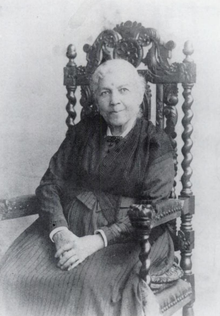
Harriet Ann Jacobs


Harriet Ann Jacobs

Jacobs in 1894
Born February 11, 1813
Edenton, North Carolina
Died March 7, 1897 (aged 84)
Washington, D.C.
Resting place Mount Auburn Cemetery
Occupation Writer, nurse and abolitionist speaker
Genre Autobiography
Subject Harriet Ann Jacobs
Notable works Incidents in the Life of a Slave Girl (1861)
Partner Samuel Sawyer
Children Joseph, Louisa


Harriet Ann Jacobs (February 11, 1813 – March 7, 1897) was an African-American writer who escaped from slavery and was later freed. She became an abolitionist speaker and reformer. Jacobs wrote an autobiographical novel, Incidents in the Life of a Slave Girl, first serialized in a newspaper and published as a book in 1861 under the pseudonym Linda Brent. It was a reworking of the genres of slave narrative and sentimental novel, and was one of the first books to address the struggle for freedom by female slaves, and to explore their struggles with sexual harassment and abuse, and their effort to protect their roles as women and mothers.

After being overshadowed by the Civil War, the novel was rediscovered in the late 20th century, when there was new interest in minority and women writers. One scholar researched the novel, identifying Harriet Jacobs as the author and documenting many events and people in her life that corresponded to this fictionalized, autobiographical account. The novel has been the subject of many academic studies, as Jacobs challenged prevailing ideas about slavery and womanhood in her work.


Reward notice issued for the return of Harriet Jacobs

Harriet Jacobs was born into slavery in Edenton, North Carolina, in 1813.[1] Her father was Elijah Knox, an enslaved biracial house carpenter owned by Andrew Knox. Elijah was said to be the son of Athena Knox, who was enslaved, and a white farmer, Henry Jacobs.[2] Harriet's mother was Delilah Horniblow, an enslaved black woman held by John Horniblow, a tavern owner. Under the principle of partus sequitur ventrem, both Harriet and her brother John were born into slavery, as their mother was enslaved. Their likely European-American paternity did not alter their status. Harriet lived with her mother until Delilah's death around 1819, when Harriet was six.[3] Then she lived with her mother's mistress, Margaret Horniblow, who taught Harriet to read, write and sew.

Boulanger Gustave Clarence Rudolphe The Slave Market


Boulanger Gustave Clarence Rudolphe The Slave Market, 1886

01.05.2014

Unterwegs mit der Frauenzunft

Von Nina Fargahi
Zum ersten Mal seit 489 Jahren ist eine Frauengesellschaft offiziell am Umzug des Zürcher Sechseläutens dabei gewesen. Davor musste die Gesellschaft zu Fraumünster (GzF) immer eine kostenpflichtige Demonstrationsbewilligung bei der Polizei einholen, weil der Frauenzug als eine eigenständige politische Demonstration gilt.
Aber dieses Jahr war einiges anders. Die Gesellschaft zur Constaffel hatte die GzF eingeladen, als Gast mitzumarschieren. Mehr noch: Als es zur Verbrennung des Bööggs kam, bot ein Constaffler ganz spontan einer Fraumünster-Frau an, mit ihnen um den Böögg zu reiten. Eine symbolische Geste der Inklusion.
Aber zurück zum Anfang: Am Montagmorgen um 9 Uhr 30 versammelten sich die Frauen der GzF vor dem Fraumünster und eröffneten mit Musik und einer Begrüssungsrede von Regula Zweifel, der Präsidentin der GzF, das Zürcher Frühlingsfest. Zweifel ist Kulturhistorikerin und war zwölf Jahre lang stellvertretende Direktorin des Zürcher Landesmuseums. Sie amtet seit sechs Jahren als Oberhaupt der GzF. Auch der Constaffelherr Thomas K. Escher fand den Weg vor das Fraumünster, um die Frauen zu begrüssen.
Danach wurde in der Kirche Emilie Lieberherrs gedacht. Die GzF ehrt jedes Jahr historische und zeitgenössische Frauen, «die Zürich geprägt haben». Einerseits geht es darum, die Frauen sichtbar zu machen. Andererseits soll an ihre Leistungen erinnert werden.
Catherine Ziegler, ein Gründungsmitglied der GzF und ehemalige Hohe Fraumünster-Frau, hielt die Laudatio auf Emilie Lieberherr. Volksnah und bodenständig sei Lieberherr gewesen, eine unermüdliche Kämpferin für Gerechtigkeit und Wegbereiterin für das Frauenstimmrecht. «Eine Grundliberale, auch wenn sie der Linken angehörte», so Ziegler.
Nach der Ehrung legten die Fraumünster-Frauen Rosen auf das Denkmal von Katharina von Zimmern. Der Ehrengast Esther Gasser Pfulg, Regierungsrätin von Obwalden, traf ein.
Nach der Ehrung von Emilie Lieberherr legten die Fraumünster-Frauen Rosen auf das Denkmal von Katharina von Zimmern.
Die Frauenzunft beim Mittagessen im Baur au Lac.

13.04.2014

Blumen und Frauen: zur Beschwichtigung


Sprachstanderhebung in der asylpolitik

Besonders wichtig ist auch der Beitrag von Sabine Gatt, der die Flüchtlingsproteste in Österreich aufnimmt. Gatt erläutert die österreichische ausschließende Asylpolitik, in der Integration als einseitiges Projekt gedacht wird, die von Flüchtlingen – und insgesamt Menschen mit Migrationshintergrund – zu erbringen sei. Nationalität werde dabei besonders über Sprache her- und Flüchtlinge als defizitär dargestellt. Auf diese Weise werde von der österreichischen Regierung die „Einführung von Sprachstanderhebungen vor Zuzug“ (S. 142) gerechtfertigt. Das auf Sprache basierende „Nationsnarrativ“ werde „durch ein Emanzipationsnarrativ“ (S. 141) ergänzt: Patriarchat würde ‚andere Kulturen‘ kennzeichnen und Bildungszwang (etwa „Sprachstanderhebungen“) zuwandernden Frauen einen Ausweg aus patriarchalischen Strukturen eröffnen. Gatt hierzu: „Über die binäre und hierarchisierende Konstruktion von eigener und fremder Kultur dient die Externalisierung des Patriarchats dazu, die eigene Kultur davon freizusprechen.“ (S. 142) Gatt arbeitet die Interessen österreichischer Politik heraus und wie sie Flüchtlinge marginalisiert und zum Schweigen bringt.