Camille Barbagallo October 31, 2015
In fact, from one point of view, we cannot unravel one female’s narrative from the other’s, cannot decipher one without tripping over the other – Hortense Spillers1
We had driven straight through from Brisbane to Sydney, a nine-hour drive with your foot flat to the floor. We were on our way to a radical student conference, it was the very late 1990s and the WTO protests in Seattle had just hit the national papers. It was a time when some of us had started to get confident in naming the problem, saying it out loud: capitalism. We arrived sweaty, tired and sort of tumbled out of the car and into the front garden of a huge run-down student house in inner Sydney. A woman I had not met before, Natasha was at the front door. Noting my then boyfriend, she spat,
“So, you’re a breeder then.”
Standing there in the harsh morning sunshine, the word breeder did the job it was intended to do: producing a connection between my nineteen year old body, its assumed capacity for biological reproduction, patriarchy and normative heterosexual sex. A little taken back, I mumbled something while looking at my feet and spent the rest of the week thinking about what breeder sex would be like.
 Conversation Piece, before a house in Monument Lane, Edgbaston (William Williams, 1780)
This essay offers a critical reflection on the history of reproduction at the intersection of slavery and capitalism in the Anglo-American context.2 In sketching this history I explore the relationship between capitalism, gender and slavery and how the invention of the two separate spheres of production and social reproduction was produced and maintained. What emerges is the highly contradictory nature of the home and family under slavery and that in some instances the household served as an important site of resistance for slave women. Exploring the complexities of the household and family structures under slavery challenges tendencies within feminist theory that assume a universal or “shared” experience of home, motherhood and the domestic sphere.
The problem of where to begin in unraveling the stories of slavery, feminism and reproduction is an interesting one. Particularly if one is not seeking to locate origins or founding moments, but is instead interested in asking how reproduction has come to be the problem that it is today. In the first instance, it is necessary to ask what is at stake in the history of reproduction, in part because the definitions and meaning of reproduction not only vary but also are often experienced in contradictory ways. The inequalities and disparities in how different racialized and gendered subjects experience the labor of making and remaking people under capitalism cannot be ignored and these gaps, silences and spaces of difference have long and complex histories. Considering the overwhelming location of reproduction is in the realm of the natural, the biological and that murky, under-theorized location of home, it is necessary to not only gesture towards what is at stake politically but to do so with the aim of “weaponizing reproduction.” The task is certainly a feminist project, one that takes seriously what it means to denaturalize reproduction, with the desire to grab hold of the problem and transform it.
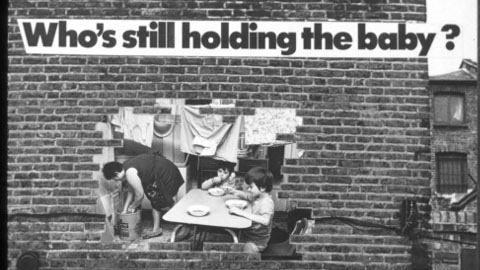
From the outset it is clear that the story of feminism and reproduction is a complex and at times contradictory one. Of the many valid and necessary critiques of second-wave feminism that have and continue to be made, the notion that the women’s movement in the 1960s and 1970s was anti-mother is certainly a persistent line of attack. It is also a criticism that has been consistently challenged by those who were active in the movement, many of who were young mothers at the time. The idea that feminists were anti-child and anti-mother can in some ways be traced to how uncomfortable the original demand in Britain for “free 24-hour nurseries” made people feel. Critics claimed that the demand signaled women’s desire for “baby dumping.” People were horrified by the supposed unnaturalness of young children being looked after by people other than their mothers at irregular times. That a demand for accessible and affordable childcare could cause such panic tells us something about the organization of gender in post-war industrial economies.
Whilst the charge that second-wave feminist were anti-mother unravels under scrutiny, the family and the post-war family in particular was certainly the object of much feminist criticism and analysis. Shelia Rowbotham writes that the women’s movement erupted “in a literature of complaint which focused on the experiences of the family – both in the sense of life in the household and with kin.”3 It was less mothers and more motherhood that feminist saw as the problem. In a pamphlet entitled Women and the Family, written by three women, each with two kids, the authors write, “our window on the world is looked through with our hands in the sink and we’ve begun to hate the sink and all it implies.”4 Rowbotham continues that it was not that “every woman suddenly became unhappy, but that significant numbers of women felt entitled to a destiny which was not simply domestic.”5Considering that in the late 1960s, nearly 55 percent women in Britain did not work outside of the home, it is unsurprising that for significant numbers of women the family and women’s domestic destiny came to be seen as one of the central sites of female oppression. For many in the movement, women’s liberation meant an escape from the home – “in the home the woman is in the family, and the two are disturbingly synonymous.”6
In fact, from one point of view, we cannot unravel one female’s narrative from the other’s, cannot decipher one without tripping over the other – Hortense Spillers1
We had driven straight through from Brisbane to Sydney, a nine-hour drive with your foot flat to the floor. We were on our way to a radical student conference, it was the very late 1990s and the WTO protests in Seattle had just hit the national papers. It was a time when some of us had started to get confident in naming the problem, saying it out loud: capitalism. We arrived sweaty, tired and sort of tumbled out of the car and into the front garden of a huge run-down student house in inner Sydney. A woman I had not met before, Natasha was at the front door. Noting my then boyfriend, she spat,
“So, you’re a breeder then.”
Standing there in the harsh morning sunshine, the word breeder did the job it was intended to do: producing a connection between my nineteen year old body, its assumed capacity for biological reproduction, patriarchy and normative heterosexual sex. A little taken back, I mumbled something while looking at my feet and spent the rest of the week thinking about what breeder sex would be like.
 Conversation Piece, before a house in Monument Lane, Edgbaston (William Williams, 1780)
This essay offers a critical reflection on the history of reproduction at the intersection of slavery and capitalism in the Anglo-American context.2 In sketching this history I explore the relationship between capitalism, gender and slavery and how the invention of the two separate spheres of production and social reproduction was produced and maintained. What emerges is the highly contradictory nature of the home and family under slavery and that in some instances the household served as an important site of resistance for slave women. Exploring the complexities of the household and family structures under slavery challenges tendencies within feminist theory that assume a universal or “shared” experience of home, motherhood and the domestic sphere.
The problem of where to begin in unraveling the stories of slavery, feminism and reproduction is an interesting one. Particularly if one is not seeking to locate origins or founding moments, but is instead interested in asking how reproduction has come to be the problem that it is today. In the first instance, it is necessary to ask what is at stake in the history of reproduction, in part because the definitions and meaning of reproduction not only vary but also are often experienced in contradictory ways. The inequalities and disparities in how different racialized and gendered subjects experience the labor of making and remaking people under capitalism cannot be ignored and these gaps, silences and spaces of difference have long and complex histories. Considering the overwhelming location of reproduction is in the realm of the natural, the biological and that murky, under-theorized location of home, it is necessary to not only gesture towards what is at stake politically but to do so with the aim of “weaponizing reproduction.” The task is certainly a feminist project, one that takes seriously what it means to denaturalize reproduction, with the desire to grab hold of the problem and transform it.
From the outset it is clear that the story of feminism and reproduction is a complex and at times contradictory one. Of the many valid and necessary critiques of second-wave feminism that have and continue to be made, the notion that the women’s movement in the 1960s and 1970s was anti-mother is certainly a persistent line of attack. It is also a criticism that has been consistently challenged by those who were active in the movement, many of who were young mothers at the time. The idea that feminists were anti-child and anti-mother can in some ways be traced to how uncomfortable the original demand in Britain for “free 24-hour nurseries” made people feel. Critics claimed that the demand signaled women’s desire for “baby dumping.” People were horrified by the supposed unnaturalness of young children being looked after by people other than their mothers at irregular times. That a demand for accessible and affordable childcare could cause such panic tells us something about the organization of gender in post-war industrial economies.
Whilst the charge that second-wave feminist were anti-mother unravels under scrutiny, the family and the post-war family in particular was certainly the object of much feminist criticism and analysis. Shelia Rowbotham writes that the women’s movement erupted “in a literature of complaint which focused on the experiences of the family – both in the sense of life in the household and with kin.”3 It was less mothers and more motherhood that feminist saw as the problem. In a pamphlet entitled Women and the Family, written by three women, each with two kids, the authors write, “our window on the world is looked through with our hands in the sink and we’ve begun to hate the sink and all it implies.”4 Rowbotham continues that it was not that “every woman suddenly became unhappy, but that significant numbers of women felt entitled to a destiny which was not simply domestic.”5Considering that in the late 1960s, nearly 55 percent women in Britain did not work outside of the home, it is unsurprising that for significant numbers of women the family and women’s domestic destiny came to be seen as one of the central sites of female oppression. For many in the movement, women’s liberation meant an escape from the home – “in the home the woman is in the family, and the two are disturbingly synonymous.”6