Posts mit dem Label widerstand werden angezeigt. Alle Posts anzeigen

29.07.2017

The Papin SIsters

Christine and Léa Papin
From Wikipedia, the free encyclopedia


Léa and Christine Papin (left to right)

Christine Papin (8 March 1905 – 18 May 1937) and Léa Papin (15 September 1911 – 1982, or 24 July 2001) were two French sisters, live-in maids, who were convicted of murdering their employer's wife and daughter in Le Mans, France, on 2 February 1933. This incident had a significant influence on French intellectuals Jean Genet, Jean-Paul Sartre and Jacques Lacan, who sought to analyze it, and it was thought of by some as symbolic of class struggle. The case has formed the basis of a number of publications, plays and films as well as essays, spoken word, songs, and artwork.
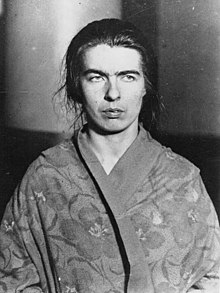


Christine Papin, stated to be the main domineering influence

Christine and Léa had grown up in villages south of Le Mans. They grew up in an alcoholic household, abused by their father and neglected by their mother. They had an older sister, Emilia, who became a nun. Both of them spent time in institutions as a result of the breakdown of their parents' marriage. As they grew older, they worked as maids in various Le Mans homes, preferring, whenever possible, to work together.

From about 1926, they worked as live-in maids in the home of Monsieur René Lancelin, a retired solicitor, in Le Mans. The family was made up of his wife and adult daughter, who was still living with her parents (another daughter was married). The two maids were extremely quiet and retiring young women, who kept to themselves and appeared to have no interests but each other.

On 2 February 1933, Monsieur Lancelin was supposed to meet his wife and daughter for dinner at the home of a friend. When they did not turn up, he was concerned and went back to their home. He was unable to get into the house because the doors were locked on the inside, but he could see the glow of a candle through the window of the maids' room. He then went to the police and one of them got into the house by climbing over the back wall. Inside, he found the bodies of Madame Lancelin and her daughter. They had both been beaten to the point of being unrecognisable, and one of the daughter's eyes was on the floor nearby. Madame Lancelin's eyes had been gouged out and were found in the folds of the scarf around her neck. The two maids were found in their room upstairs, naked[1] in bed together. They confessed to killing the two women. The weapons used had been a kitchen knife, a hammer, and a pewter pot that had stood at the top of the stairs.

27.06.2017

Werdet Schwarze Frauen*! Plädoyer für ein minoritäres Bewusstsein

Der diesjährige internationale Frauen*tag am 8. März war anders. Bestärkt durch den gigantischen Women’s March in Washington fanden globale Proteste statt, über 30 Länder haben – ausgehend von Initiativen aus Argentinien, Polen und anderen Ländern – an Frauen*streiks teilgenommen. Auch in der Schweiz gab es unzählige grössere und kleinere Aktionen: auf dem Bundesplatz in Bern versammelten sich Menschen zu einem ‚Strick-In‘, Parlamentarier_innen strickten in der Wandelhalle für Gleichstellung, in Zürich wurde die Statue des Reformators Zwingli mit einem Pussyhat zur Ober-Pussy geweiht. Musiker_innen produzierten einen Solidaritäts-Song, die Guerilla-Feminist_innen Aktivistin.ch übersäten die klischierten Spielzeugabteilungen grosser Kaufhäuser mit Protestbotschaften, und unter dem Motto "We Can’t Keep Quiet" formierte sich ein gigantisches Bündnis von Frauen*organisationen und Verbündeten.

Time, 28. Januar 2017; Quelle: time.com
Seit der Wahl von Donald Trump erfahren Frauen*bewegungen weltweit Aufwind, konstituieren sich teilweise neu, weil unzählige Frauen* und Verbündete dazu kommen und realisieren: Frauen*hass und Sexismus sind immer noch weit verbreitet. Was unsere Grossmütter erkämpft haben, ist nicht sattelfest. Und das, was noch erkämpft werden muss, erst recht nicht.
Manchmal sind diejenigen, die seit langem kämpfen, wütend: Warum wacht ihr erst jetzt auf? Wo wart ihr, als alleinerziehende Mütter in Armut versanken und Care-Arbeiterinnen ihre Rechte einforderten? Wo waren die Massen, als Black Lives Matter gegen Polizeigewalt auf die Strasse ging? Als Erdoğan in der Türkei proklamierte, die wichtigste Aufgabe der Frau sei es, Kinder zu gebären? Als in Argentinien jährlich 300 Frauen ermordet wurden? Für viele ist die Welt nicht erst seit Donald Trump unerträglich geworden. Dass es jemanden wie Donald Trump braucht, um grosse Bewegungen zu mobilisieren, ist nicht rühmlich. Gleichwohl macht es Hoffnung, dass jetzt immer mehr Menschen aktiv werden.

Warum heisst es „Women’s March?“


Widerstands-Ikone Princess Leia / Carrie Fischer; Quelle: popsugar.com
Bemerkenswert ist dabei auch, dass so viele Menschen unter dem Label 'Women' protestieren. Das ist nicht selbstverständlich. In der Tradition des 8. März zum Beispiel gab und gibt es zahlreiche Debatten und unterschiedliche Handhabungen zu der Frage, ob Männer den Protesten solidarisch fern bleiben, oder ob sie unter dem Frauen*-Dach teilnehmen sollen. Für beides gab und gibt es gute Gründe. Die aktuelle Dringlichkeit, möglichst breit gegen den reaktionären Backlash zu mobilisieren, hat das Pendel in die Richtung „all Gender“ bewegt. So auch beim bevorstehenden Women’s March am Samstag in Zürich: Marschiert wird zwar unter dem Motto „Women“, teilnehmen können und sollen aber alle. Denn die Proteste richten sich gegen multidimensionale Sexismen sowie auch gegen Rassismus, Homo- und Transphobie, Ausbeutung und soziale Ungleichheit.
Aber warum heisst es dann überhaupt noch „Women“? Bei der Lancierung des Women’s March Zürich kam es zu Diskussionen: Einige forderten, es solle "Equality March" heissen, schliesslich gehe es nicht nur um Frauen*, und man wolle nicht die Männer* abschrecken, das Label Frau* sei nicht inklusiv genug. Es zeigte sich: Wenn Männer* unter dem Frauen*-Dach mitlaufen sollen, ist das offenbar eine Kröte, die viele nicht so leicht schlucken. Dass sie unter "Women*" mitgemeint sind, stösst auf. Schnell geht dabei allerdings vergessen, dass Frauen* und viele andere sich Jahrhunderte lang unter dem Dach "weisser Mann" versammeln mussten. In der so genannten ‚westlichen Welt’ wurde der bürgerliche Mann im Zuge der Moderne zum Standard, von dessen Zentralperspektive aus das Weibliche als anders, als Abweichung und nicht zuletzt Makel markiert war (siehe zum Beispiel die freudsche Vorstellung, die Frau sei durch den Penis-Mangel bestimmt).
Genau genommen bedeutet das: In der Kulturgeschichte der europäischen Moderne existiert das Weibliche für sich genommen nicht, sondern nur im Verhältnis zum Mann (Irigaray). Das rassistische Patriarchat produzierte sich ‚seine Frauen‘ (die ‚gute Mutter‘, züchtige Ehefrau, Heilige oder Hure), deren Funktion die Begründung des Männlichen als Norm war. Aber auch Kategorien wie schwarz, proletarisch, irrational und vieles mehr fingierten als das inferiore "Andere" gegenüber dem weissen, vernünftigen männlichen Subjekt.
Natürlich ist es nicht das Ziel, diese Mechanismen umzukehren. Der phallozentrischen Ordnung kann keine Herrschaft der Frauen* folgen, keine neue Hierarchie. Gleichwohl scheint mir Women’s March eine sinnvolle Bezeichnung, unter dem Frauen*-Dach lässt sich durchaus für eine Welt einstehen, die Freiheit für alle, nicht für wenige ermöglichen soll.

Frau* ist keine feststehende Kategorie

Jedenfalls dann, wenn wir uns auf einen Frauen*-Begriffe verständigen, wie er in vielfältigen Debatten der letzten Jahrzehnte entwickelt wurde: Differenzfeministische, queer-theoretische und postkoloniale Ansätze haben Frau* als einheitliche Kategorie oder Identität zunehmend infrage gestellt. Es wurde deutlich: Frau*sein bedeutet extrem unterschiedliche Dinge, unterschiedliche Erfahrungen und Kontexte. Es kann nicht festgelegt werden, wer oder was Frauen* sind. Wer das festlegen will, bewegt sich in der vorherrschenden patriarchalen Logik, einer Logik, die Kategorien bildet und dadurch wiederum normiert, ausschliesst und hierarchisiert.
Es wurde deshalb vorgeschlagen, Frau* nicht als biologische, nicht als feste Identität, sondern als eine gesellschaftliche und mithin politische Kategorie zu begreifen (genau darauf soll übrigens auch das Sternchen verweisen). Plädiert wurde für einen utopischen Begriff Frau*, der gerade nicht wie im bisherigen Männersystem funktioniert, das heisst keine Kategorie definiert. Frau* sollte vielmehr eine Sehnsucht nach etwas radikal anderem ausdrücken, den Entschluss, die phallozentrische, rassistische, hetero-sexistische Ordnung zu verlassen, sich den vorherrschenden Massstäben zu entziehen.

Tejal Shah: "Between the Waves", Collage, Quelle: catch-fire.com
Entsprechend wurde Frau* nicht mehr als Identität gedacht, sondern als eine Aktivität, ein Prozess, der unterschiedlich ausgefüllt werden kann. Deleuze/Guattari (1972), Luce Irigaray (1974) und andere schlugen bereits in den 1970er Jahren vor, Frau* nicht als ein Zustand, sondern als Werden zu denken, als eine Bewegung hin zu etwas, das erst erfunden werden muss. Etwas, das kontinuierlich im Begriff des Entstehens ist, und niemals abgeschlossen. Frau* wurde zu einem Marker für die Bestrebung, das System von festen und zwangsläufig herrschaftlichen Kategorien zu verlassen und zu unterwandern.
Rosi Braidotti (2006) und andere schlugen vor, die symbolische Inexistenz der Frau* als ein politisches Potential zu nutzen: Während die Bestimmung des Mannes als Massstab extrem begrenzend ist, verkörpert das Minorisierte eine relative Offenheit. Es kann nicht zum Massstab werden, an dem der Rest der Welt bewertet wird. Deleuze und Guattari riefen deshalb zum Minoritär-Werden auf, zum "Frau-Werden, Schwarz-Werden, Tier-Werden": „Becoming woman is the basis of a total critique“.
Das Minorisierte eröffnet einen Raum für politischen Widerstand, gerade weil es nicht feststeht. „Frau-Werden, Tier-Werden, Schwarz-Werden“ ist eine politische Aktivität, die der vorherrschenden binären Ordnung zu entfliehen versucht – ohne schon zu wissen, was das Minoritäre genau ist. „‚Becoming minoritarian‘ is the code name for overturning the logic that legitimates a central norm through hierarchically organized binary oppositions“ (Braidotti 2006).

15.02.2017

Love’s Labour’s Cost: The Political Economy of Intimacy

By Emma Dowling / 13 February 2016
On Valentine's Day, Emma Dowling makes a powerful case for thinking about the structure of social relationships rather than simply 'the one'. Her excavation of the political economy of intimacy analyses how the ideology of work has penetrated the affective registers of our social lives, while at the same time, we are paying for capitalism's crisis as financialisation and austerity attack our structures of social reproduction. Drawing on feminist critiques of women's unwaged housework, Dowling assesses the uneven and gendered distribution of emotional labour today. Love's work, therefore, must be challenged and transformed: as our material precarity increases, rejecting precariousness in our love relations would be a start in building affective resistance and with that, other possible worlds of love and care.


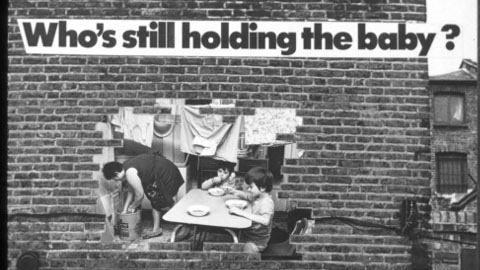
- Hackney Flashers, Who's still holding the baby?, 1978

They say it is love. We say it is unwaged work.

They call it frigidity. We call it absenteeism.

Every miscarriage is a work accident.

So reads a feminist pamphlet calling for Wages for Housework written by Silvia Federici in 1975. “We are all housewives because no matter where we are they can always count on more work from us, more fear on our side to put forward our demands, and less pressure on them for money, since hopefully our minds are directed elsewhere, to that man in our present or our future who will ‘take care of us.’”

Taking care in order to be taken care of. That was the deal of heteronormative love. Underpinning the romantic ideal was the domestic contract between the two parties of the heterosexual couple. Each partner entered into the relationship on the basis of a gendered agreement, a reproductive deal: she would cook, clean, have sex, bear children and care for him, while he was to pay the bills and fulfil his role as care-taker – then he could expect to be taken care of. Since the sexual revolution and tide of social change in the 1960s, feminist and queer struggles challenged the inequality and desirability of this set-up – that women’s housework was seen as the ‘labour of love’ undeserving of remuneration, whereas men’s work outside the home, brought both social agency and power in the home thanks to his wage.

The neoliberal restructuring of the state and the economy alongside the rise of the service industry and the entry of large numbers of women into (often low-)paid work have macerated this reproductive deal. If in a sense the nuclear family arrangement has crashed, it hasn’t so much been undone as it has been fragmented into its constituent parts, with the roles outsourced to different paid and unpaid assistive workers. Migrant cleaners, nannies and au-pairs, sex workers and psychotherapists shatter the middle-class myth of the self-sufficient couple. And it is still women who are doing much of this kind of work. Women, Arlie Hochschild wrote in The Managed Heart in 1984, have been taught to have an instrumentalised relationship to their feelings. It is these abilities that are easily put to work – and nowhere more than in the political economy of intimacy.

08.03.2016

Kindstötung in der Sklaverei

Colonial-era fictional and non-fictional descriptions of slave motherhood offer conflicting accounts of the attitudes of slave mothers toward their children. While abolitionists tended to portray slave mothers as wholly selfless, doting, and maternal, pro- writers described slave mothers as negligent and cruel. The debate over the nature of slave motherhood was especially relevant to the Caribbean, where brutal working conditions, disease, and malnutrition impeded slave reproduction. Plantation owners blamed slave women for their failure to reproduce, accusing them of practicing birth control and procuring abortions. In some cases, planters accused slave women of committing infanticide.
It is difficult to ascertain just how often the latter occurred. There is certainly evidence to suggest that Caribbean planters’ allegations of slave women killing their infants were exaggerated.1 On the other hand, “the infant mortality rate from natural causes was undoubtedly high in the Caribbean, but the unusually high death rate within the first week, not satisfactorily explained as caused by tetanus, may signify that women used preparations which effected apparently natural death.”2 One of the more famous stories of slave infanticide in the Caribbean is that of Sabina Park, a Jamaican slave who was brought to trial for killing her young child. Park claimed that she “had worked enough for buckra (master) already and that she would not be plagued to raise the child… to work for white people.”3
The obvious response to slave infanticide is to conceptualize it as an act of desperation, a sad act, or an act of altruism, in the sense that it was intended to save enslaved children from a life of hard labor, degradation, and physical, sexual, and mental abuse.

But what if slave infanticide, in all its horror, was an expression of resistance? To conceptualize it this way places agency back in the hands of the slave women who killed their children, because it assumes that their decision was actively, discursively antagonistic and insurrectionary.
Reactions to slave infanticide varied according to one’s beliefs about the nature of slaves and the justice of slaveholding. According to Christopher Peterson, “for racist ideologues, slave infanticide is further proof of an animality inherent in black motherhood: a propensity to from which white motherhood is exempt. For abolitionists, [it] emerges both as proof of slavery’s evils and of a mother’s love for her children.”4 Indeed, in keeping with the viewpoint Peterson attributes to abolitionists, the obvious response to slave infanticide is to conceptualize it as an act of desperation, a sad act (which it certainly was), or an act of altruism—altruism in the sense that it was intended to save enslaved children from a life of hard labor, degradation, and physical, sexual, and mental abuse. But what if slave infanticide, in all its horror, was an expression of resistance? To conceptualize it this way places agency back in the hands of the slave women who killed their children, because it assumes that their decision was actively, discursively antagonistic and insurrectionary.
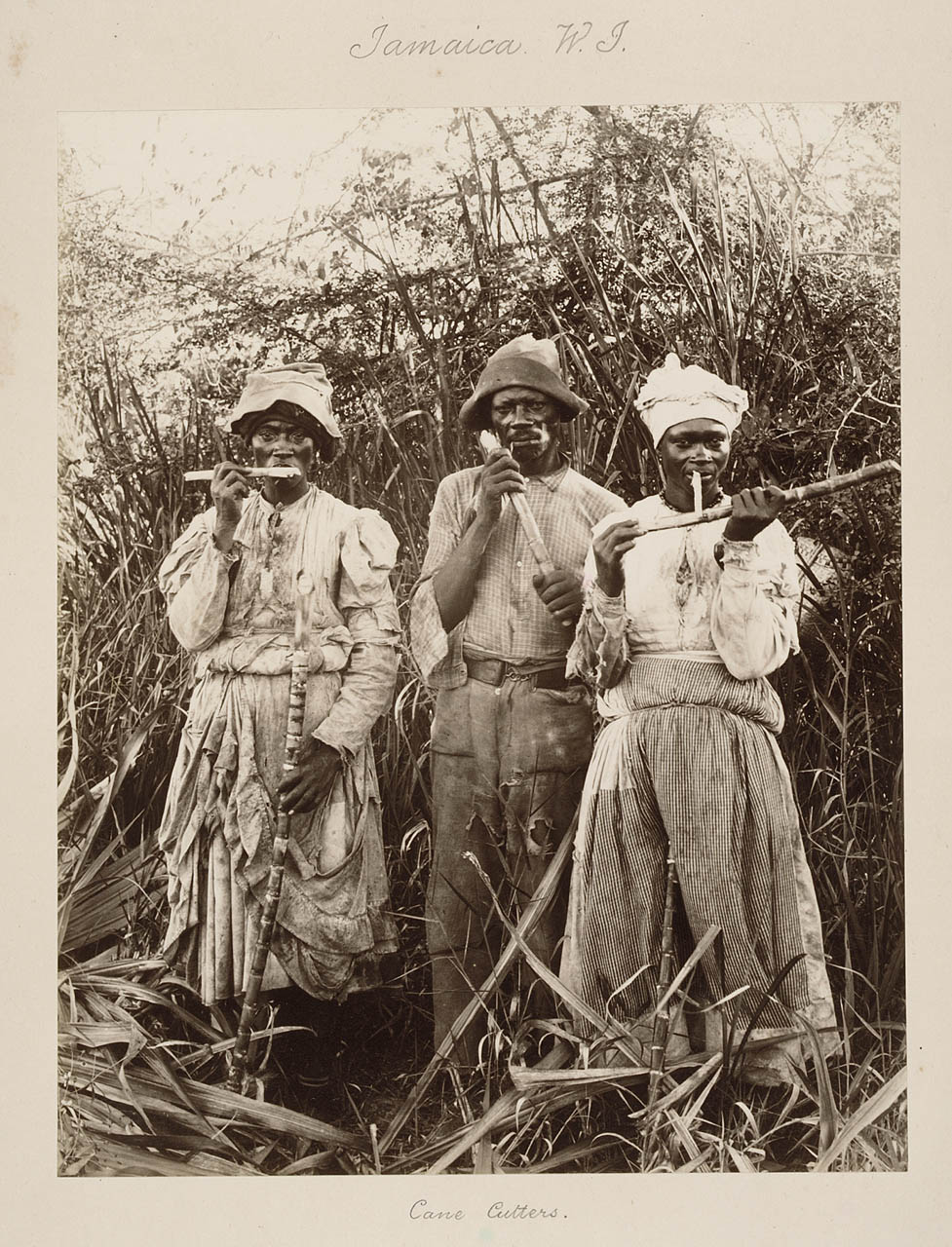
Cane cutters in Jamaica
An image depicting cane cutters in Jamaica after formal slavery was ended, mid-19th century. More than half of the slaves in the region were female.
The extremely grave nature of this subject matter merits an unusually high degree of respect and sensitivity in one’s approach to it. History is not a neutral discipline. Considering infanticide as a form of resistance is important in telling the story of Caribbean slave women as full people, as rational actors who made calculated decisions with rebellion in mind. Drawing on colonial-era accounts of slave motherhood, resistance theory, and recent work on the sociology of slavery, the central aim of this paper is to explore the equation of infanticide with resistance, with a geographical focus on the colonies of Jamaica, Barbados, and Saint-Domingue.5 All of the historical sources cited are from the mid-eighteenth century to 1834, when Britain abolished slavery in its colonies. Sources pertaining to Saint-Domingue are from prior to the slave rebellion of 1791 that culminated in the abolition of slavery in the colony.
Considering infanticide as a form of resistance is important in telling the story of Caribbean slave women as full people, as rational actors who made calculated decisions with rebellion in mind.
Extant accounts of Caribbean slave life are rife with racist assumptions about the supposed negligence and selfishness of black mothers. For example, many plantation owners accused slave women of procuring abortions with the intention of continuing to have promiscuous sex, unhindered by pregnancy.6 White observers such as plantation owners, overseers, and doctors believed that slave women’s alleged promiscuity made them especially prone to venereal disease. They often blamed slave miscarriages on the medicines slave women took (or supposedly took) to treat venereal disease.7 The logical implication of this belief was that if slave women were not so sexually indiscriminate, they would not need to take miscarriage-inducing medicines. Indeed, plantation owners found it more convenient to blame slave women for their failure to produce healthy offspring than to accept responsibility for the deplorable conditions that undoubtedly contributed to complications in pregnancy and childbirth. Physicians in Saint-Domingue accused slave mothers of causing mal de mâchoir (or ‘soreness of the jaw,’ cases of which have been retrospectively diagnosed as tetanus and neonatal tetany) among infants.8 This, of course, functioned to bolster the claim that enslaved women were neglectful, evil, unfit mothers.9 According to the French author of a 1790 pro-slavery pamphlet, they “destroy their own fruit, or they practice infanticide in order to live without moderation.”10
These derogatory cultural images of enslaved mothers are relevant to the analysis of slave infanticide because they colored white people’s perception of slaves’ reproductive habits. It was a difficult task, determining if a documented infanticide case was valid, and not a natural death caused by poor living conditions. As result, there is no clear consensus among historians on the issue. In 1796, a slave named Mary Thomas of the Newton Estate in Barbados was accused of killing her newborn infant. Historian Hilary McD. Beckles describes the event by restating Wood’s claim that Mary Thomas killed her infant out of anger at her white lover, the plantation bookkeeper.11 Beckles does not question Woods in this paraphrased account. Conversely, in her summary of the Mary Thomas case, historian Tara A. Inniss casts doubt on Wood’s accusation of infanticide, adding, “Enslaved midwives were easy targets for blame should the child succumb to illness or sudden death in the first days of life.”12 Inniss and Beckles’ differing interpretations of Wood’s account demonstrate the challenge of discerning fact from fiction in records of infanticide. It is almost impossible to tell if Mary Thomas was in fact guilty of killing her infant.
Jamaican cane cutters, mid 1800s after emancipation
Even those who believe that slave infanticide was common admit that this supposition is based on some speculation. In the words of Barbara Bush, who has written extensively on gender and slavery in the Caribbean, studying Caribbean slave infanticide requires “informed speculation and creative approaches in history.” 13 A perfect example of such a speculative, creative approach lies in James A. Delle’s analysis of birth and death records of the Radnor Plantation in Jamaica. Records from the years of 1822-1825 list eight infant deaths for which the cause of death is unnoted. Delle speculates that some of these were infanticides.14 Bush is one of the more vocal proponents of the argument that slave women frequently practiced infanticide. In an articled titled “Hard Labour: Women, Childbirth and Resistance in British Caribbean Slave Societies,” she notes that Caribbean populations grew significantly after emancipation, even though the standard of living hardly improved in most places. To her, this indicates that the “nature of slavery and the responses of slave women to their bondage must also be considered.”15 Bush notes that slave infanticide occurred in the antebellum United States, where slaves lived under generally better conditions than in the Caribbean. Thus, it was probably also practiced in the Caribbean.16 This statement is supported by the fact that, in general, Caribbean slave populations were more successful than those in the United States in preserving parts of West African cultural traditions. In many traditional West African cultures, newborn babies are not considered fully human until eight days after birth.17 According to Bush, the possibility that slave women committed infanticide through “letting” their young infants die (as opposed to violently killing them) is likely.18

slaves representations


http://scholar.library.miami.edu/slaves/representations/Individual_art_essays/carolines.htm

schiebinger - abtreibungspflanze

14.01.2016

Plantation uprisings / Judges, Masters, Diviners: Slaves’ Experience of Criminal Justice in Colonial Suriname

Chapter 14: To rise or not to rise.


The opportunities for a large-scale slave revolt.

A casual observer of the 18th century Surinam slavery system might have predicted a development akin to that in Saint-Domingue. All the conditions for a large-scale rebellion by the black population seemed to be present in optima forma. Eugene Genovese has outlined the circumstances leading to a higher probability of slave revolt:
(1) The master-slave relationship had developed in the context of absenteeism and depersonalization as well as greater cultural estrangement of whites and blacks;
(2) economic distress and famine occurred;
(3) slaveholding units approached the average size of one hundred to two hundred slaves, as in the sugar colonies, rather than twenty or so, as in the Old South;
(4) the ruling class frequently split either in warfare between slaveholding countries or in bitter struggles within the slaveholding country;
(5) blacks heavily outnumbered whites;
(6) African born slaves outnumbered those born into American slavery (Creoles);
(7) the social structure of the slaveholding regime permitted the emergence of autonomous black leadership;
(8) the geographical, social and political environment provided terrain and opportunity for the formation of colonies of runaway slaves strong enough to threaten the plantation regime.”
It seems at first sight that the situation in Surinam fitted this model rather well.

Absenteism and cultural estrangement.

Absenteeism was rampant in Surinam. Apart from the earliest period, few Surinam planters lived on their estates. They preferred to reside in Paramaribo and in many instances, it took them days to reach their plantations by boat. Consequently, they were only dimly aware what went on there most of the time. The majority did not seem to be very interested anyway. They were driven by an animus revertendi, a desire to return to their homeland with their fortune made. In many instances, their eagerness for maximum profit overrode any humanitarian concerns they might have had. As the saying goes in Holland: what one does not know does not hurt. The Surinam plantation owners preferred not to know. After the Amsterdam stock-exchange crisis of 1773, the situation worsened. Many of the new plantation owners were Dutch investors, who had little knowledge of agriculture and who only tried to recoup their losses as much as possible. They gave free reign to callous administrators and directors. The latter, in the 17th and 18th centuries especially, were mostly recruited from the lower rungs of white society, in particular from the ranks of former soldiers and sailors. Accustomed to harsh discipline themselves and obliged to deliver a maximum crop by their patrons, they were not unduly bothered by altruistic feelings either. So, Surinam exhibited the classic features of too much absenteeism.

Just as important was the fact that masters and slaves had totally different cultures, with only limited influence on each other. This was partly the result of the fact that the bondsmen formed a large numerical majority and spent most of their time with little or no white supervision. However, it was also partly the result of a deliberate policy of the whites. Being such a tiny minority, they were in danger to be swallowed up by their subjects: biologically through miscegenation and culturally through ‘negroization’. Therefore, they strove to keep people of color apart from white society and to keep some cultural accomplishments exclusively their own, in particular those with a ‘boundary defining character’ (like language and religion). The whites jealously guarded these: they did not want their slaves to speak Dutch, or to become Christian. In later times, they relented a bit and saw some advantage in converting slaves to Christianity, but by then it did not matter anymore.

Economic distress.

Surinam has shown the characteristics of a volksplanting only for a very limited period. By the time slavery became entrenched, it was already clear that Surinam would be an exploitation colony par excellence, geared to produce commodities for the world market and largely oblivious to the needs of its own population. One result of this attitude was the fact that production for the home market was often neglected. This was the case with timber, for example: Surinam had an abundance of high quality wood, but people were often forced to import timber from the United States to build their houses. It was even more apparent in the production of food. All through the slavery era, there were plantations that specialized in the cultivation of victuals, but most of their products went to Paramaribo and they never produced sufficient quantities anyway. Especially during the early period, the lowland planters preferred to put all their energy into the cultivation of cash crops, hoping that they would be able to buy the foodstuffs they needed for their slaves at home or abroad. Often this was indeed possible, but when droughts, floods, or other calamities resulted in a particularly meager crop, the slaves went hungry. Some planters were even forced to let them fend for themselves in the forest. In the 18th century, the situation improved somewhat because the coffee grounds often produced more plantains than they had use for, but even then, many planters could buy only a minimal amount of food –just enough to keep their slaves from running away or being unable to work. The ‘frugality’ of the planters was even more visible in the distributions of ‘luxuries’ as meat, fish, salt, tobacco and clothes. These always had to be imported, which drove up the prices, and they were often unavailable when the trade routes were cut off during one of the many wars that plagued the Caribbean during this period. However, it was not only stinginess that withheld food and clothing from the slaves: in later times, many plantations fared so badly that they could hardly afford the barest necessities.

In the eyes of many people, even the inhabitants, 18th century Surinam was the epitome of a prosperous plantation colony. In the early part of the century, when the prices of the commodities it produced were high, this was indeed the reality. Money poured in and the planters were quick to spend it in the most conspicuous manner possible. The apparent prosperity made the planters eligible for ample credits and generous loans and this enabled them to maintain a high level of consumption a few decades longer. However, during the latter part of the 18th century, Surinam lived far above its station. The conditions for plantation agriculture were not exactly ideal. Land was plentiful, but land suitable for plantations was not and it had to be prepared by a costly procedure. Slaves were hard to come by and the fact that Surinam was located outside the main trade routes made them very expensive. As a result, the production costs compared unfavorably with those in other parts of the Caribbean, especially the French colony Saint-Domingue and (in later times) the Spanish colony Cuba. Fortunately, the Dutch market could absorb all of Surinam’s production (in fact much more).

In the 19th century, the number of plantations fell drastically and the remaining ones barely survived by a process of shifting to sugar, modernization of the production and much subsidy (mostly by hapless stockholders, who wasted the chance to invest their money more productively in the Netherlands). What it boils down to, is that Surinam has been a genuinely prosperous colony only during a few decades: it merely managed to give that impression a while longer because of high prices in the developing world market and the misuse of credit that was never paid back. Economically speaking, the situation of most Surinam plantations for most of the time was precarious and only in favorable circumstances the slaves were not victimized by this.


A predominance of large plantations.

During most of the slavery era, sugar plantations formed the majority of Surinam estates. They were condemned to a certain minimum size to make it possible to exploit an expensive sugar mill profitably. In the early period, when most of these mills were simple, animal-driven constructions, Surinam plantations could be small: a force of 10 to 20 slaves was not unusual. However, when water mills (and in later days steam mills) came in vogue, the production capacity increased and additional slaves were needed. Plantations with more than a hundred bondsmen became the norm in the 18th century. Even the coffee grounds, though much more flexible in the number of hands they employed, were comparatively large. In other plantation colonies, they were often relegated to marginal lands, but in Surinam, they took up some of the most fertile grounds, especially in the Commewijne district. Their overall size was somewhat smaller than that of sugar plantations, but they had more land under permanent cultivation. In the United States, planters owning more than 100 slaves tended to split up their holdings into several independent units, because it made supervision easier and the cotton plantations that predominated there hardly profited from the economies of scale. In Surinam, on the other hand, the few plantations specializing in cotton belonged to the largest in the colony.

While the coffee grounds lost terrain in the latter part of the slavery era, the remaining sugar estates grew in size steadily through a process of concentration: many 19th century estates boasted 200 to 400 slaves. Although this did not facilitate close supervision (which had never been a prime concern for many Surinam planters anyway), it made technological innovation -on a modest scale- possible. For the slaves, this process of concentration held little promise and they often protested the fusion of slave forces vehemently. With regard to the United States, it has often been maintained that the treatment of slaves was much better on small units than on larger ones. In Surinam, size seems to have made little difference. The slaves on large plantations were in some ways better off: they had less supervision and fewer problems to recruit the personnel for a large-scale rebellion.

11.10.2015

Review: The Many-Headed Hydra

An article from Do or Die Issue 10. In the paper edition, this article appears on page(s) 322-329.

Review: The Many-Headed Hydra

The Many-Headed Hydra:Sailors, Slaves, Commoners and the Hidden History of the Revolutionary Atlantic
By Peter Linebaugh and Marcus Rediker (Verso, 2000)
Hardback/433pp/£19/ISBN 1 85984 798 6
"Who are the oppressors but the Nobility and Gentry; and who are oppressed, if not the Yeoman, the Farmer, the Tradesman and the Labourer? ... your slavery is their liberty, your poverty is their prosperity; yea, in brief, your honouring of them, dishonoureth the commonality... Unlord those that are lorded by you."
- Ranter Laurence Clarkson, 1647 (p. 81)
The Many-Headed Hydra is a long awaited (almost 20 years in the making) tour-de-force of radical history from below. Avoiding the usual categories that constrain history within the limits of the nation state, the authors take an internationalist approach in order to study the way people have fought against these categories and have tried to escape from and resist states by moving across borders and organising across races.
Nowadays when globalisation is the buzzword most used to understand capitalism, it is worth remembering that capitalism has always been global. Linebaugh and Rediker make this point by referring to the Virginia Company - the origin of English imperialism - as a "new world-trade organization". (p. 15) This book is about the origins of capitalism in the first wave of globalisation in the 17th and 18th centuries and about the resistance that it encountered. At school we are taught about the great era of exploration and discovery - we are not taught about the slavery, genocide, and exploitation that it entailed, nor about the mutinies, slave revolts and runaway maroon communities of ex-slaves that resisted it.
The authors' contention is that the 'discovery' of the Americas signalled a new stage in human history. It kick-started capitalism, launched global maritime trade, created the biggest movement of peoples in history and transformed the world. They take this as their starting point and focus on the resistance to this new globalisation. They then follow the thread of this resistance and the twists and turns it makes up to the point which normal 'labour history' tends to take as its starting point.
Thus The Many-Headed Hydra is a book of Atlantic history - about the three-way traffic between Africa, America and Europe. Everyone is familiar with the famous triangular slave trade which built the fortunes of Bristol, Liverpool, Glasgow and London. But it is inevitable that not only slaves, sugar and tobacco travelled on the ships. News travelled too - underground news of slave revolts, of revolutions in Haiti, France and America; new ideas and new tactics. People travelled too - radicals who had stirred up trouble in England were transported overseas and spread their ideas, while travellers who had seen in the indigenous peoples of the Americas that a free life in harmony with nature was possible, brought their ideas back to Europe.
Linebaugh and Rediker use a few particular episodes and a few individual people to draw out a series of themes that permeate the whole book. They do this successively, using one telling episode to make a wide range of points. And they find a series of metaphors that recur throughout the historical period they're looking at. Chief among these is the myth of Hercules and the hydra, which was continually used by ruling class propagandists as a way of explaining the difficulty of their task of forging an empire. One of the twelve labours of Hercules was to slay the monstrous hydra, a snake-like beast with many heads. Every time he cut one off, another two grew in its place. He eventually killed it by using fire to seal the severed stumps, thus preventing the heads from regrowing. The Anglo-American ruling class saw themselves as Hercules trying to discipline rebellious subjects that would simply re-appear in new and more threatening forms every time they seemed to have conquered them. The building of empire was a 'Herculean' task and at every turn they were confronted by new manifestations of their amorphous enemy - pirates, rebellious slaves, independent women, religious radicals, 'war-like' tribal peoples... "the rabble", which "like a Monstrous Hydra" would "hiss against their Soveraigns Regal Power and Authority." (p. 29)

Enclosure

The history of the ruling-class Hercules' struggle with the hydra of resistance is driven by four central themes that determine the whole period covered in the book: enclosure, terror, co-operation and resistance, and the struggle for alternative ways of life.
The central thing that governs it all is enclosure or expropriation. It is the enclosure of common lands in England, beginning slowly in the late Middle Ages and then rapidly speeding up through to the mid-18th century that provides the essential historical basis for capitalism. To get the poor to work, you had to take away their land. Once the land was denied to the people, they had no choice but to work, making money for the owners of the plantations, ships and workshops. Huge numbers of displaced people were redeployed overseas to populate the colonies. The main argument advanced by the propagandists of English colonialism was that colonisation would provide a way for England to rid itself of the "swarmes of idle persons" enclosure had produced. (p. 16) The separation of the people from the land in England was mirrored overseas as the Irish were dispossessed, Africans enslaved and Native Americans displaced.
May Day 1640: At the outbreak of the English Revolution, 'prentices and seamen break open the prisons and storm the Archbishop of Canterbury's house in Lambeth.
Enclosure and the vast changes that were taking place in society (the beginnings of industrial exploitation, a huge military mobilisation) prompted massive and gloriously-named rebellions across the country as handicraft workers and peasants sought to preserve their old ways of life: the Beggars' Christmas Riot of 1582, the Plaisterers' Insurrection of 1586, the Felt-Makers' Riot of 1591, the Southwark Candle-Makers' Riot of 1592. Those who resisted enclosure, tearing down the fences and filling in the ditches were for the first time called Levellers.

Terror

This resistance to enclosure naturally imsplied a response: terror was used to make possible the basic conditions for capitalist development. At home, in the colonies and at sea, gruesome punishments were enacted to keep the poor at their work, prevent the spread of radical ideas and prevent colonists running off to join the enemy.
Transportation to the colonies was a punishment and one which not only kept the poor in their place but also profited the state, rather than costing it anything. The conquered Irish, as well as Gypsies and Africans were forcibly deported out of England. Thousands upon thousands of those found guilty of even minor crimes were transported to the colonies. In a sermon of 1622, John Donne promised that the Virginia Company would "sweep your streets, and wash your dores, from idle persons, and the children of idle persons, and imploy them: and truely, if the whole Countrey were such a Bridewell [prison], to force idle persons to work, it had a good use." (p. 59) As the authors point out, the propagandists and planners of colonisation wanted America to function as a prison.
However, it was not a prison from which escape was impossible. English soldiers and settlers in the new plantations in Ireland would regularly run away to join the Irish. And in the New World, settlers in England's Virginia colony refused to work, mutinied and "did Runne Away unto the Indyans". In 1611 some of these renegades were recaptured. Sir Thomas Dale, the governor of the colony "in A moste severe mannor caused [them] to be executed... Some he apointed to be hanged Some burned Some to be broken upon wheles, others to be staked and some to be shott to death." The purpose of this was "to terrefy the rest for Attemptinge the Lyke." (p. 34)

10.05.2014

The application of Guerrilla Warfare in Jamaican maroon communities

This post comes from a History and Anthropology student at the University of Birmingham.

Maroon communities, prevalent in the United States, South America and Jamaica, were formed of black slaves who had managed to escape their white owners and build different lives for themselves, whilst continuing to combat the plantocracy system; also known as a ‘slavocracy’, whereby society is ruled by a dominant class of plantation owners. The focus of this essay will lie with the maroons of Jamaica, as they are considered to be the slave society with the greatest number of revolts and successes. The study of maroon guerrilla warfare is vital when attempting to identify their most salient characteristics. To gain a thorough insight into the emergence of and nature of these communities, their offensive and defensive tactics will need closer investigation, as will their Spanish historical links, African collaboration and Patterson’s formula for slave revolts.
With the English colonial takeover of Jamaica in 1655, the Spanish left behind some of their black slaves, who are believed to be the earliest Jamaican maroons and existed in the interior mountains of the island. As a result of maroon settlements tending to cluster in inaccessible, mountainous areas, the English found tracking them extremely difficult . Jamaica had the biggest economy in the West Indies with a regular influx of new slaves and a low degree of ‘creolisation’  leading to a high frequency of slave rebellions and escapees who were able to join the already existing maroons. The historical background of the maroons in Jamaica offered slaves hope of freedom and the possibility of accommodation among those communities if they were going to risk escape. Whilst rebellions and escapes were largely the cause for great increases in maroon numbers, slaves were also captured by maroons during plantation raids . Also, slaves or free blacks sent to fight the maroons sometimes defected; this was of great military value to the maroons as these defected slaves often had arms, as well as knowledge of the plantocracy’s plans . These factors, coupled with the atrocious conditions experienced by the slaves, provide an explanation as to why maroon communities emerged and grew in numbers in the seventeenth and eighteenth century.
The maroons of Jamaica can be divided into two factions; those situated in the west came to be known as the Windwards and those in the east the Leewards.