Posts mit dem Label Sklaverei werden angezeigt. Alle Posts anzeigen

29.01.2018

Nederland was voor even de grootste slavenhandelaar ter wereld


De Gouden Eeuw staat bekend als dé bloeiperiode uit de geschiedenis. Minder bekend is dat Nederland toen ook een grote ronselaar van werkkrachten voor Braziliaanse plantages was. Sterker nog: een tijdlang was het ’s werelds grootste handelaar in slaafgemaakten.


Karwan Fatah-Black
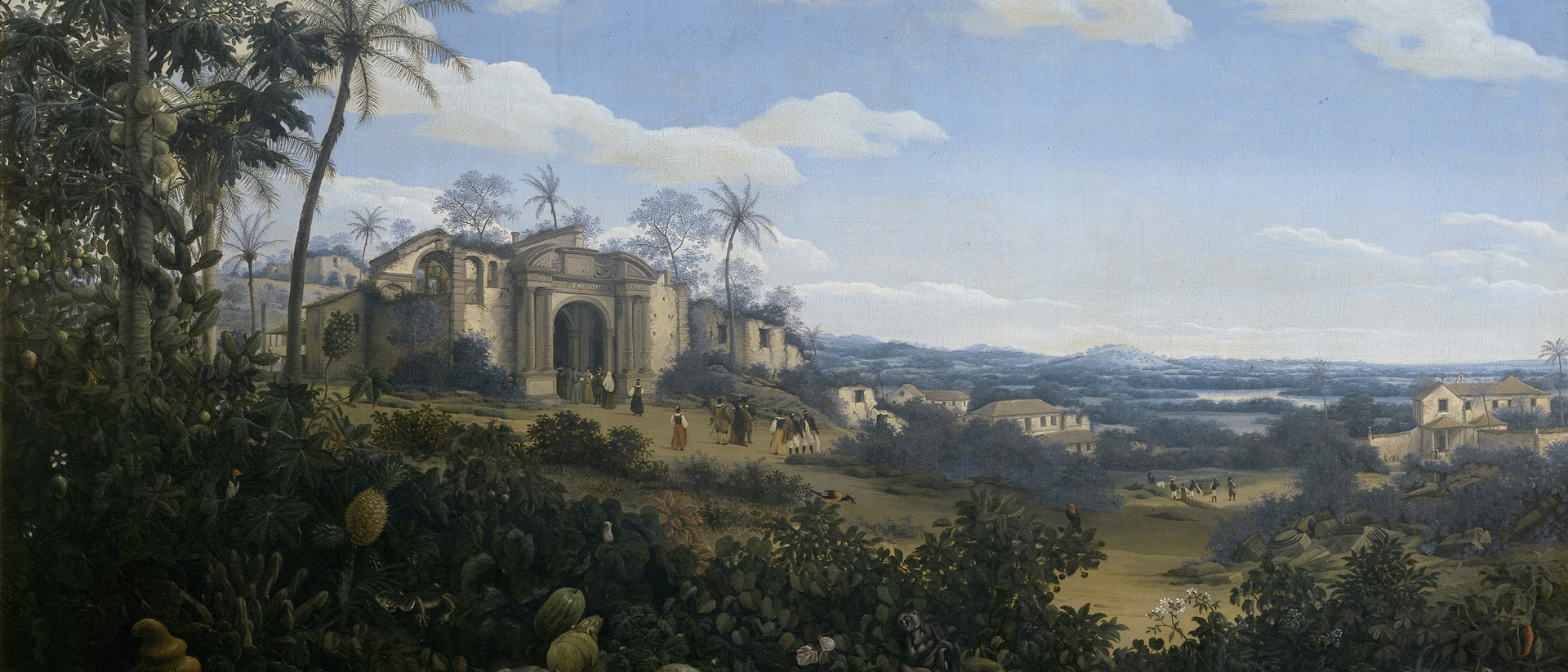

'View of Olinda' door de Haarlemse schilder Frans Post in opdracht van militair Johan Maurits, graaf van Nassau-Siegen, 1662.

De Gouden Eeuw staat bekend als dé bloeiperiode van Nederland. Maar wist je dat de Republiek der Verenigde Nederlanden De Republiek der Verenigde Nederlanden was tussen 1588 en 1795 een statenbond met trekken van een defensieverbond en een douane-unie. Ze besloeg grotendeels het grondgebied van het huidige Nederland. Wikipedia Republiek der Zeven Verenigde Nederlanden in grofweg diezelfde periode verantwoordelijk was voor 5 procent van alle handel in slaafgemaakten naar de Amerika’s?

Sterker nog: wist je dat Nederland tussen 1650 en 1675 de grootste handelaar in slaafgemaakten tussen West-Afrika en Zuid-Amerikaanse plantages was?


Tegenwoordig herinneren we ons in Nederland de zeventiende eeuw maar zelden als een periode van koloniale expansie. De aandacht gaat liever uit naar schilders, bestuurders en enkele zeehelden.

Als we het wel over de trans-Atlantische slavernij hebben, vertellen we onszelf graag dat Nederland hooguit de grootste van de kleintjes was, in een misdaad waarin iedereen deelde. De Britten, Fransen, Spanjaarden en niet te vergeten de tussenhandelaren en koninkrijken op de West-Afrikaanse kust speelden een veel grotere rol.

Dat verhaal is misschien geruststellend. Er is niets uniek gewelddadigs of racistisch aan wat onze voorgangers overzee uitspookten, denk je dan.

Internationaal denken historici daar toch een beetje anders over. De Nederlanders van de Gouden Eeuw waren niet alleen gewiekste tussenhandelaren, maar ze waren ook ontzagwekkend efficiënt als het ging om het organiseren van geweld overzee en het ronselen van (al dan niet vrije) werkkrachten. Historici spreken daarom zowel van een ‘Dutch primacy in world trade’ als van een ‘Dutch moment’ in de geschiedenis van het Atlantisch gebied. En dat zijn geen complimenten.

De verovering van overzeese gebieden in het Atlantisch gebied was een fundamenteel onderdeel van de internationale politiek van de Republiek. Het ‘Dutch moment’ was er een van handel, geweld en van slavernij. En doordat de West-Indische Compagnie (WIC) zich inliet met het verschepen van slaafgemaakten van West-Afrika naar plantages in ‘Brasiel,’ heeft Nederland een grote rol gespeeld in de vorming van wat nu Brazilië heet.


Braziliaans landschap met een arbeidershuis. Frans Post in opdracht van militair Johan Maurits, graaf van Nassau-Siegen, 1650-1675.


Wat Nederland in Brazilië deed

Het is misschien wel de onbekendste kolonie van Nederland: Brazilië. Nederland veroverde er de eerste plantagegebieden tijdens de slotakte van de Tachtigjarige Oorlog (1568-1648). Na een eerste aanval in 1624 drongen tussen 1630 en 1654 de troepen van de WIC diep door in de Portugese overzeese delen van het Habsburgse rijk. Dit rijk bestond uit zowel Spanje als Portugal, die destijds samen de Iberische Unie vormden. Portugese forten op de Afrikaanse kust en plantagegebieden in Brazilië werden door Nederlanders veroverd.

En daar werd zeker niet alleen gevochten en geplunderd. De forten in Afrika werden door de WIC gebruikt om mensen in te kopen om deze vervolgens op plantages in Brazilië te werk te stellen voor onder meer suikerproductie.

De Nederlandse activiteiten in Brazilië waren niet altijd zo onbekend. Sterker nog, in die tijd waren ze het gesprek van de dag. ‘Brazilië’ was zelfs ‘een van de meestbesproken nieuwsonderwerpen van de Nederlandse Gouden Eeuw.’

Brazilië sprak destijds erg tot de verbeelding van de zeventiende-eeuwse Nederlanders. Lang voor de eerste aanval waren boeken beschikbaar geweest die repten over het land met exotische dieren en zo mogelijk nog exotischere mensen, en nu was het in handen van de heldhaftige republiek, zo dacht men.


Braziliaanse granen, vruchten, groenten en pinda’s. Albert Eckhout in opdracht van militair Johan Maurits, graaf van Nassau-Siegen, 17e eeuw.


De eerste ronde: Nederland verplaatste zijn oorlog met Spanje naar de Amerika’s

De eerste aanval op Brazilië in 1624 was onderdeel van de Nederlandse oorlogsstrategie tijdens de Tachtigjarige Oorlog. Het plan was niet mals geweest. De WIC stelde ‘dat men de koning van Spanje […] van zijn jaarlijkse inkomsten behoorde af te snijden.’ Daarnaast was het plan om het strijdtoneel tussen de lage landen en Spanje te verplaatsen naar het wereldtoneel.

Het was op hun beurt de Spanjaarden niet ontgaan dat de opstandige Nederlandse provincies het op hun overzeese rijk hadden voorzien. De aanval van de Nederlanders in de Braziliaanse Allerheiligenbaai in 1624 provoceerde dan ook een grootscheepse Spaanse reddingsactie. Spanje stuurde 56 schepen en ruim twaalfduizend manschappen de oceaan over. Geen enkele trans-Atlantische troepenverplaatsing was groter geweest dan wat er op gang kwam om Brazilië voor de Habsburgers te behouden. Het is dan ook niet helemaal verwonderlijk dat Nederland snel de eerste veroveringen kwijtraakte.

Dat we dit uit ons collectieve geheugen hebben gewist, komt misschien wel door de nederlaag die snel op het eerste succes volgde. Maar dan nog is het niet terecht dat ‘Brazilië’ een verzwegen geschiedenis is geworden.
De tweede ronde: Nederland ging zich met handel in slaafgemaakten bezighouden

De tweede ronde van Nederlandse veroveringen in Brazilië begon in 1630 en was succesvoller. Het grotere plan van de WIC was om zowel plantagegebieden alsook forten in Afrika te veroveren. De bedoeling: greep krijgen op de handel in slaafgemaakten en de suikerproductie.
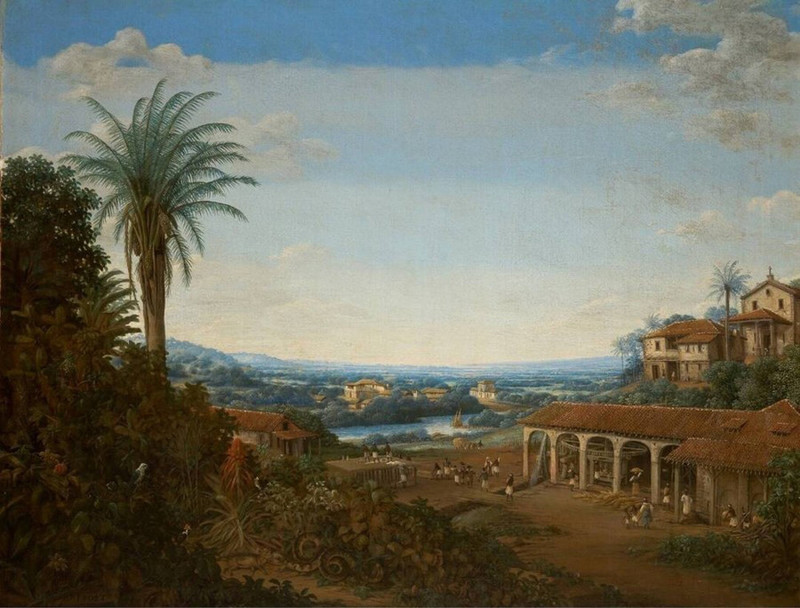


De suikerfabriek en de plantage van Engenho Real. Frans Post in opdracht van militair Johan Maurits, graaf van Nassau-Siegen, 1650-1675.


Dat de WIC zich begon in te laten met slavernij is eigenlijk verbazingwekkend. Het was alsof in een volledig op groene energie gebaseerde economie een groep ondernemers plotseling met het voorstel komt om een kolencentrale te openen. Ga maar na: in de steden van de Republiek was al in de middeleeuwen de slavernij afgeschaft. Een stad als Amsterdam was er bijvoorbeeld bijzonder trots op dat er binnen haar grenzen geen slavernij was.

En in de Lage Landen beschouwde men het eigen grondgebied in die tijd niet alleen als slaafvrije zone, men zag zichzelf zelfs als antislavernij: een slaaf die bijvoorbeeld naar Antwerpen of Amsterdam vluchtte, mocht zich beschermd weten tegen uitlevering. Iedereen was binnen die muren vrij.
Het was een systeem dat door de Portugezen was opgezet, en nu door de WIC werd overgenomen

Slavernij was, kortom, een achterhaalde en barbaarse activiteit, vonden veel mensen in Nederland. Het houden van slaven en het tot slaaf maken van krijgsgevangen werd destijds meer geassocieerd met de Osmaanse koninkrijken, met name op de kust van Algerije en Marokko waar Europese zeelieden werden gegijzeld.

Dat Spanje en Portugal zich inlieten met het tot slaaf maken van de inheemse bevolking van Amerika werd gezien als een katholieke dwaling, en niet als een activiteit waarmee de Republiek zich wilde inlaten.

Toch ging de WIC er nu zelf toe over deals te sluiten met koningen en tussenhandelaren in West-Afrika om mensen te leveren. De dienaren van de WIC sloten deze gevangenen op in de Nederlandse forten om ze vervolgens op zeilschepen naar Brazilië te vervoeren.

Het was een systeem dat door de Portugezen was opgezet, en nu door de WIC werd overgenomen.

Het vervoer van de tot slaaf gemaakte Afrikanen ging onder erbarmelijke omstandigheden. Vastgeketend en opeengepakt zat men enkele maanden gevangen op weg naar een onbekende bestemming. Velen overleefden door uitputting en ziekten de reis niet. De bemanning paste wrede onderdrukkingsmethodes toe om de controle over de gevangenen te houden.


Links: een Afrikaanse man. Rechts: een Afrikaanse vrouw met kind. Albert Eckhout in opdracht van militair Johan Maurits, graaf van Nassau-Siegen, 1641.


Hoe slavernij toch werd goedgepraat

Hoewel er altijd tegenstanders van de slavernij bleven bestaan, kozen de meeste bestuurders ervoor om de slavernij overzee te vergoelijken. Voorstanders gebruikten meestal twee argumenten.

Allereerst was slavernij volgens hen te verkiezen boven het doden van vijanden. Zo konden in een rechtvaardige oorlog rechtmatig slaven worden gemaakt. Dit argument verdween al snel naar de achtergrond, omdat dat niet was wat de WIC in Angola en Brazilië deed.

Het tweede argument werd dat Afrikanen de nazaten waren van Noahs vervloekte zoon Cham, wiens nazaten volgens de vloek gedoemd waren om ‘slaven van slaven’ te zijn. Deze lezing van het verhaal gaat er van uit dat Cham en zijn nakomelingen een donkere huidskleur hadden.

Het was een theologische innovatie die voorafgaand aan de bemoeienissen in de Atlantische wereld niet had bestaan, maar die nu als schaamlap voor een nog altijd verwerpelijk geachte activiteit werd gehangen.
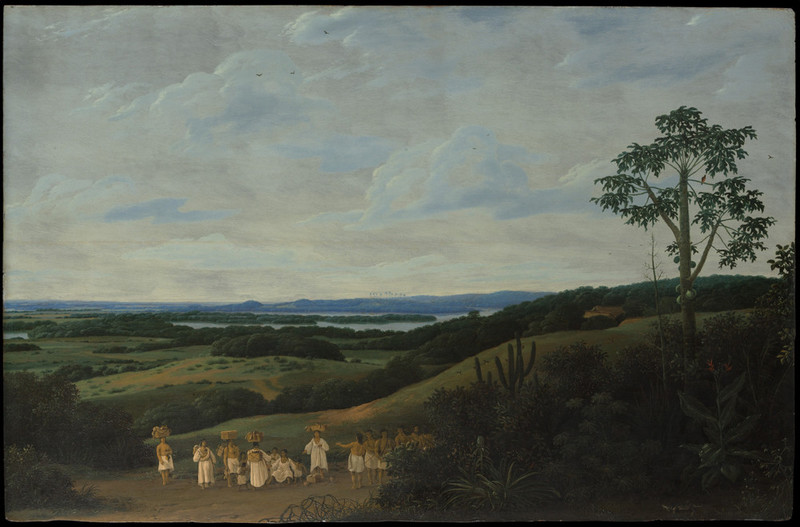


Een Braziliaans landschap. Frans Post in opdracht van militair Johan Maurits, graaf van Nassau-Siegen, 1650.


Zo werd de WIC verantwoordelijk voor de helft van de slaventransporten

Brazilië bleef uiteindelijk niet lang in Nederlandse handen. De Portugezen vochten terug en heroverden de plantages en steden een voor een. Met de verovering van de stad Recife door de Portugezen eindigde in 1654 de Nederlandse aanwezigheid in Brazilië. De kolonie ging verloren. Dat betekende echter niet het einde van de Nederlandse invloed.
Wat de Nederlanders hadden geleerd in Brazilië pasten ze nu toe in de rest van de Atlantische wereld

Sterker nog: na de definitieve Nederlandse nederlaag in 1654 transformeerde het land van oorlogsmachine tot een succesvol tussenhandelaar in slaafgemaakten. De eerdere schroom was volledig verdwenen.

Wat ze hadden geleerd in Brazilië werd nu toegepast in de rest van de Atlantische wereld. Zo werden Nederlandse slavenschepen tussen 1650 en 1675 verantwoordelijk voor maar liefst de helft van alle slaventransporten over de Atlantische oceaan.

Deze transporten gingen niet langer naar Brazilië, maar in plaats daarvan naar Curaçao en vervolgens verder naar de Spaanse koloniën in Zuid- en Midden-Amerika. Ook leverde men aan de nieuwe suikerplantages op het Engelse Barbados. Nederlandse ondernemers en bestuurders maakten in een cruciale fase van de geschiedenis het Britse en Franse rijk verslaafd aan suiker, plantages en slavenarbeid.


Aantal getransporteerde slaafgemaakten Tussen 1650 en 1675 over de Atlantische Oceaan N


Van Brazilië naar Suriname

Het verlies van Brazilië was in eerste instantie een traumatische gebeurtenis voor Nederland. Het maakte pijnlijk duidelijk hoe verdeeld de provincies in de Republiek der Verenigde Nederlanden onderling eigenlijk waren. De Zeeuwen wilden graag doorvechten, maar het berekenende Amsterdam kreeg haar zin. Het verlies werd genomen en de militaire versterking voor de door Portugezen belegerde WIC-troepen in Recife kwam er niet.

In Amsterdam wilde men zo snel mogelijk de schande van de nederlaag vergeten. Men ging zich bezighouden met een (niet lang daarna eveneens mislukte) kolonie in de Delaware en tussenhandel in de Atlantische wereld.

De Zeeuwen zinden nog wel op een revanche. Pleidooien voor een herovering waren tevergeefs, dus begon men te zoeken naar een ‘Tweede Brazilië.’

Eerst dachten Zeeuwse bestuurders dit op Tobago gevonden te hebben, maar in 1667 herkende men een Engelse kolonie aan de Surinamerivier als kanshebber. Toen de Zeeuwen van Holland geen steun kregen voor hun nieuwe koloniale plannen, veroverden de Zeeuwen op eigen houtje Suriname op de Engelsen.

Suriname werd daadwerkelijk een tweede Brazilië. Vluchtelingen uit Brazilië vonden er een veilig heenkomen om nieuwe plantages op te zetten. De handel in slaafgemaakten werd verder gereguleerd en algauw produceerde de kolonie miljoenen ponden suiker per jaar. De slavernij en suikerproductie werden op Braziliaanse leest geschoeid. Men kopieerde wat men in Brazilië had geleerd.


Links: een Tupiaanse vrouw met een plantage op de achtergrond. Rechts: een Mestiço man (een kind van een Europeaan en een inheemse). Albert Eckhout in opdracht van militair Johan Maurits, graaf van Nassau-Siegen, 1641.


Waarom we deze geschiedenis niet mogen vergeten

De herinnering aan het Nederlandse slavernijverleden wordt gedragen door Afro-Nederlandse nazaten van slaafgemaakten uit Suriname, Curaçao en de kleinere eilanden. Brazilië is in die herinnering een verborgen verleden. Er herinnert in Nederland maar weinig nog aan de periode die aan de Surinaamse slavernij voorafging.

We hebben de Atlantische geschiedenis van Nederland nodig om ons beeld van de Gouden Eeuw compleet te maken. Het was niet alleen de glorietijd van dynamiek, immigratie, wetenschap, kunst en ondernemerschap. Men vormde zich toen ook een beeld van de wereld buiten Europa, en men leerde het geweld, uitbuiting en toenemende ongelijkheid te vergoelijken. Slavernijgeschiedenis en koloniale geschiedenis vormen geen aparte afdeling van ons verleden, maar zijn er onlosmakelijk onderdeel van.

De Braziliaanse episode verdient het om aan de vergetelheid te worden ontrukt. Brazilië heeft immers een nawerking gehad die niet te onderschatten is.

Nog belangrijker dan dat is de culturele erfenis. Er ontstond een typisch Europees exotisme waarin Braziliaanse natuur en kunstschatten een belangrijke rol spelen, en de associaties van wit met ‘vrij’ en zwart met ‘onvrij’ stammen uit deze tijd. Deze associaties waren in die tijd nog niet zo kwaadaardig als ze tijdens de Verlichting zouden worden, maar we moeten de oorsprong ervan wel naar deze geschiedenis herleiden.

Dit verhaal is geschreven voor de Maand van de Verzwegen Geschiedenis van De Correspondent en The Black Archives. Ga naar de website van The Black Archives.


Met dank aan Correspondentlid en geschiedenisdocent Marijn Luijten voor het nalopen van de geschiedenisboeken.

17.12.2017

Pieza de India


Pieza de India (span., wörtlich Stück Indiens) bezeichnet eine Einheit, mit der während des transatlantischen Sklavenhandels afrikanische Sklaven einheitlich gezählt werden sollten. Die Maßeinheit wurde im Laufe der Zeit mehrfach geändert, beschreibt jedoch im Allgemeinen einen gesunden männlichen Sklaven festgelegter Größe und eines bestimmten Alters, was gelegentlich noch mit der Bestimmung der Herkunftsregion kombiniert wurde. Im Asiento von 1663 wurden beispielsweise drei 8–15-jährige Sklaven mit zwei Piezas de India oder je zwei vier- bis achtjährige oder 35–40 jährige als ein Pieza de India bemessen.

--
aus: Sylvia Winter: Being Human
Ein Pieza war ein portugiesischer Sklavenhandelsbegriff für "einen Mann von fünfundzwanzig Jahren, ungefähr, bei guter Gesundheit, berechnet, um einen bestimmten Betrag an physischem Arbeitswert zu geben, an dem alle anderen gemessen werden könnten - zum Beispiel drei Teenager, die einer Pieza entsprechen, und ältere Männer und Frauen, die in einem Joblos als Abfall geworfen werden. Eine Pieza ist eine Person, ein Symbol, eine Ware und eine Maßeinheit, und als solche zeigt sie, wie Produktions- und Herrschaftsformen miteinander verflochten sind. Das macht Sinn als Kritik an den weißen Arbeiterbewegungen und am Kapitalismus selbst, aber Wynters Verwendung biologischer Begriffe wie Autopoiesis bleibt rätselhaft.
deepl

12.09.2017

«Sklavenhalter verstehen sich als Beschützer»


Der US-Soziologe Austin Choi-Fitzpatrick beschreibt, wie Zwangsarbeit heute funktioniert. Recherchiert hat er in Indien – doch Sklaverei betrifft auch den Westen.


Kinder in Neu-Delhi fesseln sich selbst anlässlich einer Demonstration gegen Sklaverei. Bild: Keystone

Mit Austin Choi-Fitzpatrick sprach Juliane Liebert 00:30

Wie war es für Sie, mit Sklavenhaltern zu sprechen?
Für mich war das Überraschendste, wie einfach es war, mit ihnen zu reden. Es war manchmal einfacher, mit den Tätern zu sprechen als mit den Opfern. In einigen Fällen hatten sich die Opfer noch nie zu ihren Erlebnissen geäussert. Sie wussten nicht, wie sie ihre eigene Geschichte erzählen sollten. Die Täter waren erfahrener. Sie wussten mehr von der Welt. Wir teilten etwas. Es war sehr ernüchternd für mich, zu realisieren, dass ich so viel mit den Tätern gemeinsam hatte – Status, Vokabular, die Sichtweise auf die Welt: Dinge, die mich von den Opfern trennten, denen meine politische Sympathie galt.

Gibt es einen Moment, der Ihnen besonders in Erinnerung blieb?
Ich sprach mit 25 Menschen, die als Zwangsarbeiter in einer Ziegelfabrik gearbeitet hatten. Ich fragte sie: Wie seid ihr entkommen? Ein Mann zeigte mir wortlos, dass er in seinen Kleidern ein sehr altes Nokia-Handy versteckt hatte. Er benutzte es, um eine Organisation anzurufen, die ihnen helfen konnte.

03.09.2017

Leaving Home: Slavery and the Politics of Reproduction

Camille Barbagallo October 31, 2015


In fact, from one point of view, we cannot unravel one female’s narrative from the other’s, cannot decipher one without tripping over the other – Hortense Spillers1

We had driven straight through from Brisbane to Sydney, a nine-hour drive with your foot flat to the floor. We were on our way to a radical student conference, it was the very late 1990s and the WTO protests in Seattle had just hit the national papers. It was a time when some of us had started to get confident in naming the problem, saying it out loud: capitalism. We arrived sweaty, tired and sort of tumbled out of the car and into the front garden of a huge run-down student house in inner Sydney. A woman I had not met before, Natasha was at the front door. Noting my then boyfriend, she spat,

“So, you’re a breeder then.”

Standing there in the harsh morning sunshine, the word breeder did the job it was intended to do: producing a connection between my nineteen year old body, its assumed capacity for biological reproduction, patriarchy and normative heterosexual sex. A little taken back, I mumbled something while looking at my feet and spent the rest of the week thinking about what breeder sex would be like.

Conversation Piece, before a house in Monument Lane, Edgbaston (William Williams, 1780)

This essay offers a critical reflection on the history of reproduction at the intersection of slavery and capitalism in the Anglo-American context.2 In sketching this history I explore the relationship between capitalism, gender and slavery and how the invention of the two separate spheres of production and social reproduction was produced and maintained. What emerges is the highly contradictory nature of the home and family under slavery and that in some instances the household served as an important site of resistance for slave women. Exploring the complexities of the household and family structures under slavery challenges tendencies within feminist theory that assume a universal or “shared” experience of home, motherhood and the domestic sphere.

The problem of where to begin in unraveling the stories of slavery, feminism and reproduction is an interesting one. Particularly if one is not seeking to locate origins or founding moments, but is instead interested in asking how reproduction has come to be the problem that it is today. In the first instance, it is necessary to ask what is at stake in the history of reproduction, in part because the definitions and meaning of reproduction not only vary but also are often experienced in contradictory ways. The inequalities and disparities in how different racialized and gendered subjects experience the labor of making and remaking people under capitalism cannot be ignored and these gaps, silences and spaces of difference have long and complex histories. Considering the overwhelming location of reproduction is in the realm of the natural, the biological and that murky, under-theorized location of home, it is necessary to not only gesture towards what is at stake politically but to do so with the aim of “weaponizing reproduction.” The task is certainly a feminist project, one that takes seriously what it means to denaturalize reproduction, with the desire to grab hold of the problem and transform it.

From the outset it is clear that the story of feminism and reproduction is a complex and at times contradictory one. Of the many valid and necessary critiques of second-wave feminism that have and continue to be made, the notion that the women’s movement in the 1960s and 1970s was anti-mother is certainly a persistent line of attack. It is also a criticism that has been consistently challenged by those who were active in the movement, many of who were young mothers at the time. The idea that feminists were anti-child and anti-mother can in some ways be traced to how uncomfortable the original demand in Britain for “free 24-hour nurseries” made people feel. Critics claimed that the demand signaled women’s desire for “baby dumping.” People were horrified by the supposed unnaturalness of young children being looked after by people other than their mothers at irregular times. That a demand for accessible and affordable childcare could cause such panic tells us something about the organization of gender in post-war industrial economies.

Whilst the charge that second-wave feminist were anti-mother unravels under scrutiny, the family and the post-war family in particular was certainly the object of much feminist criticism and analysis. Shelia Rowbotham writes that the women’s movement erupted “in a literature of complaint which focused on the experiences of the family – both in the sense of life in the household and with kin.”3 It was less mothers and more motherhood that feminist saw as the problem. In a pamphlet entitled Women and the Family, written by three women, each with two kids, the authors write, “our window on the world is looked through with our hands in the sink and we’ve begun to hate the sink and all it implies.”4 Rowbotham continues that it was not that “every woman suddenly became unhappy, but that significant numbers of women felt entitled to a destiny which was not simply domestic.”5Considering that in the late 1960s, nearly 55 percent women in Britain did not work outside of the home, it is unsurprising that for significant numbers of women the family and women’s domestic destiny came to be seen as one of the central sites of female oppression. For many in the movement, women’s liberation meant an escape from the home – “in the home the woman is in the family, and the two are disturbingly synonymous.”6

25.08.2017

Die kubanische Plantage der Familie Escher


Alfred Escher und das Blutgeld: der Historiker Hans Fässler über die vielfältigen Verbindungen der liberalen Schweiz zur Sklaverei und ihre Mühe, sich damit auseinanderzusetzen.
Juni 1966, Bahnhofplatz Zürich: Die Statue Alfred Eschers, des Gründers der Schweizerischen Kreditanstalt, wird um ein paar Meter verschoben. Foto: Kurt Salvisberg, ETH-Bibliothek Zürich
Jetzt ist es belegt: Die Familie des Zürcher Säulenheiligen Alfred Escher besass eine Sklavenplantage auf Kuba. Womöglich droht der Credit Suisse als Nachfolgerin der von Escher gegründeten Schweizerischen Kreditanstalt (SKA) neues Ungemach aus den USA: Wenn ein Unternehmen seine Beziehungen zur Sklavenwirtschaft nicht offenlegt, stellen nämlich verschiedene Grossstädte ihre Geschäftsbeziehungen mit diesem mittlerweile ein. Auch in Zürich hat ein Vorstoss von SP und AL im Gemeinderat Konsequenzen aus den neuen Erkenntnissen gefordert.
Die Enthüllungen des renommierten deutschen Historikers Michael Zeuske von der Universität Köln im «Magazin» des «Tages-Anzeiger» vom 8. Juli, dass zur Plantage Buen Retiro auf Kuba, die im Besitz der Familie Escher war, auch über achtzig SklavInnen gehörten, sind angesichts jüngster Forschungen zu Schweizer Verwicklungen in den atlantischen SklavInnenhandel keine Überraschung.
Vor fünfzehn Jahren sah es noch anders aus. Als 2003 der Zürcher Regierungsrat von Peider Filli (AL) zu den Sklavereibeziehungen des alten Zürich angefragt wurde, war die Kantonsregierung überzeugt: «Das in der alten Eidgenossenschaft eingebettete Zürcher Gesellschafts- und Staatsgebilde des 18. Jahrhunderts hat als Kollektiv zu keiner Zeit SklavInnenhaltung und SklavInnenhandel gerechtfertigt oder gar betrieben.» Der 2003 von Renate Schoch und Anja Recher (AL) verlangte und 2007 zuhanden des Präsidialdepartements abgelieferte Bericht von Konrad Kuhn und Béatrice Ziegler-Witschi, «Die Stadt Zürich und die Sklaverei: Verbindungen und Beziehungen», zeigte dann auf, dass man mit solchen Wertungen vorsichtig sein muss.

Historischer Bewusstseinswandel

Mittlerweile hat sich die Situation noch einmal stark verändert. Verschiedene HistorikerInnen haben den Beweis erbracht, dass sich die Schweiz bzw. Akteure aus dem Gebiet der heutigen Schweiz im 18. und 19. Jahrhundert an allen sklavereirelevanten Tätigkeiten beteiligt haben: Finanzierung von Dreieckshandelsexpeditionen, Investition in Kolonialgesellschaften, Reederei, Handel mit Gütern für den und aus dem Dreieckshandel, Verwaltung von Kolonialgebieten, Besitz und Verwaltung von Plantagen, Besitz von SklavInnen, Handel mit SklavInnen, militärische Kontrolle, Niederschlagung von Aufständen sowie ideologische Rechtfertigung von Sklaverei und anti-schwarzem Rassismus.
Die Sklavenplantage von Eschers Familie kann man natürlich unterschiedlich interpretieren. Man kann die Steuerliste aus dem Nationalarchiv in Havanna so sehen wie der nigerianische Historiker Joseph Inikori: als ein weiteres Mosaiksteinchen im grossen Bild des Black Atlantic, also der interkontinentalen Beziehung zwischen Schwarzafrika und Europa beziehungsweise Amerika. Oder man kann diesen Fund herunterspielen, wie das sein Namensvetter Joseph Jung, der Hofhistoriker des Finanz- und Industrieplatzes Zürich, versucht. Die moralische Trennlinie, die Jung zwischen dem «Halten von Sklaven und dem Handel mit Sklaven» definiert, wirkt wie eine letzte (schwache) ideologische Verteidigungsposition im Interesse seines früheren Arbeitgebers, der Credit Suisse.

Chicago ging voraus

Für die 1856 von Alfred Escher gegründete SKA, die heute unter dem Namen Credit Suisse tätige und tätliche Grossbank, könnte sich jedoch Zeuskes Archivfund noch als folgenschwer erweisen. Dazu muss man ausholen.
Im Jahr 2002 erliess die Stadt Chicago als erste US-amerikanische Körperschaft eine «Slavery Era Disclosure Ordinance», das heisst ein Gesetz, das es den Stadtbehörden untersagt, mit Firmen Geschäfte zu treiben, die ihre Beziehungen zur Sklaverei (Investitionen in die und Profite aus der Sklaverei) nicht offenlegen. Die erste Firma, die dieses Gesetz zu spüren bekam, war die Investmentbank Lehman Brothers. 2003 gab Lehman Brothers zu, dass die aus Bayern stammenden Firmengründer Mayer, Henry und Emanuel Lehman 1850 in Montgomery die Sklavin Martha gekauft hatten. Weil Lehman Brothers über das Ausmass ihrer Sklavereibeziehungen später falsche Angaben machte, wurde die Bank zur ersten Firma, der unter dem genannten Gesetz eine Strafe aufgebrummt wurde: Sie verlor ihre Stellung als Emissionsbank für eine Anleihe von 1,5 Milliarden US-Dollar für den Flughafen O’Hare in Chicago und erlitt damit einen Verlust von 500 000 US-Dollar.
Vielleicht wurde die UBS einst durch das Schicksal von Lehman Brothers alarmiert. Als 2006 ein Artikel in der «Chicago Sun-Times» über einen Schweizer berichtete, der in Rio de Janeiro zwei Sklaven (Antonio und Joaquin) besessen und 1856 die Deutsch-Schweizerische Kreditbank gegründet habe (deren Rechtsnachfolgerin die UBS sei), sorgte die Bank dafür, dass die Geschichte dieses Mannes aufgearbeitet wurde. Es handelte sich dabei um den St. Galler Kaufmann und Sklavenzüchtiger Jakob Laurenz Gsell (1815–1896): «… wenn ich nämlich meinem Schwarzen etwas befehle und der nicht sogleich gehorcht, husch, da zuckt etwas durch die Luft und ein guter Hieb sitzt auf dem Rücken des Negers.» Die UBS hatte wohl Angst, es könnte ihr wegen des reitpeitschenschwingenden Gsells der Auftrag für die Anleihenemission für denselben O’Hare-Flughafen entgehen, der schon Lehman Brothers beschäftigt hatte. Auch hatten es in der Zwischenzeit grosse Unternehmen wie JP Morgan, Wachovia und Bank of America mit der Sklavereigesetzgebung zu tun bekommen. Man kann nun immerhin mutmassen, dass die UBS nach der Enthüllung im Fall Escher durch das «Magazin» und den «Tages-Anzeiger» noch das eine oder andere Mal eine eidesstattliche Erklärung abgeben müssen wird. Ähnliche Gesetze wie die «Slavery Era Disclosure Ordinance» von Chicago existieren nämlich mittlerweile in den US-Bundesstaaten Kalifornien, Iowa und Illinois sowie in den Grossstädten Detroit, Los Angeles, Milwaukee, Oakland, Philadelphia, San Francisco und Cleveland.

Gedenktäfelchen?

Die Enthüllung der Herkunft des Vermögens von Alfred Escher («Mitbegründer der modernen Schweiz», «Eisenbahnbaron», «Wirtschaftspionier», «ETH-Gründer», «liberaler Geist») aus einem Verbrechen gegen die Menschlichkeit dürfte nicht nur in Zürich noch weiter zu diskutieren geben. Bis Sonntagabend hatten schon weit über 200 LeserInnen einen Kommentar zum Artikel «Alfred Eschers Erbe gründet auf Sklavenarbeit» hinterlassen, interessanterweise mehrheitlich positiv zur Recherche. Was aber wären adäquate Forderungen nach Konsequenzen, Sichtbarmachung, weiterer Aufarbeitung und Wiedergutmachung für Zürich (und die Schweiz)? Hans Barth, mein Freiburger Mitstreiter in der Kampagne «Démonter Louis Agassiz» und bei der Ausstellung «Gletscherforscher, Rassist», hat anstelle eines «Gedenktäfelchens» am Belvoir, dem Familiensitz der Eschers, zwei Ideen in die Runde geworfen: «Vorschlag 1: Das Belvoir wird zu Geld gemacht, das dann an Kuba überwiesen wird. Auflage: Mit der Summe sollen die Nachkommen der Escher-Opfer unterstützt werden. Vorschlag 2: Das Belvoir wird nicht länger als Hotelfachschule missbraucht, sondern wird ein Forschungszentrum zur Schweizer Beteiligung am Sklaverei-Verbrechen.»
Erfreulicherweise geht auch das Postulat, das soeben von SP und AL im Zürcher Gemeinderat eingereicht worden ist, über die Dimension des Gedenkorts hinaus. Es verknüpft als eine Art Lackmustest die Enthüllung von Michael Zeuske mit der Forderung nach Aufarbeitung im Rahmen der Escher-Stiftung und des Escher-Keller-Jubiläumsjahrs 2019 (Alfred Escher und Gottfried Keller wurden beide 1819 geboren). Wie wäre es, zu diesem Jubiläum einen afrokubanischen Historiker und eine afrikanische Historikerin einzuladen? Möglicherweise Nachkommen der 17 194 versklavten Menschen, die 1819 nach Kuba importiert wurden, obwohl der Handel mit schwarzafrikanischen SklavInnen schon vier Jahre vorher durch den Wiener Kongress für illegal erklärt worden war? Wie wäre es mit einem Podium mit diesen zwei Gästen, mit Joseph Jung, der Rassismusforscherin Patricia Purtschert, CS-Chef Tidjane Thiam, der Migrationsforscherin Béatrice Ziegler-Witschi und dem Menschenrechtler Jean Ziegler?

Rätsel zum Schluss

Und wie wäre es, wenn auch zu jenem anderen UBS-Ahnen, einem Mitbegründer des Schweizer Bankvereins von 1909, geforscht würde, der in Brasilien in der Sklavereiwirtschaft tätig war und dem bis jetzt noch kein SklavInnenbesitz nachgewiesen werden konnte – obwohl der ziemlich wahrscheinlich ist? Der Name sei nicht verraten, damit es noch etwas zu rätseln gibt und damit nicht die gemäss Michael Zeuske schlecht bezahlten ArchivarInnen auf Kuba die Dokumente beiseiteschaffen, um sie dann dem Meistbietenden zu verkaufen – was man den armen Leuten eigentlich nicht übelnehmen kann.
Der Historiker Hans Fässler forscht seit zwanzig Jahren zur Verwicklung der Schweiz in den transatlantischen SklavInnenhandel. Er setzt sich etwa öffentlichkeitswirksam für die Umbenennung des nach einem wegweisenden Rassentheoretiker benannten Agassizhorns ein.

21.07.2017

How Slavery Made the Modern World

Slavery was the flywheel on which America’s market revolution turned—not just in the United States, but in all of the Americas.

By Greg Grandin
February 24, 2014


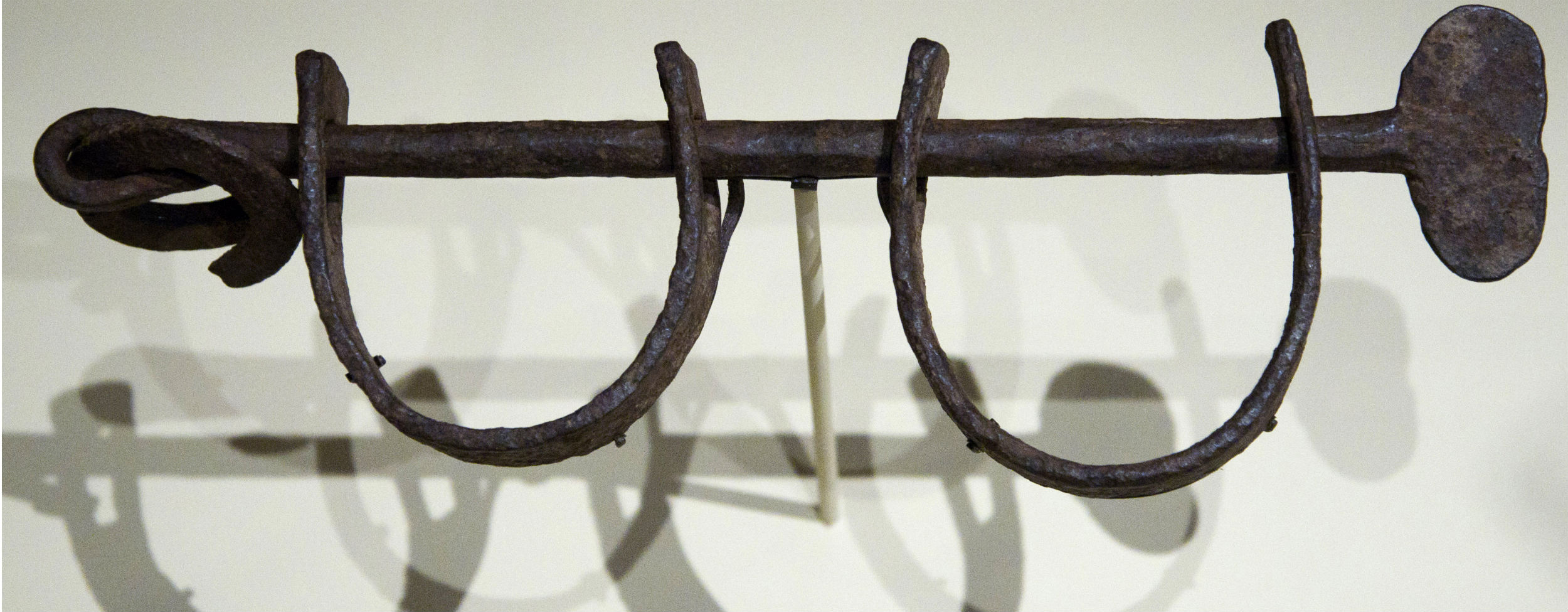
A nineteenth-century bilboes for an adult, typically found on slave ships. (AP Photo/Manuel Balce Ceneta)

Many in the United States were outraged by the remarks of conservative evangelical preacher Pat Robertson, who blamed Haiti’s catastrophic 2010 earthquake on Haitians for selling their souls to Satan. Bodies were still being pulled from the rubble—as many as 300,000 died—when Robertson went on TV and gave his viewing audience a little history lesson: the Haitians had been “under the heel of the French” but they “got together and swore a pact to the devil. They said, ‘We will serve you if you will get us free from the French.’ True story. And so, the devil said, ‘OK, it’s a deal.’”

A supremely callous example of right-wing idiocy? Absolutely. Yet in his own kooky way, Robertson was also onto something. Haitians did, in fact, swear a pact with the devil for their freedom. Only Beelzebub arrived smelling not of sulfur, but of Parisian cologne.

Haitian slaves began to throw off the “heel of the French” in 1791, when they rose up and, after bitter years of fighting, eventually declared themselves free. Their French masters, however, refused to accept Haitian independence. The island, after all, had been an extremely profitable sugar producer, and so Paris offered Haiti a choice: compensate slave owners for lost property—their slaves (that is, themselves)—or face its imperial wrath. The fledgling nation was forced to finance this payout with usurious loans from French banks. As late as 1940, 80 percent of the government budget was still going to service this debt.

In the on-again, off-again debate that has taken place in the United States over the years about paying reparations for slavery, opponents of the idea insist that there is no precedent for such a proposal. But there is. It’s just that what was being paid was reparations-in-reverse, which has a venerable pedigree. After the War of 1812 between Great Britain and the US, London reimbursed Southern planters more than a million dollars for having encouraged their slaves to run away in wartime. Within the United Kingdom, the British government also paid a small fortune to British slave owners, including the ancestors of Britain’s current Prime Minister, David Cameron, to compensate for abolition (which Adam Hochschild calculated in his 2005 book Bury the Chains to be “an amount equal to roughly 40 percent of the national budget then, and to about $2.2 billion today”).

21.05.2017

Delgado, Martín Morúa (1856-1910)


Martin Morua Delgado with Daughters Arabella and Vestalina.
Image Courtesy of Manuscripts, Archives and Rare Books Division,
Schomburg Center for Research in Black Culture,
The New York Public Library, Astor, Lenox and Tilden Foundations

Born in 1856, Martín Morúa Delgado gained prominence as an Afro-Cuban writer and Cuba’s first black Senate president after the country’s war for independence against Spanish rule in the 1890s.  Son of an African-slave mother, Ines Delgado, and Spanish father, Francisco Morúa, Martín Morúa Delgado espoused both anti-slavery sentiments and exemplified ideas of success through meritocracy among Afro-Cubans.
Unable to obtain a formal education because of economic demands, Morúa Delgado was thrust into the work force and became a self-taught Cuban.  He became a prolific reader and was fluent in several languages.  Beginning his literary career in 1878, Morúa Delgado published a newspaper, El Pueblo.  Through it, he opposed slavery and sought the integration of blacks into mainstream Cuban society and culture.
In 1880, Delgado left Cuba for Key West, Florida in the United States where he spent the next ten years working as a literary critic and translator and publishing his magazine Revista Popular.  While in the United States he wrote the essays "Duty Calls" and "Cuba and the Colored Race."  While the former is a brief account of Cuba’s social history and call for revolution against the Spanish, the latter focuses on the historical plight of Afro-Cubans and their desire for freedom from slavery.
Upon returning to Cuba, Morúa Delgado published two novels, Sofia and The Unzuazu Family.  Again, he explored issues of the cruelty of slavery and its subsequent psychological impact not just on individual Afro-Cubans but also on Cuban society as a whole.   He focused especially on the complex interpersonal relationships among Cubans, which had been often built on a foundation of mixed-race relationships.
Becoming a major political figure in post-independence Cuba, Morúa Delgado was one of two men of color elected to the country’s constitutional assembly under United States occupation.  In 1901 he became the country’s first elected Afro-Cuban senator (1901).
As part of the Afro-Cuban intellectual/political elite, Delgado symbolized a social mobility that very few black Cubans were able to achieve because of social and legal barriers.  Although a believer in racial equality, Morúa Delgado opposed independent, black civil rights organizations.  Instead he worked through his political party, the Liberal Party, in establishing patronage networks among Afro-Cubans.  As the first black President of the Cuban Senate (1909), Morúa Delgado introduced a bill that banned black political parties because they discriminated against white Cubans.  The Morúa Amendment would later be cited as inciting Cuba’s “Race War of 1912.”  Morúa Delgado would go on to become Minister of Agriculture, passing away in 1910 while serving in that office.
Sources:
Jorge Cantera and Carolina Hospital, A Century of Cuban Writers in Florida: Selected Prose and Poetry (Sarasota: Pineapple Press, Inc., 1996); Aline Helg, “To be Black and to be Cuban: The Dilemma of Afro-Cubans in Post-independence Politics,” in Darien J. Davis, eds., Beyond Slavery: The Multilayered Legacy of Africans in Latin America and the Caribbean (Lanham: Rowman & Littlefield Publishers, Inc., 2007); http://www.historyofcuba.com/history/race/Delgado.htm.
Contributor(s):
Escamilla, Luis
University of Washington
- See more at: http://www.blackpast.org/gah/delgado-martin-morua-1856-1910#sthash.0X0zzdf6.dpuf

02.01.2017

manumissie

(rechtsgeschiedenis) "term voor het volgens bepaalde rechtsregels vrijgeven van slaven in Suriname van de 19e eeuw. Afgeleid van "manumissio", een begrip in het Romeinse recht, letterlijk vertaald: ?zending uit de hand [van de meester]?."

http://www.slavernijenjij.nl/de-aankomst/manumissies/

Manumissies


anno 1838
Jan Houthakker, alias Flink
PARAMARIBO – Flink is geboren in Afrika. Die naam heeft hij gekregen bij zijn aankomst als slaaf in Suriname. Wat zijn echte naam is weten we niet, wanneer hij in Suriname is aangekomen ook niet. We weten wel dat hij in 1838 het ‘eigendom’ is van Nathaniel Vollenbeek, Gregoris Carel de L’Isle en Johannes Zwiep.
Op 13 december 1838 laten zij hem namelijk vrij: ze manumitteren hem. Bij zijn vrijlating krijgt Flink de naam Jan Houthakker. Op 7 april 1841 wordt hij onder die naam in het burgerregister ingeschreven. Die inschrijving is belangrijk, want vanaf dat moment kan hij een huis kopen, een vrij beroep uitoefenen en slaven ‘bezitten’.
Met twee van zijn voormalige eigenaren, Nathaniel Vollenbeek en Johannes Zwiep, is iets bijzonders aan de hand. Zij zijn zelf ook slaven geweest. In 1833 zijn ze allebei gemanumitteerd. De voormalige eigenares van Vollenbeek is zelf ook weer een gemanumitteerde vrouw, Mary van McNiel. Jan Houthakker volgt hun voorbeeld. Hij gaat zijn best doen om zoveel mogelijk slaven te helpen om vrij te worden.

Wat is het verschil tussen manumissie en emancipatie?


12.11.2016

THE COLONIAL ADMINISTRATION OF BODIES AND SPACE


http://the-archipelago.net/2014/08/21/ann-laura-stoler-the-colonial-administration-of-bodies-and-space/

Conversation recorded with Ann Laura Stoler in New York on August 11, 2014

Ann Laura Stoler and I begin this conversation by introducing the political context lexicon (see below) that she co-curates and edits. We then discuss the work she had done around the colonial management of sexuality and reproduction. The existence of the métis (mix-blooded) child in the colony renders more complex the binary distinction between colon citizens and colonial subjects. Biology is nevertheless not merely the only site of recognition for the colonial administration, behavior is also extremely important in the access to citizenship. We examine how space, whether corridor or school, is built to accommodate the administrated behavior of the colony. Finally, Ann gives us a preview of her forthcoming book that attaches a strong importance to the notion of duress and the concepts we need to write new colonial histories of the present.
Ann Laura Stoler is Willy Brandt Distinguished University Professor of Anthropology and Historical Studies at the The New School for Social Research in New York City. She has worked on issues of colonial governance, racial epistemologies, and the sexual politics of empire. Her regional focus has been Southeast Asia. She was a visiting distinguished professor at the École des hautes études and at the École Normale Supérieure in Paris and is recipient of Fulbright, Guggenheim, National Endowment for the Humanities, National Science Foundation and Social Science Research Council fellowships.

The Slave Ship: An Operative Architecture Responsible for the Abysmal Atlantic Crossing

info@thefunambulist.net
The Slave Ship: An Operative Architecture Responsible for the Abysmal Atlantic CrossingJanuary 8, 2016
Architecture & Design / History - By: Léopold Lambert


Above: La Marie-Séraphine (1770) / Excerpt from Bertrand Guillet, La Marie-Séraphine: Navire négrier, Nantes: Editions MeMo, 2009.


Writing about the open wound that the history of slavery constitutes is always a painful exercise. It is also doomed to fail making us fathom the formidable sustainability of violence that the three centuries of legalized slavery implemented — but would we ever recover from such a fathoming? This article is the fifth one about the abysmal Atlantic crossing and its architectural technology, the slave ship. While two of them were comparing (without ever equating) the Atlantic abyss with the current Mediterranean one (see “The Mediterranean Abyss: South Wall of Fortress Europe and Cemetery of the Poors” and “The Politics of Overpopulated Spaces“), two others focused on the historical crossing of the slave trade, citing the three Carribean authors C.L.R. James, Édouard Glissant, and Patrick Chamoiseau (see “The Slave Ship Is Architecture” and “Abysmal Atlantic: The Slave Ships’ Genocide“).
The argument of these articles in the broader context of the research exposed on this platform is simple: although architecture and design (and through them, architects and designers) cannot be held responsible for the founding logic of the genocide that constitutes the slave trade, the latter could simply have never existed without their active contribution and, as such, architecture is fundamentally responsible for the operativity of slavery. Here, more than ever, we need to forget any dissociation between the various scales of design: the plantation cabin is architecture, of course (see Clifton Ellis and Rebecca Ginsburg (eds), Cabin, Quarter, Plantation, New Haven: Yale University Press, 2010) but more broadly, any materialized form of whatever size or nature implementing the organization of bodies in space is also architecture. This includes the slave ship and its inherent tension between the fundamental cruelty of its design and the economization of life that its function requires vis-a-vis its “human cargo.”

30.10.2016

Readings from the Slave Narratives


Veröffentlicht am 23.09.2015
Unchained Memories is a 2003 documentary film about the stories of former slaves interviewed during the 1930s as part of the Federal Writers' Project and preserved in the WPA Slave Narrative Collection. This HBO film interpretation directed by Ed Bell and Thomas Lennon is a compilation of slave narratives, narrated by actors, emulating the original conversation with the interviewer. The slave narratives may be the most accurate in terms of the everyday activities of the enslaved, serving as personal memoirs of more than two thousand former slaves. The documentary depicts the emotions of the slaves and what they endured. The "Master" had the opportunity to sell, trade, or kill the enslaved, for retribution should one slave not obey.
Narrated by: Whoopi Goldberg
Sarah Gudger, North Carolina (Vol. 11)— read by LaTanya Richardson
Charley Williams, Oklahoma (Vol. 13) – read by Ruben Santiago-Hudson
Martin Jackson, Texas (Vol. 16) - read by Robert Guillaume
Henry Coleman, South Carolina (Vol. 14) – read byRoscoe Lee Browne
Jennie Proctor, Texas (Vol. 16) – read by Oprah Winfrey
Elizabeth Sparks, Virginia (Vol. 17) – read by Angela Bassett
Rosa Starke, South Carolina (Vol. 14) --
Cato Carter, Texas (Vol. 16) – read by Roger Guenveur Smith
Mary Reynolds, Texas (Vol. 16) – read by Angela Bassett
Rev. Ishrael Massie, Virginia –
Fannie Berry, Virginia – read by CCH Pounder
Mary Estes Peters, Arkansas (Vol. 2) – read by Jasmine Guy
Sarah Ashley, Texas (Vol. 16) – read by LaTanya Richardson
Charles Grandy, Virginia — read by Ruben Santiago-Hudson
William Colbert, Alabama (Vol. 1) – read by Courtney B. Vance
Katie Darling, Texas (Vol. 16) – read by Jasmine Guy Jasmine Guy
Vinnie Brunson, Texas (Vol. 3) – read by Vanessa L. Williams
Fannie Berry, read by CCH Pounder
Jack & Rosa Maddox, Texas (Vol. 7) – read by Ossie Davis and Ruby Dee
Mary Reynolds, Texas (Vol. 16) – read by Angela Bassett
Louisa Adams, North Carolina (Vol. 11) – read by LaTanya Richardson

16.10.2016

Plantations and Unruly Edges: Mushrooms as Companion Species (Anna Tsing)

Plantations were the engine of European expansion. Plantations produced the wealth—and the modus operandi—that allowed Europeans to take over the world. We usually hear about superior technologies and resources; but it was the plantation system that made navies, science, and eventually industrialization possible. Plantations are ordered cropping systems worked by non-owners and arranged for expansion. Plantations deepen domestication, re-intensifying plant dependencies and forcing fertility. Borrowing from state-endorsed cereal agriculture, they invest everything in the superabundance of a single crop. But one ingredient is missing: They remove the love. Instead of the romance connecting people, plants, and places, European planters introduced cultivation through coercion.[xxvi] The plants were exotics; the labor was forced through slavery, indenture, and conquest. Only through extreme order and control could anything flourish in this way; but with hierarchy and managed antagonism in place, enormous profits (and complementary poverties) could be produced. Because plantations have shaped how contemporary agribusiness is organized, we tend to think of such arrangements as the only way to grow crops. But this arrangement had to be naturalized until we learned to take the alienation of people from their crops for granted.


Consider sugar cane, a key participant. No one loves plantation sugar cane. Puerto Rican cane workers go out to “defend themselves” (se defienden) and “do battle” (bregando) with the cane.[xxvii] Yet between the 17th and the 19th centuries, sugar cane plantations produced much of the wealth that fueled European conquest and development. The cane was moved across the warm zones, redefining regions; and so too came owners, managers, and laborers.[xxviii] Slaves were sent from West Africa to the New World. Contracted coolie labor from India and China moved into the Pacific. Peasants were conquered and coerced in the Indies. And in forging a new antagonism to plantation plants, humans changed the very nature of species being. Elites entrenched their sense of autonomy from other species; they were masters not lovers of nonhuman beings, the species Others who came to define human self-making. But for planters this was only possible to the extent that human subspecies were formulated and enforced: Someone had to work the cane. Biology came to signify the difference between free owners and coerced labor. Colored people worked the cane; white people owned and managed it. No racial laws or ideals could stop miscegenation, but they could guarantee that only those of the white race could inherit property. Racial divisions were produced and reproduced in each dowered marriage and inheritance.[xxix]
From the first, fungi were there, ready for niches to fill. Fungi constrained smallholder sugar cane; after it is cut, cane must be processed immediately to avoid fungal fermentation. The huge scale of cane plantations, and their savage labor discipline, are in part a response to fears of fermentation, which inspire on-site, expensive mills—and the desire to keep them running continuously. Yet fungal fermentation turned out to be a gift to the planters. It didn’t take Caribbean planters long to observe that molasses, a byproduct of sugar milling, suited ubiquitous local yeast spores and quickly changed to alcohol. Rum was born, and the deadly but profitable “triangle trades” proffered rum for more African slaves, and thus more sugar production, and thus more distillers and financers in England or New England. Long before sugar became an object and symbol of mass consumption (thus cementing the expectation of species-autonomous publics whose species-unrecognizeable foods mysteriously appeared from afar), fungally fermented rum made plantation sugar profitable—spreading it across the field of European conquest.[xxx]
At the edge of respectability, rum charged sea-faring masculinities in which trade became adventure. Fermentation thus detracted attention from the cruelty of shore-bound domestication, both human and nonhuman.
White women became agents of racial hygiene. By dividing us firmly into races, plantations remade human species being, the practice of being human. Racial separation—depending as it does on marriage and family organization—required additional transformations of gender. In the plantation zones, with their unsettled mixtures of native and foreign, free, bound, and enslaved, wild and tame, disease and plenty, things could so easily go awry. Here white women became responsible for maintaining the boundaries—of homes, families, species, and the white race. Tropical fungi were one small part of their problem; molds and infections could get out of hand. Keeping their homes free of mildew, mosquitoes, and miscegenation, white women in the tropics became models of species and subspecies alienation.[xxxi]


By the late 19th century, discourses of scientific hygiene and eugenics informed white women’s species segregations. Pasteurian germ theory was tested and boosted in the tropics, where white-controlled spaces could be organized as laboratories, with microorganisms stopped at the border of white homes. White women were called to follow their husbands to the tropics to keep things clean.[xxxii] Re-imported to the metropole, such public and private hygiene charged class dichotomies, informing distinctions between those women Ehrenreich and English once contrasted as the “sick” and the “sickening.”[xxxiii] Vulnerable upper class women became the angels of the house; poor women were blamed as the agents of infection. Both received renewed mandates to reproduce. Poor families needed more labor, particularly where child labor kept many adults alive.[xxxiv] Privileged families were charged with the advancement of the race; women must bear its heirs.
The boundaries of the home became the expected boundaries of love. With the fetishization of the home as a space of purity and interdependence, extra-domestic intimacies, whether within or between species, seemed archaic fantasies (the community, the small farmer) or passing affairs (feminism, animal rights). Outside the home, the domain of economic rationality and conflicting individual interests reigned. Moreover, this kind of family fetish reappeared in mid-20th century U.S. mass culture—and once again in our times now—as the United States assumed a global leadership that allowed it to draw from older regimes of colonial culture. Here love is just not expected outside family walls. Within the family, other species can be accepted; pets are models for family devotion. But the model of the loving and beloved pet does not spread love; it holds it tight inside the family.
U.S. publics learn to imagine themselves as compassionate, moral people because they love their children and their pets. They learn that this love makes them “good people”—unlike terrorists, who only hate. They imagine that this love equips them to make decisions for the whole world; it creates a moral hierarchy in which American “goodness” is qualification for global leadership. Other peoples, and other species, are judged by their ability to live up to U.S. standards of domestic intimacy. If they are properly engaged with family love, they may deserve to live. Others risk becoming “collateral damage” in U.S. projects to improve the world; to eliminate them may be unfortunate but not “inhumane.” Under this tutelage, our species being is realigned to stop Others at home’s door.
Given the power and pervasiveness of this biosocial plan, it is amazing that a still-rich diversity of species and populations still exists on earth. But such richness can no longer be taken for granted.

http://tsingmushrooms.blogspot.pt

27.08.2016

Aunt Hester


Aunt Hester is Frederick Douglass Aunt.
Her beauty attracts Captain Anthony.
According to Douglass, when Captain Anthony sees Hester talking to a male slave he gets really upset and beats her badly.
This is the first time Douglass witness slavery cruelty


"I have often been awakened at the dawn of day by the most heart-rending shrieks of an own aunt of mine,
whom he used to tie up to a joist, and whip upon her naked back
till she was literally covered with blood" (Douglass, 5).

 “I remember the first time I ever witnessed this horrible exhibition. I was quite a child, but I well remember it. I never shall forget it whilst I remember any thing. It was the first of a long series of such outrages, of which I was doomed to be a witness and a participant. It struck me with awful force. It was the blood- stained gate, the entrance to the hell of slavery, through which I was about to pass. It was a most terrible spectacle. I wish I could commit to paper the feelings with which I beheld it" (Douglass, 5).

15.08.2016

Suriname Slaves Origin, Ghana, Benin, Loango


Many Surinamese descendants of slaves often wonder where their ancestors came from. The short answer is mostly from Ghana, Benin and Loango, but also from many other parts of West Africa such as Gambia, Guinea, Senegal, Ivory Coast etc.
To delve deeper into this subject we have to briefly examine the history starting from the 17th century of the slave trade by both the English and the Dutch.
The first slaves which came to Suriname came to an English colony. English was the language of that day and as a matter of fact the same language which the slaves spoke then is still spoken today, Sranang Tongo. It is mostly an English derived language and not Dutch.
The Dutch got Suriname from the English by the treaty of Breda in 1667. At that time there were already 3000 slaves in Suriname, which was still very sparsely populated surrounded by a huge jungle. Many of the slaves took advantage of this and escaped to the jungle.
From the beginning of the 17th century until after the end of emancipation in 1863, the Dutch were in control of the Gold Coast trade in West Africa and had two main fortresses there from where they shipped Africans.
Fort Amsterdam – In Kromanti Ghana and Fort Elmina, in Elmina Ghana.
More about Kromanti, Ghana and the Suriname Caribbean connection
Learn about Kromanti language in Suriname and Jamaica 
Ghana & Loango(in present day Congo) was the source of most slave descendants in Suriname with a significant number from Dahomey(in present day Benin) but also from other parts of West Africa howbeit in smaller numbers.
Culturally it appears that the Acan(Ghana) culture was more dominant if we look at language, and religious practices which we call winti.
See also African words in daily use in Suriname
And
African Culture – Religion In Suriname
However there are also cultural influences from Loango, Benin and other parts of West Africa.

Here are some images to give you an idea of what those cities looked like where the slaves came from at the time, 16th & 17th century:

Kumasi – Ghana(center of Ashante, Acan kingdom):

7-Kumasi

Loango(currently Congo):

18-loango-africa-kongo-kingdom

Benin(Dahomey):

benin-pic-2
As you can see, these were well organized cities, with an obvious infrastructure of roads and defenses, contrary to what some Westerners would have you believe.

Share this:

creolisierung - suriname