Posts mit dem Label surinam werden angezeigt. Alle Posts anzeigen

14.02.2017

Wer war Seidenfaden?

Als im Januar 1827 Gerichtsdiener des Justizamtes Obernkirchen in den verschneiten Wäldern am Bückeberg eine notdürftig verscharrte Leiche entdeckten, nimmt einer der spektakulärsten Fälle der deutschen Kriminal- und Justizgeschichte seinen Lauf. Mehr als 10 Jahre sollte es dauern, bis das Verbrechen gesühnt und die Urteile vollstreckt waren.
Dabei macht nicht die Tat - ein Mord unter Dieben - diesen Fall so außergewöhnlich, sondern die Biographie des Täters.
Johann Heinrich Seidenfaden wurde 1797 in Rolfshagen geboren, und wuchs in einer Zeit auf, deren verbreitete Massenarmut später als „Pauperismus“ in die Geschichtsbücher einging.
Wie sein Komplize Wilhelm Mühlhaus entstammte auch er der sozialen Unterschicht, beide waren uneheliche Söhne hessischer Husaren und machten früh Bekanntschaft mit Verbrechen und Gefängnis.
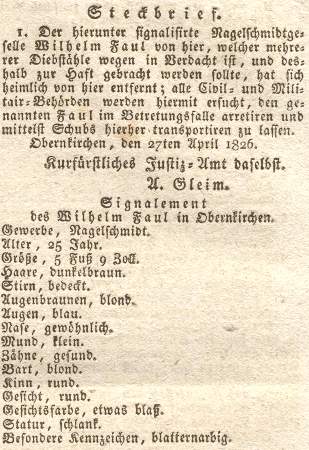
Aus Angst vor Verrat ermordeten Seidenfaden und Mühlhaus 1825 im Wald bei Obernkirchen ihren Komplizen Wilhelm Faul.
 
Steckbrief von Wilhelm Faul
(zu der Zeit war er im Bückeberg versteckt)Das Verbrechen wurde wenig später aufgedeckt, es folgte die Inhaftierung und 1831 das Todesurteil durch das Obergericht Rinteln.
Doch während Mühlhaus 1831 auf dem Rintelner Heinekamp vor den Toren der Stadt öffentlich enthauptet wurde, gelang Seidenfaden zuvor die Flucht aus dem Gefängnis und das Untertauchen in den Niederlanden.
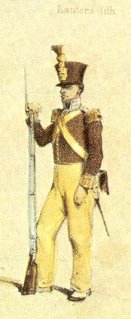
Unter dem Namen „Wilhelm Wiggers“ trat er in die Dienste der niederländischen Armee ein, wo er sich im Niederländisch-Belgischen Sezessionskrieg, bewährte. Anschließend beorderte man ihn in die von Aufständen erschütterte südamerikanische Kolonie Surinam für den Wachdienst im Hafen von Paramaribo und die Jagd nach entlaufenen Sklaven.

Uniform eines westindischen Jägers um 1830

14.01.2016

Chapter 4: The plantations and their products.

LIFE IN THE SHADOWS
THURSDAY, JULY 17, 2008

Chapter 4: The plantations and their products.

The layout of the plantations.


The Surinam agricultural system was shaped and dominated by the plantation and, since agriculture was the mainstay of the colony, so were the economical and social structures. One cannot maintain that Surinam was eminently suitable for plantation agriculture, but that was the onlyprofitable activity it was suitable for.

Eric Wolf and Sidney Mintz have sketched the general conditions necessary for plantations to flourish:
(1) a technology adequate for the creation of a surplus, that is to say, the possibility to profit from the economies of scale;
(2) a certain measure of class stratification, to keep the underprivileged from gaining access to production factors and to help diverting the surpluses solely to members of the elite;
(3) the possibility of production for an outside market: since the plantation was specialized in the production of a single commodity, it could not depend on the internal market of the colony, but had to produce firstly for the motherland and secondly for the international market;
(4) the ability to accumulate sufficient capital for the large investments plantation agriculture usually entailed;
(5) a political-legal system that supports the operations of plantations, which had three functions (a) to permit the planters to procure the land and workers they needed; (b) to establish a political and legal setting stimulating for the growth of the plantations; (c) to provide the means for transferring the surpluses.

In Surinam, most of these preconditions were adequately met initially. Because the Dutch had been instrumental in dispersing sugar technology all over the Caribbean, the Surinam plantations certainly met the prevailing standards. Since the colony was conquered territory and opted for slavery, the class stratification was introduced automatically. Holland provided an lucrative market for the products of the plantations and was even able to absorb much more than Surinam could produce (the colony never supplied more than 1/3 of the sugar and 1/2 of the coffee needed). The Dutch merchants were willing to invest the profits of their commercial ventures in colonial enterprises and furthermore, Surinam managed to draw wealthy immigrants who could finance the establishment of plantations with their own means. As property of the Society of Surinam, the whole political-legal system of the colony was geared to plantation agriculture. However, even though the conditions were ideal from this point of view, the expansion of the plantations was handicapped by a chronic lack of workers and a limited amount of fertile grounds (which often needed extensive water works, leading to high production costs). In the late 18th and 19th centuries, moreover, the conditions deteriorated considerably. Surinam lagged behind in technological innovation; capital investments were diverted to other colonies; the Dutch government showed little interest in facilitating plantation agriculture and the scarcity of workers became even more acute. No wonder that Surinam could no longer be a serious competitor in the world market and not even in the Dutch market.

In 1651, the English pioneers started from scratch. Nevertheless, the number of plantations grew fast (to 175) during the few years their hegemony lasted. It dropped dramatically (to 107) after the Zeelanders had taken over, but during the government of Cornelis van Aerssen, the plantations recouped their former territory and until the end of the 18th century, they steadily increased in number, although a good part of the old terrains had already been abandoned. The 19th century saw a process of decline and concentration.

The English did not experiment with small-scale subsistence farms, as they had done in Barbados, but started with laying out full-size plantations at once, although the less affluent pioneers limited themselves to provision grounds and tobacco farms. The Zeelanders inherited a plantation system almost bankrupted by the departure of most of the English planters and slaves and in their desperation to fill this void, they resorted to near anarchy in the distribution of grounds for cultivation. Once the Society of Surinam had taken over the rudder, however, the laying out of the plantations happened systematically and orderly.

Contrary to the situation in other mainland colonies, the way the plantations could expand in Surinam was severely limited by the peculiarities of the landscape. The plantations were depended upon the rivers to provide water power and transportation facilities and the land had to be divided under strict control to make sure everyone would get a fair share of the land along the riverbanks. In this sense, the view of Surinam as a ‘frontier society’ is not entirely accurate. Later arrivals could not get all the land they wanted and existing plantations were unable to expand freely. Nevertheless, a situation of 'open resources' had prevailed during the crucial period of initial colonization, when the economical and social foundations of the colony had been laid.

Plantations seeking additional terrains had to expand their operations further inland and so developed a rectangular shape. Aspiring planters were allowed to stake their claim wherever they found suitable soil. When they went looking for a desirable location, they preferred to go in “the most heavy Rainy Season when one has to wade through the forest with water coming up to the Waist Yes to the Neck because only then one can See which lands Stay above water [and] which Drown”.

The English were forced to limit their plantations to the higher sandy grounds along the upper part of the Suriname and Para rivers, because they did not know how to drain the swampy lowlands. The Dutch, on the contrary, encountered a familiar landscape there, that could be conquered with the proven technique of inpoldering, a craft they had thoroughly mastered in their homeland. This way, the Lower Suriname and Lower Commewijne divisions were added to the plantation area in the late 17th and early 18th centuries. In the middle of the 18th century, the Cottica and Orelane regions were incorporated, followed in later years by the districts of Matapicca and Warappa, between the Commewijne and the coast. Some planters in the highlands shifted the focus of their operations to the lowlands, but nevertheless retained their former estates, even though they were not productive anymore. These show up on the maps as well, so the number of functioning plantations may ocassionally have been overstated in archival sources.

On the initiative of Governor Friderici (1790-1802), the first grounds along the Saramacca River were given out in the 1790’s, beginning with his own plantations La Prevoyance and Catharina Sophia. However, this part of the colony never boasted the flourishing settlements he had hoped for: barely fifty years later, most of the plantations had been deserted and the projected town of Columbia had never materialized. The first plantations in the Nickerie district were established in 1797. Coronie (then called Upper Nickerie) followed in 1808. Many Scottish and Irish planters settled there and, after the abolition of slavery in the English colonies, planters form Barbados and other islands as well, giving these districts an atmosphere totally different from that of the old plantation area. Quintus Bosz found that a large part of the concessions given out between 1799 and 1802 had already been deserted by 1809, partly because the owners could not get sufficient slaves as a result of the English occupation.

Plantation uprisings / Judges, Masters, Diviners: Slaves’ Experience of Criminal Justice in Colonial Suriname

Chapter 14: To rise or not to rise.


The opportunities for a large-scale slave revolt.

A casual observer of the 18th century Surinam slavery system might have predicted a development akin to that in Saint-Domingue. All the conditions for a large-scale rebellion by the black population seemed to be present in optima forma. Eugene Genovese has outlined the circumstances leading to a higher probability of slave revolt:
(1) The master-slave relationship had developed in the context of absenteeism and depersonalization as well as greater cultural estrangement of whites and blacks;
(2) economic distress and famine occurred;
(3) slaveholding units approached the average size of one hundred to two hundred slaves, as in the sugar colonies, rather than twenty or so, as in the Old South;
(4) the ruling class frequently split either in warfare between slaveholding countries or in bitter struggles within the slaveholding country;
(5) blacks heavily outnumbered whites;
(6) African born slaves outnumbered those born into American slavery (Creoles);
(7) the social structure of the slaveholding regime permitted the emergence of autonomous black leadership;
(8) the geographical, social and political environment provided terrain and opportunity for the formation of colonies of runaway slaves strong enough to threaten the plantation regime.”
It seems at first sight that the situation in Surinam fitted this model rather well.

Absenteism and cultural estrangement.

Absenteeism was rampant in Surinam. Apart from the earliest period, few Surinam planters lived on their estates. They preferred to reside in Paramaribo and in many instances, it took them days to reach their plantations by boat. Consequently, they were only dimly aware what went on there most of the time. The majority did not seem to be very interested anyway. They were driven by an animus revertendi, a desire to return to their homeland with their fortune made. In many instances, their eagerness for maximum profit overrode any humanitarian concerns they might have had. As the saying goes in Holland: what one does not know does not hurt. The Surinam plantation owners preferred not to know. After the Amsterdam stock-exchange crisis of 1773, the situation worsened. Many of the new plantation owners were Dutch investors, who had little knowledge of agriculture and who only tried to recoup their losses as much as possible. They gave free reign to callous administrators and directors. The latter, in the 17th and 18th centuries especially, were mostly recruited from the lower rungs of white society, in particular from the ranks of former soldiers and sailors. Accustomed to harsh discipline themselves and obliged to deliver a maximum crop by their patrons, they were not unduly bothered by altruistic feelings either. So, Surinam exhibited the classic features of too much absenteeism.

Just as important was the fact that masters and slaves had totally different cultures, with only limited influence on each other. This was partly the result of the fact that the bondsmen formed a large numerical majority and spent most of their time with little or no white supervision. However, it was also partly the result of a deliberate policy of the whites. Being such a tiny minority, they were in danger to be swallowed up by their subjects: biologically through miscegenation and culturally through ‘negroization’. Therefore, they strove to keep people of color apart from white society and to keep some cultural accomplishments exclusively their own, in particular those with a ‘boundary defining character’ (like language and religion). The whites jealously guarded these: they did not want their slaves to speak Dutch, or to become Christian. In later times, they relented a bit and saw some advantage in converting slaves to Christianity, but by then it did not matter anymore.

Economic distress.

Surinam has shown the characteristics of a volksplanting only for a very limited period. By the time slavery became entrenched, it was already clear that Surinam would be an exploitation colony par excellence, geared to produce commodities for the world market and largely oblivious to the needs of its own population. One result of this attitude was the fact that production for the home market was often neglected. This was the case with timber, for example: Surinam had an abundance of high quality wood, but people were often forced to import timber from the United States to build their houses. It was even more apparent in the production of food. All through the slavery era, there were plantations that specialized in the cultivation of victuals, but most of their products went to Paramaribo and they never produced sufficient quantities anyway. Especially during the early period, the lowland planters preferred to put all their energy into the cultivation of cash crops, hoping that they would be able to buy the foodstuffs they needed for their slaves at home or abroad. Often this was indeed possible, but when droughts, floods, or other calamities resulted in a particularly meager crop, the slaves went hungry. Some planters were even forced to let them fend for themselves in the forest. In the 18th century, the situation improved somewhat because the coffee grounds often produced more plantains than they had use for, but even then, many planters could buy only a minimal amount of food –just enough to keep their slaves from running away or being unable to work. The ‘frugality’ of the planters was even more visible in the distributions of ‘luxuries’ as meat, fish, salt, tobacco and clothes. These always had to be imported, which drove up the prices, and they were often unavailable when the trade routes were cut off during one of the many wars that plagued the Caribbean during this period. However, it was not only stinginess that withheld food and clothing from the slaves: in later times, many plantations fared so badly that they could hardly afford the barest necessities.

In the eyes of many people, even the inhabitants, 18th century Surinam was the epitome of a prosperous plantation colony. In the early part of the century, when the prices of the commodities it produced were high, this was indeed the reality. Money poured in and the planters were quick to spend it in the most conspicuous manner possible. The apparent prosperity made the planters eligible for ample credits and generous loans and this enabled them to maintain a high level of consumption a few decades longer. However, during the latter part of the 18th century, Surinam lived far above its station. The conditions for plantation agriculture were not exactly ideal. Land was plentiful, but land suitable for plantations was not and it had to be prepared by a costly procedure. Slaves were hard to come by and the fact that Surinam was located outside the main trade routes made them very expensive. As a result, the production costs compared unfavorably with those in other parts of the Caribbean, especially the French colony Saint-Domingue and (in later times) the Spanish colony Cuba. Fortunately, the Dutch market could absorb all of Surinam’s production (in fact much more).

In the 19th century, the number of plantations fell drastically and the remaining ones barely survived by a process of shifting to sugar, modernization of the production and much subsidy (mostly by hapless stockholders, who wasted the chance to invest their money more productively in the Netherlands). What it boils down to, is that Surinam has been a genuinely prosperous colony only during a few decades: it merely managed to give that impression a while longer because of high prices in the developing world market and the misuse of credit that was never paid back. Economically speaking, the situation of most Surinam plantations for most of the time was precarious and only in favorable circumstances the slaves were not victimized by this.


A predominance of large plantations.

During most of the slavery era, sugar plantations formed the majority of Surinam estates. They were condemned to a certain minimum size to make it possible to exploit an expensive sugar mill profitably. In the early period, when most of these mills were simple, animal-driven constructions, Surinam plantations could be small: a force of 10 to 20 slaves was not unusual. However, when water mills (and in later days steam mills) came in vogue, the production capacity increased and additional slaves were needed. Plantations with more than a hundred bondsmen became the norm in the 18th century. Even the coffee grounds, though much more flexible in the number of hands they employed, were comparatively large. In other plantation colonies, they were often relegated to marginal lands, but in Surinam, they took up some of the most fertile grounds, especially in the Commewijne district. Their overall size was somewhat smaller than that of sugar plantations, but they had more land under permanent cultivation. In the United States, planters owning more than 100 slaves tended to split up their holdings into several independent units, because it made supervision easier and the cotton plantations that predominated there hardly profited from the economies of scale. In Surinam, on the other hand, the few plantations specializing in cotton belonged to the largest in the colony.

While the coffee grounds lost terrain in the latter part of the slavery era, the remaining sugar estates grew in size steadily through a process of concentration: many 19th century estates boasted 200 to 400 slaves. Although this did not facilitate close supervision (which had never been a prime concern for many Surinam planters anyway), it made technological innovation -on a modest scale- possible. For the slaves, this process of concentration held little promise and they often protested the fusion of slave forces vehemently. With regard to the United States, it has often been maintained that the treatment of slaves was much better on small units than on larger ones. In Surinam, size seems to have made little difference. The slaves on large plantations were in some ways better off: they had less supervision and fewer problems to recruit the personnel for a large-scale rebellion.
26.12.2015

Medicinal Plants of the Guianas (Guyana, Surinam, French Guiana)


The Guianas are embedded high in the green shoulder of northern South America, an area once known as the “Wild Coast.” They are situated just north of the Equator in a configuration with the Amazon River of Brazil to the south and the Orinoco River of  Venezuela to the west. The three Guianas comprise, from west to east, the countries of  Guyana (area: 83,000 square miles; capital: Georgetown), Surinam (area: 63,251 square miles; capital: Paramaribo), and French Guiana (area: 35,135 square miles; capital: Cayenne).
Evidently the earliest physical contact between Europeans and the present-day Guianas occurred in 1500 when the Spanish navigator Vincente Yanez Pinzon, after discovering the Amazon River, sailed northwest and entered the Oyapock River, which is now the eastern boundary of French Guiana. As early as 1503 French colonists attempted to settle the island upon which Cayenne is built. Within the boundaries of today’s Guianas, the land was originally occupied by Amerindians of Carib and Arawak  language-families, and from the late 1500’s onwards was almost interchangeably settled by Spanish, British, Dutch, and French traders, adventurers, agriculturists and colonists. Gradually the land was sorted into areas controlled exclusively by either British, Dutch or French interests. The former British domains became independent on May 26, 1966 as the Cooperative Republic of Guyana, and the former Dutch domains became independent on November 25, 1975 as the Republic of Surinam. French Guiana became an Overseas Department of France in 1946 and is an integral part of France.

Many of the species of tropical medicinal plants utilized at present in the Guianaswere introduced in historical eras, and under circumstances, which seem the distance of auniverse away from the conditions that often prevail today. For a long time the NewWorld itself was only a vague vision. The earliest European acquaintance with tropicalvegetation had actually been the result of Alexander the Great’s invasion of northernIndia in 326 B.C., at which time the banyan tree (Ficus bengalensis) was first observedby the Western eyes of the conqueror’s Greek forces (Stearn, 1976, 1988; Desmond,1992). Information about the wondrous banyan fig tree with its dangling aerial rootsflowed back to Greece and was recorded by the classical Greek scholar Theophrastus.The impressive Indian vegetation was soon largely forgotten by Europe; indeed, theliterature was later sometimes suppressed for being of pagan (non-Christian) origin.The first travelers came to South America primarily in search of gold, spices, and new souls for the Church, for in the 16th century, the divine scheme of the universe was the redemption of sinners in a disobedient world prior to the second coming of Christ.Thus the discoverers, after praying to the Madonna of the Navigators for protection,sailed to bring news of “The Redeemer” to the “misguided” peoples of America.

10.05.2014

Violence and Hope in a Space of Death: Paramaribo


Richard Price
About 1710, J. D. Herlein, a Dutch visitor to Paramaribo, reported that a runaway slave from the town had been recaptured by the authorities. His sentence, which the court intended "to serve as an example to others," was "to be quartered alive, and the pieces thrown in the River." Herlein witnessed the execution: "He was lain on the ground, his head on a long beam. The first blow he was given, on the abdomen, burst his bladder open, yet he uttered not the least sound; the second blow with the axe he tried to deflect with his hand, but it gashed the hand and upper belly, again without his uttering a sound. The slave men and women laughed at this, saying to one another, 'That is a man!' Finally, the third blow, on the chest, killed him. His head was cut off and the body cut in four pieces and dumped in the river."
Herlein made clear that the harshness of this sentence was no anomaly, explaining to his European audience that "if a slave runs away into the forest to evade work for a few weeks, upon his being captured his Achilles tendon is removed for the first offence, while for the second offence, if they wish to increase the punishment, his right leg is amputated in order to stop him from running away; I myself was a witness to slaves being punished thus."
As in other capitals of New World plantation colonies, maintaining order among the mass of enslaved laborers was a central concern. In the idealized slaveocracy, planter hegemony would leave little room for slave response or maneuver and dramatic public executions, a veritable theatre of terror, played a central role toward this end. But the victims in the colonies, unlike those who suffered judicial penalties in the metropoles, generally refused to play their designated roles and mocked the system until their dying breaths, flaunting their individuality and resistance.
In the exercise of totalizing power, capital punishment constitutes a limiting case–yet for this very reason, it may be a good place to plumb the ultimate capacities of the oppressed to respond, resist, and create. An examination of the ways that condemned slaves went to their deaths reveals much about the limits of planter power and about the spirit that allowed slaves to create, within the limited spaces available to them, a world of their own, one that influenced not only every aspect of their own descendants' lives but also that of the descendants of their oppressors.
By the time of Herlein's visit, Paramaribo was a small, bustling town that served as the administrative and commercial hub of a fast-growing sugar plantation colony in northeastern South America. Named after the Amerindian village that had occupied the site, ten kilometers up the Suriname River from the Atlantic, it was dominated by the wooden fort (Zeelandia) that gave the town its name in the creole language created by the slaves: Foto. The first fort, and the town itself, were founded soon after 1650, when Frances Lord Willoughby of Parham sent out an expedition from Barbados to establish the English colony that lasted until the Treaty of Breda (1667), in which the English traded Suriname for New York with the Dutch.

Fig. 1. Paramaribo ca. 1710. From J. D. Herlein, Beschryvinge van de Volk-plantinge Zuriname (1718).
The town had grown from fewer than thirty houses in 1678–the homes of officials, inns, and public houses–to a couple of hundred structures with some five hundred people, only 3 percent of the colony's population but one-third of its Europeans (who included Dutch, French, Portuguese, Jews, Germans, Scandinavians, and others). The remaining whites lived either in and around the town of Jews Savanna fifty kilometers upstream, which had its own synagogue and where half the colony's slaves were owned, or on the plantations themselves. Paramaribo was the port where planters and their delegates did their shopping for slaves as well as other goods, all of which moved between town and plantations in boats rowed by slaves, and where they carried out their administrative affairs. In the early eighteenth century, over 95 percent of the colony's eighteen thousand slaves–almost all of whom had been born in Africa and two-thirds of whom had arrived during the previous decade–worked and lived on plantations.

29.11.2013

Coromantee

Coromantee
From Wikipedia, the free encyclopedia

Jump to: navigation, search
Coromantee (derived from the name of the Ghanaian coastal town "Kormantse"), also called Coromantins, Coromanti or Kormantine was the English name given to Akan slaves from the Gold Coast or modern-day Ghana. The term Coromantee is now considered archaic as it simply refers to Akan people, and was primarily used in the Caribbean. Coromantins actually came from several Akan ethnic groups – Ashanti, Fanti, Akyem, etc. – presumably taken as war captives. Owing to their militaristic background and common Akan language, Coromantins organized dozens of slave rebellions in Jamaica and elsewhere in the Caribbean. Their fierce, rebellious nature became so notorious among white plantation owners in the 18th century that an Act was proposed to ban the importation of people from the Gold Coast despite their reputation as strong workers. The Akans had the single largest African cultural influence on Jamaica, including Jamaican Maroons whose culture and language was seen as a derivation of Akan. Names of some notable Coromantee leaders such as Cudjoe, Quamin, Cuffy, and Quamina correspond to Akan day names Kojo, Kwame, Kofi, and Kwamina, respectively.

History


Map of Ashanti Empire and the Gold Coast
Origin
In the 17th and 18th centuries, captive Africans from the Gold Coast area, modern-day Ghana, were sent to Caribbean colonies. Jamaica received a high percentage of people from this region because of Great Britain’s control of the Gold Coast. These would have included people sold by the Ashanti, but because of frequent wars between Akan groups, would have also included Ashanti, Fanti, and other Akan prisoners of war. White slave owners began to distinguish Africans by place of origin and attach behaviors and characteristics based on their ethnicity.[1] “Coromantee” (Twi: Kormantse) was defined as the region from where people came since they shared a common language today known as Twi, and this language formed the basis for membership in a loosely structured organization of people who socialized and helped one another. Edward Long, an 18th-century white Jamaican colonist who strongly advocated banning Coromantins, noted that this unity among the Akan groups played an important role in organizing plots and rebellions despite the geographical dispersion of Coromantins across different plantations. The organizational unity of Coromantins, due to their common background also contributed to a mutual aid society, burial group, and places to enjoy social entertainment.[2]