28.11.2016

Postkoloniale Theorie und die »Spurensuche« nach Widerstand

Katrin Amelang und Oliver Schupp
Intro
Im Seminarplan sind die Postkolonialen Theorien als Themengebiet innerhalb der Befassung mit Theorien des Widerstands eingeordnet. Diese Verbindung war für uns nicht immer offensichtlich, somit gestaltete sich unsere Befassung mit postkolonialen Theorien eher als »Spurensuche« nach Momenten und Möglichkeiten von Widerstand. Ausgehend von einer Einordnung postkolonialer Theorien und allgemeinerer Kritik an ihnen, möchten wir die drei klassischen Vertreter (häufig auch »holy trinity« genannt) Edward Said, Gayatri Spivak und Homi Bhabha, welche als MigrantInnen aus postkolonialen Gebieten kommend heute an US-amerikanischen Universitäten lehren, in einzelnen Kapiteln genauer vorstellen. Abschließend werden wir unsere Ergebnisse und aufgeworfenen Fragestellungen hinsichtlich der Verbindung von postkolonialen Theorien und Widerstand zusammenfassend darstellen.

Postkoloniale Theorien – Einordnung und Kritik weiter / zurück
Die postkolonialen Theorien bzw. Postcolonial Studies werden als Unterabteilung der Cultural Studies betrachtet. Da beide wenig Eingang in deutsche akademische Diskussionen gefunden haben bzw. in diesen kaum präsent sind, wird im folgenden die Einordnung der Cultural Studies der der postkolonialen Theorie vorangestellt. Eingehend sei darauf verwiesen, dass die folgende kurze Darstellung den »vielstimmigen« Cultural Studies und ihrer Reaktion auf gesellschaftliche Veränderungen durch theoriepolitische Verschiebungen und Diskurskorrekturen nicht umfassend erfassen kann.(1) Die nur schwer zu definierenden Cultural Studies sind keine akademische Disziplin im herkömmlichen Sinne. Laut Dominik Bloedner (1997) und Douglas Robinson (1997) sind sie eher als offenes interdisziplinäres Projekt zu verstehen, welches inhaltlich und methodisch von Anthropologie, Soziologie, Gender Studies, Ethnic Studies, Literaturkritik, Geschichte, Psychoanalyse, Politikwissenschaften und Philosophie Gebrauch macht, und die Untersuchung von vielfältigen kulturellen Texten, Formen und Praktiken mit Kulturkritik [critics of culture] verbindet. Sie beziehen sich theoretisch auf das Hegemonie-Konzept von Antonio Gramsci(2) und »typically describe themselves and their work as ›counterhegemonic‹.« (Robinson 1997, 13) So strukturieren Machtbeziehungen Gesellschaften und ihre Kultur, wobei Kultur Bedeutungen erst hervorbringt und damit als Ort politischer Intervention zu betrachten ist. AkteurInnen bewegen sich also zwischen individuellem Handeln und gesellschaftlicher Fremdbestimmung. Von diesen theoretischen Grundannahmen wird die Verpflichtung zu einer politisch emanzipatorischen Perspektive abgeleitet (vgl. Bloedner 1997, 35). Die Cultural Studies sind in der 50er Jahren in Großbritannien im Zusammenhang mit der Entstehung der britischen »New Left« als Ergebnis intellektueller und politischer Tradition zu sehen und wurden 1964 mit dem Centre for Contemporary Cultural Studies (zugehörig zum Lehrstuhl für englische Literatur) erstmalig im akademischen Rahmen institutionalisiert (vgl. ebd., 36f.). Als einer der wichtigsten – und hier zulande wohl auch bekanntesten – Vertreter gilt Stuart Hall.

Genauso heterogen wie die Cultural Studies sind auch die Postcolonial Studies akademisch schwer zu definieren: »Postcolonial criticism and theory alike comprise a variety of practices, performed within a range of disciplinary fields in a multitude of different institutional locations around the globe.« (Moore-Gilbert 1997, 5) Die Entstehung der Postcolonial Studies ist mit dem Entkolonialisierungsprozess in den 1940/50/60ern sowie der Entstehung der Cultural Studies verbunden, und sie sind zwischen literaturwissenschaftlichen und kulturtheoretischen Ansätzen einzuordnen (vgl. Robinson 1997, 13 u. Grimm 1997a, 39). Die häufige Zuordnung der Postcolonial Studies zu Lehrstühlen von Literatur kann als Nähe zu den Literaturwissenschaften interpretiert werden, wichtiger ist diesbezüglich aber die zentrale Rolle der britischen Commonwealth Literature Studies(3)für die Konstitution postkolonialer Kritik im »westlichen« akademischen Rahmen (vgl. Moore-Gilbert 1997, 26ff.). Weitere theoretische Einflüsse und Bezüge postkolonialer Theorie sind die Arbeiten von Frantz Fanon, Antonio Gramsci, Karl Marx, Jacques Lacan, Louis Althusser, Jacques Derrida und Michel Foucault.
Kann man allgemein ausgedrückt sagen, dass sich die Postcolonial Studies mit der Geschichte des Kolonialismus und dessen gegenwärtigem Fortwirken beschäftigen (vgl. Grimm 1997a, 39), so wird es bei der genaueren Definition des postkolonialen Forschungsfeldes schon schwieriger. Was gehört zum Untersuchungsgegenstand und was nicht? Robinson unterteilt die darüber stattfindenden Kontroversen in drei Stränge. Er unterscheidet zwischen der Untersuchung der ehemaligen europäischen Kolonien 1) seit der Unabhängigkeit, 2) seit der Kolonialisierung sowie 3) aller Kulturen/ Gesellschaften/Nationen etc. bezüglich ihrer Machtbeziehungen zu anderen Kulturen/ Gesellschaften/Nationen etc., wobei er erstere Ansätze als vorherrschend in der postkolonialen Theorie sieht (vgl. Robinson 1997, 13ff.). Auch Moore-Gilbert stellt erstere zwei Bereiche heraus, sieht sie aber eher als Ergebnis einer historischen Bedeutungsverschiebung innerhalb postkolonialer Debatten. Beziehend auf Aijaz Ahmad verweist er darauf, dass es Anfang der 1970er noch um die Beschreibung der Situation ehemaliger Kolonien nach der Entkolonialisierung ging, der Untersuchungsbereich aber in den 1980ern auf den Beginn der Kolonialisierung ausgeweitet wurde (vgl. Moore-Gilbert 1997, 9). Ein weiterer Ansatz wird von E.G. Rodríguez verfolgt. Für sie umschreibt der Begriff Postkolonialismus »ein Bewusstsein und einen Zustand, der weiterhin über Spuren und Effekte kolonialer Geschichte den Alltag im Norden und im Süden bestimmen.« (Rodríguez 2000)
Verwiesen sei des weiteren auf das Präfix »post«, was einerseits das zeitliche »nach« der formalen Dekolonisierung markiert, andererseits darüber hinausweisend in Verbindung mit anderen Phänomenen der Postmoderne und Globalisierung auf das veränderte Fortwirken von Machtverhältnissen im Hintergrund des kolonialen Diskurses verweist (vgl. Bloedner 1998, 35). Post-Begrifflichkeiten bei Homi Bhabha verweisen auf ein »Darüber Hinaus«, auf die von den postkolonialen Subjekten bewohnten Zwischenräume an den Rändern der Moderne und ihrer »großen Geschichte« [master narrative] der Einheitlichkeit. Postkoloniale Perspektive ist dann eine Perspektive von diesen Rändern aus - den ehemals kolonialen Länder sowie von Minoritäten (Migration, Diaspora) in der Welt (vgl. Bhabha 2000, 6ff.).
Weitere Diskussionen des Konzeptes, was denn nun als postkolonial gelte, stehen im Zusammenhang mit einer Vielzahl unterschiedlicher Perspektiven und AkteurInnen des postkolonialen Feldes. Offen und stark diskutiert ist zum Beispiel der Punkt, inwieweit es legitim ist, nicht nur postkoloniale Kulturen zu analysieren, sondern auch die Kulturen der Kolonisierenden. Ebenfalls umstritten ist die Frage, inwiefern »interne/innere Kolonien« wie Schottland, Wales und Irland im Falle von England/Großbritannien oder so genannte »white settler colonies« wie Kanada, Australien, Neuseeland und die USA, bei denen die »Opfer-Täter-Perspektive« komplex und abhängig vom Blickwinkel ist, ebenfalls einzubeziehen sind (vgl. ebd. 9ff.; Robinson 1997, 14). Daraufhin vergleicht dann Moore-Gilbert das schwer einzuschränkende Konzept postkolonialer Kritik mit feministischer Kritik, die sich historisch und regional nicht beschränken lässt und auf eine Vielzahl unterschiedlicher Kontexte anwendbar ist (vgl. Moore-Gilbert 1997, 12). An dieser Stelle sei auf diese Diskussionen eher als Hintergrund für die weitere Auseinandersetzung mit dem Thema verwiesen, als eine Positionierung oder Lösung unsererseits anzubieten.

22.11.2016

Nicht so lange her Als Menschen aus Europa nach Afrika flohen


01.08.2016 by Jochen Lingelbach

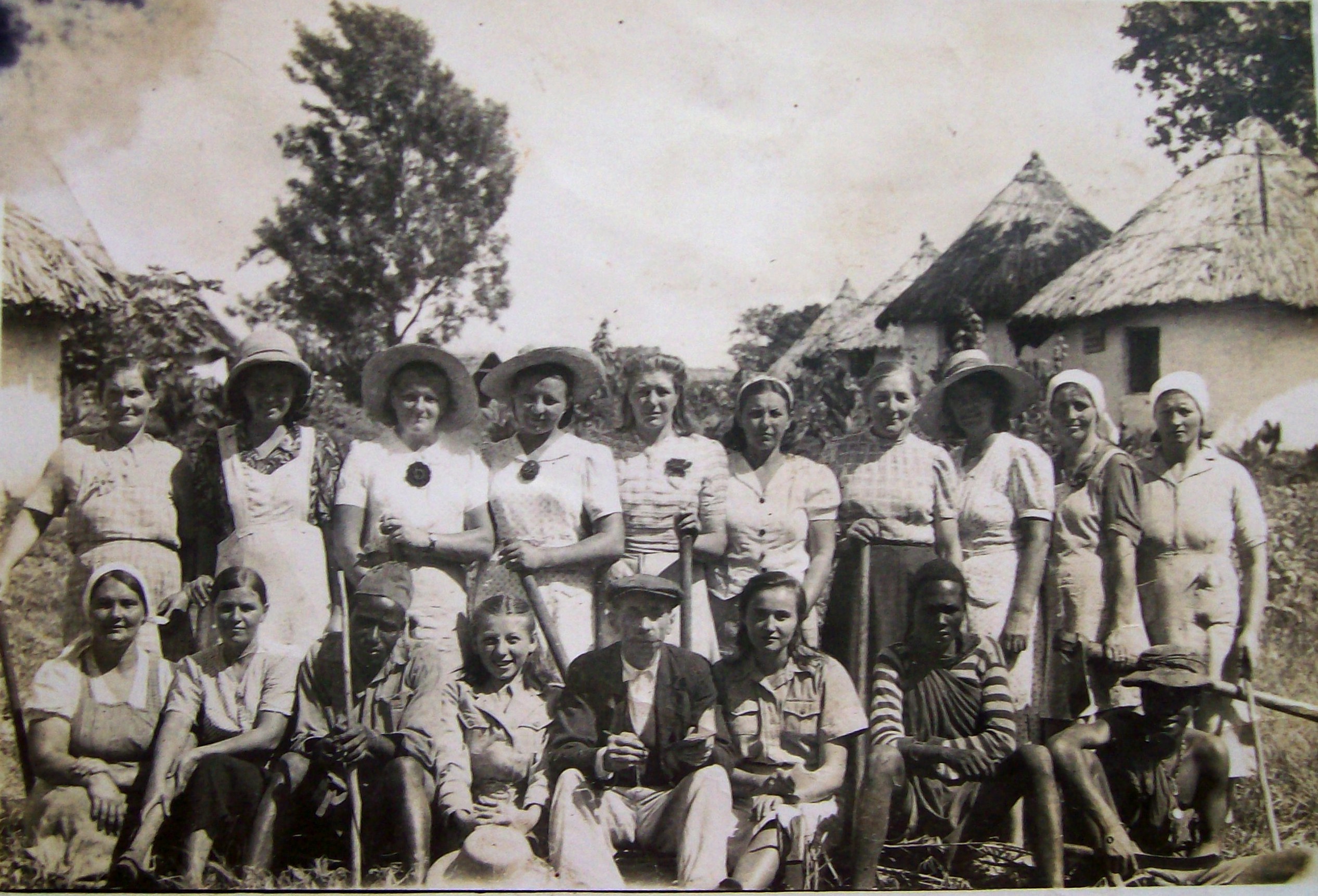
Vor rund siebzig Jahren lebten tausende Europäerinnen und Europäer in afrikanischen Flüchtlingslagern. Im Folgenden gebe ich einen Überblick über diese Fluchtbewegungen und erzähle vor allem die Geschichte von zwanzigtausend polnischen Flüchtlingen, die ein wenig komplizierter ist als erwartet. Dabei zeigt sich nicht nur, dass sich Fluchtrichtungen ändern, sondern auch, dass unterschiedliche Flüchtlinge schon immer unterschiedlich behandelt wurden.
Eine kleine Bahnstation mitten im südlichen Uganda, nahe dem Viktoria-See. Eine Gruppe Flüchtlinge ist angekommen und wartet auf Lastwagen, die sie zu ihrem Flüchtlingslager bringen sollen. Sie haben eine lange Reise voller Entbehrungen hinter sich, Jahre der Not und Verzweiflung, seit sie aus ihren Heimatorten verschleppt wurden. Unterwegs sahen sie Freunde und Angehörige an Krankheiten und Hunger sterben. Sie fuhren in überfüllten Zügen und Booten, schliefen in Wäldern und an Bahnstationen. Jetzt sind sie endlich in Sicherheit, werden medizinisch versorgt und erhalten ausreichend Nahrung. Unter den Menschen in der Gegend hat sich schon herumgesprochen, dass Flüchtlinge ankommen. Vor allem die Kinder sind neugierig und trauen sich an die Fremden heran. Eines der Kinder wird sich noch Jahrzehnte später an diese Begegnung erinnern, vor allem an das süße Brot, welches die polnischen Flüchtlinge ihm schenkten.
Bei einem Forschungsaufenthalt in Uganda 2015, erzählte mir ein Freund von Professor Lwanga-Lunyiigo diese Anekdote, als ich ihn nach den polnischen Flüchtlingen fragte. Sie lebten hier von 1942 bis 1951. Wie aber kamen polnische Flüchtlinge nach Uganda? Und wieso beschenkten die Flüchtlinge die ansässige Bevölkerung und nicht anders herum?
“But we might recall, that it was not always so; Europe, not Africa or Asia, was once the continent of most of the world’s homeless.” (Marrus: The Unwanted, 4)


Europäische Flüchtlinge in Afrika
Wenn heute von der historischen Herausforderung durch die „Flüchtlingskrise“ in Europa die Rede ist, stehen der Zweite Weltkrieg und seine Folgejahre häufig als Referenzpunkt Pate (z.B. UNHCR, AI). Vergleiche beziehen sich zumeist auf die weitreichenden innereuropäischen Fluchtbewegungen, Vertreibungen und Deportationen. Doch Menschen aus Europa flohen auch nach Afrika.

Stefanie Zweigs Aufenthalt in Kenia ist durch ihren Bestseller Nirgendwo in Afrikawahrscheinlich der Bekannteste. Neben ihr flohen Tausende europäische Jüdinnen und Juden vor der Verfolgung durch die Nationalsozialisten nach Südafrika, Algerien oder Marokko. Viele andere standen jedoch nicht nur in westlichen Ländern vor verschlossenen Türen, sondern auch in deren afrikanischen Kolonien. In Nord-Rhodesien sprachen sich antisemitische weiße Siedler 1938 energisch gegen Pläne zur Aufnahme jüdischer Flüchtlinge aus.

Darüber hinaus lebten einige tausend griechische Flüchtlinge in Lagern in Belgisch-Kongo und Ägypten (und übrigens auch in Syrien). Und während mehr als eine Million koloniale Soldaten aus Afrika gegen die Achsenmächte kämpften, befanden sich hunderttausende Italiener und Deutsche in Afrika – als zivile Internierte oder Kriegsgefangene. Doch waren sie nicht die einzigen, die zur Zeit des Krieges auf dem friedlicheren Kontinent im Süden waren.


Deportation
Die eingangs erwähnten Flüchtlinge waren Teil einer viel größeren Gruppe, deren Weg 1940 in Polen begann. Sie flohen jedoch nicht vor den Deutschen, sondern wurden von der sowjetischen Geheimpolizei, eingesperrt in Viehwaggons, in die Arbeitslager und „Spezial-Siedlungen“ des Gulag verschleppt. Die Deportationen betrafen hunderttausende Menschen aus Polen und dienten dem sowjetischen Machterhalt und der Zerstörung möglichen polnischen Widerstands im östlichen Landesteil (s. hierzu Sword). In den Lagern kämpften sie gegen Hunger, Krankheit und Kälte, bis 1941 der Überfall der Wehrmacht auf die Sowjetunion eine unerwartete Wende brachte.
Die polnische Exilregierung in London und die sowjetische Regierung schlossen – unter britischer Vermittlung – das Sikorski-Maiski-Abkommen. Dieses beinhaltete die Freilassung aller Polen aus sowjetischer Gefangenschaft, damit sie eine Armee auf Seiten der bedrängten Alliierten bilden konnten. Diese Armee wurde schließlich im Iran aufgestellt und sie kämpfte unter britischem Kommando in Nordafrika und Italien gegen die Deutschen.
Doch mit den Soldaten kamen auch Frauen, Kinder und Alte und diese saßen nach ihrer überstürzten Flucht aus der Sowjetunion in iranischen Transitlagern fest. Um die Motivation der polnischen Soldaten aufrechtzuerhalten, musste die britische Regierung deren Angehörige versorgen und in Sicherheit bringen. Da der Iran jedoch zu nah am Kriegsgeschehen war und einen wichtigen Transportkorridor der Alliierten darstellte, wurden andere Orte für die polnischen Zivilisten gesucht.


Polnische Flüchtlingslager in Afrika
Schließlich fanden rund 19 000 von ihnen Unterkunft in den britischen Kolonien im östlichen und südlichen Afrika (Bildergalerien hier und hier). Die meisten kamen 1942 nach Tanganyika (heute Tansania) und Uganda, weitere wurden in Nord-Rhodesien (heute Sambia), Süd-Rhodesien (heute Simbabwe) und Kenia untergebracht. Südafrika nahm lediglich 500 Kinder auf (andere fanden im Nahen Osten, Indien, Mexiko oder NeuseelandZuflucht).
Die polnischen Flüchtlinge lebten für die nächsten Jahre in über zwanzig weit verstreuten Flüchtlingslagern, deren Größe von wenigen hundert bis zu viertausend Bewohnern reichten. Das Leben in den Lagern war größtenteils isoliert von der restlichen Gesellschaft und die interne Verwaltung lag in der Hand von in Nairobi ansässigen Vertretern der polnischen Exilregierung. Die Kolonialregierungen stellten jeweils den Kommandanten des Lagers und versuchten die Interaktion der polnischen Flüchtlinge, vor allem mit der afrikanischen Bevölkerung, zu kontrollieren. Eine Integration der Flüchtlinge lag weder im Interesse der polnischen noch der britischen Obrigkeit. Die Kolonialregierungen wollten die Flüchtlinge nur für die Dauer des Kriegs beherbergen und die polnischen Vertreter taten alles dafür, ihre polnische Nationalidentität zu stärken, etwa durch polnische Schulen, Kirchen, Feiertage, Volkstanz- und Pfadfindergruppen.
Doch wie bei anderen Flüchtlingslagern auch war die Isolation nie vollständig. Vor allem die polnischen Jugendlichen gingen ihre eigenen Wege, lernten von ihren afrikanischen Nachbarn Kiswahili, gingen zum Hahnenkampf und schlossen Freundschaften. Neben den afrikanischen Arbeiter und Wächtern kamen viele Bäuerinnen und Bauern in die Lager und verkauften Obst, Gemüse oder Eier. Ein polnischer Flüchtling betrieb eine ertragreiche illegale Schnapsbrennerei. Einige der alleinstehenden Frauen begannen Beziehungen mit britischen, italienischen, indischen oder ostafrikanischen Männern. Die polnischen und britischen Beamten beobachteten diese Interaktionen mit Argwohn und versuchten sie möglichst zu verhindern.


Rückkehr wohin?
Wie so häufig bei der Aufnahme von Kriegsflüchtlingen wollten die Regierungen sie nur für die Dauer des Krieges aufnehmen. Doch die Flüchtlinge steckten nach dem Krieg in einem Dilemma: Die neue polnische Regierung war nicht mit der Exilregierung in London verbunden, sondern mit der sowjetischen Führung in Moskau. Die meisten der polnischen Flüchtlinge in Afrika weigerten sich nachdrücklich in ein Land zurückzukehren, das kommunistisch regiert wurde. Darüber hinaus kamen fast alle aus dem östlichen Polen. Ihre Heimatorte waren nun aufgrund der Westverschiebung Polens Teil der Sowjetunion, was eine Rückkehr unmöglich machte.
Eine polnische Repatriierungsmission der UNRRA kam 1946 in die Flüchtlingslager, um für die freiwillige Rückkehr zu werben. Ihr Empfang war allerdings alles andere als herzlich: Einige der Flüchtlinge machten sehr energisch darauf aufmerksam, dass sie nicht in den sowjetischen Einflussbereich zurückwollten. In einem Lager verkleideten sie sich als Häftlinge in Arbeitslagern, um deutlich zu machen, was sie mit der Sowjetunion assoziierten. Andere bewarfen die Delegation mit Tomaten und die britische Verwaltung sorgte sich ernsthaft um ihre Sicherheit. Insgesamt kehrten nur rund 3000 Flüchtlinge freiwillige nach Polen zurück.


Warum polnische Flüchtlinge nicht in Afrika bleiben durften
Die polnischen Flüchtlinge befanden sich in einer ähnlichen Situation wie heutige Flüchtlinge in protracted refugee situations: Sie hatten keinen Ort, an den sie zurückkehren konnten. Aussicht auf dauerhafte lokale Ansiedlung und Integration gab es ebenfalls nicht.
Mitte 1946 schlug Major Bagshawe, ein Polen-freundlicher Kolonialbeamter in Süd-Rhodesien, vor, eine Agrarsiedlung für 400 polnische Familien zu gründen. Sie sollten kleine Landparzellen, einen Pflug und einen Ochsen erhalten. Bagshawe räumte ein, dass sie wahrscheinlich nicht nach „europäischen Standards“ leben könnten, doch sei es allemal besser als in den Lagern. Die politischen Vertreter der polnischen Flüchtlinge begrüßten die Vorschläge als den Anfang größerer Ansiedlungspläne. Allerdings machten die kolonialen Regierungen umgehend deutlich, dass dies nicht in ihrem Interesse war. Auch gegenüber der Londoner Zentralregierung unterstrichen sie, dass sie keinesfalls größere Gruppen von Polinnen und Polen dauerhaft aufnehmen würden.
Der Grund für diese Ablehnung war neben der generellen Diskriminierung aller nicht-britischen Immigranten, vermutlich die Angst vor der Entstehung einer weißen Unterschicht. Arme Weiße gefährdeten das sorgsam konstruierte Bild einer überlegenen weißen „Rasse“ und damit eine der Säulen kolonialer Herrschaft. Gerade im Angesicht der erstarkenden afrikanischen Unabhängigkeitsbewegungen kam dieses Gesellschaftsmodell immer stärker unter Beschuss. Doch die sogenannten „poor whites“ waren schon in früheren Zeiten ein Grund zur Sorge kolonialer Regierungen. Sie begegneten dieser weißen Unterschicht mit einer Mischung aus Fürsorge, Isolation und möglichst schneller Entfernung. Ganz ähnlich war der Umgang mit den polnischen Flüchtlingen: Sie erhielten recht großzügig Unterstützung, wurden in abgelegenen Lagern untergebracht und sollten so schnell wie möglich wieder ausreisen.
Dies führt uns auch zurück zur anfänglichen Szene an der ugandischen Bahnstation. Die Flüchtlinge waren unterwegs in ihr Lager, das abgeschirmt auf einer Halbinsel lag. Und sie gaben den Kindern süßes Brot – Brot, welches sie durch die Kolonialregierungen erhalten hatten. Auch wenn sie weit entfernt vom Luxus der britischen Siedlerschicht lebten, so waren sie doch aufgrund ihrer augenscheinlichen Zugehörigkeit zur weißen „Rasse“ privilegiert. Sie mussten die afrikanischen Nachbaren nicht anbetteln, sondern im Gegenteil bauten afrikanische Arbeiter ihre Häuser, hackten ihr Holz und reinigten ihre Toiletten. Ihre kumulative Kaufkraft führte zu inflationären Preissteigerungen im Norden Tanganyikas. Den direkten Vergleich zu ihren Leidensgenossen in Europa zog ein kanadischer Vertreter der International Refugee Organisation (IRO). Er war überrascht, wie viel besser es die polnischen Flüchtlinge in Afrika im Vergleich zu Displaced Persons in deutschen Lagern hatten.
Das Schicksal der Flüchtlinge war eng mit der polnischen Armee verknüpft. Als die polnischen ex-Soldaten 1947 schließlich in Großbritannien akzeptiert wurden, durften ihre Angehörigen aus den afrikanischen Lagern nachreisen. Doch nicht alle Flüchtlinge waren direkt mit Armeeangehörigen verwandt und so kamen schließlich knapp zwei Drittel von ihnen nach Großbritannien. Der Rest bemühte sich um Aufnahme in eins der Umsiedlungsprogramme der IRO und gelangte so nach Kanada oder Australien. Andere nutzten Kontakte in der weltweiten polnischen Diaspora um individuell an Visa zu gelangen. Rund tausend durften sich in den afrikanischen Kolonien niederlassen.


Nicht so lange her…
Ein Blick in die Geschichte zeigt, dass sich Fluchtrichtungen ändern. Die sicheren Zufluchtsorte von heute sind die Kriegsgebiete von gestern. Und so kann sich dies zukünftig auch wieder ändern. Die Genfer Flüchtlingskonvention entstand aus den Erfahrungen der europäischen Fluchtbewegungen und wurde erst mit dem Protokoll 1967 universell gültig. Ihre selektive Durchsetzung zeigt, dass der Anspruch der Flüchtlingskonvention leider nie uneingeschränkt umgesetzt wurde. Unterschiedliche Flüchtlinge wurden schon immer unterschiedlich behandelt und „Rasse“ war dabei häufig eine wichtige soziale Kategorie der Unterscheidung. Hoffentlich nicht mehr lange.


Nicht näher belegte Aussagen in diesem Beitrag beruhen auf Archivrecherchen in London, Dar es Salaam und Nairobi sowie Interviews in Uganda und Tansania im Rahmen meinesDissertationsprojekts. Einen guten Überblick zu den polnischen Deportationen gibt Piotrowski in seiner Sammlung von Zeitzeugen-Erzählungen.


Dieser Beitrag ist Teil der Blogreihe Flucht und Vertreibung in Afrika des Arbeitskreises Afrika des Netzwerks Flüchtlingsforschung.

20.11.2016

NOTES ON A THEORY OF MULTI-RACIAL WHITE SUPREMACIST PATRIARCHY, AKA MRWASP

November 29, 2013 · by Robin James · in critical race theory, feminism, gender, MRWaSP, multi racial white supremacy, neoliberal, patriarchy, Puar, race, resilience, sexton, sheth
Multi-Racial White Supremacist Patriarchy, or MRWaSP, is my term for early 21st-century globalized Western race/gender/sexuality/capitalist hegemony. I put a lower-case “a” in the acronym to both make the acronym something pronounceable to English speakers, and to echo the older acronym WASP (White Anglo-Saxon Protestant). You say it like “Mr. Wasp”–emphasis on the “mister” shows that this is not just about white supremacy, it’s also about patriarchy.
MRWaSP is an upgrade on WASP. As critical theorists of race have been arguing, white supremacy has retooled itself to work more efficiently in and for globalized, neoliberal hegemonies. Not only are exclusion and border-patrolling resource-intensive, they’re also not the most efficient ways of promoting nationalist, capitalist, patriarchal interests. As Jared Sexton argues, contemporary multiculturalism/multiracialism is a “protest less against the genocidal objectives of Anglo white supremacy than the inefficiency of unrestrained violence as the means of its accomplishment” (Amalgamation Schemes, 200). You can extend this argument to patriarchy and other institutionalized forms of identity-based oppression. It is more cost-effective to include some formerly excluded/abjected groups in racial/gender/sexual supremacy, because this inclusion further reinforces both the supremacy of the hyperelites and the precarity of the most unruly groups (those who pose the greatest threat to MRWaSP hegemony). As the always-brilliant philosopher Falguni Sheth explains,more and more men and women of color have been invited into the offices of White Supremacy to share in the destruction of other men and women of color who are vulnerable, disfranchised, and rapidly being eviscerated through the policies of a multi-racial white supremacy…A multiracial white supremacy is a system of power that has invited in—or exploited wherever it could– people of color in order to wage institutional, legal, political assaults on other black, brown, and poor people—at “home” and internationally.
Sheth cites numerous recent examples, including Asian-American former Attorney General John Yu and African-American former Secretary of State/National Security Advisor Condoleza Rice’s central role in establishing and maintaining the US prison facility at Guantanamo Bay. Though installing people of color in positions of real political, economic, and social power may not seem to benefit white supremacy, it actually does; when your racist project appears to be led by a person of color, that obscures the racism. It “promote[s] their claims to be non-racist by using the presence of these [non-white] individuals as cultural symbols to distract many of us” so that what is an “overt racial mission…can be couched as an ostensible hunt for justice.” Putting otherwise privileged people of color at the center of white supremacist institutions obscures the white supremacy (and the imperialism/coloniality), thus allowing it to run all the more efficiently. This inclusion is always conditional and always instrumental–this can’t be emphasized enough. People of color are folded into white supremacy only insofar as this augments white supremacy; the moment this becomes a bad deal for white supremacy, it ends.

Homonationalism, an idea developed by Jasbir Puar, is another type of MRWaSP strategy. The nominal inclusion of formerly abjected groups–here, homosexuals–is used to distinguish between successful, resilient nations and those nations in need of (white) savoirist intervention. “Good” societies recognize that gays and lesbians are normal people, too; “bad” societies cling to primitive homophobic views and traditions. Similar discursive moves also distinguish “good” post-feminist societies and “bad” traditional societies that still overtly oppress women (e.g., through veiling, genital cutting, child marriage, sex work, etc.) Supposedly liberated attitudes about gender, sexuality, and often also race distinguish resilient societies from primitive ones. Sometimes this distinction is used to disaggregate whiteness, generally along the lines of social class. For example, in 2013 World Wrestling Entertainment (WWE) featured a bad guy character (a “heel,” in industry parlance), Jack Swagger, who expressed anti-immigrant, nationalist, and sometimes overtly white supremacist views. The schtick is that these racist views are what qualify him to be a heel: they’re obviously odious to fans, evidence of the character’s vilany. “Good guys” should not harbor the racist, anti-immigrant views espoused by Swagger, and should instead be fully comfortable cheering on Swagger’s Mexican-American nemesis, Alberto del Rio. As neoliberal capitalism restructures the economy and leaves working-class and rural whites in the lurch, framing them as backwards and uneducated makes their increasingly marginal socioeconomic status seem like the result of their individual failings, not the result of broad economic forces. Just as it conditionally and instrumentally includes otherwise privileged people of color within white supremacy, MRWaSP conditionally and instrumentally excludes otherwise underprivileged whites from the privileges to which they are accustomed as white. Similarly, just as it conditionally and instrumentally includes otherwise privileged women, gays and lesbians, and people with disabilities (think about pre-murder-trial Oscar Pistorious, or Temple Grandin’s recent fame), MRWaSP conditionally and instrumentally excludes otherwise underprivileged women, queers, and people with disabilities.

Another way of saying that is: MRWaSP uses resilience to cut the color line–and the gender binary, the line between homonormative and queer, and to differentiate between mainstreamable and non-mainstreamable people with disabilities. By “resilience” I mean a specific neoliberal ideology, not the general sense of surviving in the face of hardship and oppression. Mark Neocleous explains the relationship between resilience discourse and neoliberal ideology here. What I’m calling “resilience discourse” is another way of framing what Naomi Klein calls “shock doctrine” capitalism–it’s the incitement of damage for the purpose of overcoming it (because that overcoming generates surplus value/profit/etc.). I’ve talked a bit about resilience discourse and femininity here and here.

Resilient populations who can overcome their race/class/gender/sexual/immigrant/religious/ damage in socially profitable ways move closer to the center of white supremacist privilege, whereas less resilient, precarious populations move further and further from this center. Resilience deregulates the work of racialization, gendering, sexualization, bodily normalization, and so on; it treats racialization/gendering/sexualization/etc. like a deregulated marketplace. Rather than tying race status directly and primarily to phenotype (visible race), and then regulating on the basis of racial identity (e.g., Jim Crow, apartheid, etc.), resilience frames race as an effect or outcome of one’s response to underlying, background conditions. Similarly, rather than tying gender status directly and primarily to either sex and/or visible gender performance, resilience frames it as an effect or outcome of one’s response to underlying, background conditions. This makes your status seem like the result of your individual choices, a true meritocracy in which the hard-working overcome their damage, but the lazy and sick can or will not. Of course, however, these background conditions are not equal, and they’re definitely controlled by histories of racial exploitation, patriarchy, and so on. It’s harder to bounce back if you’re starting from behind.


It’s not just race that shapes these material and ideological conditions–it’s also cis/heteropatriarchy, capitalism, Eurocentrism, ableism, all of what falls under “kyriarchy”. Because all these -isms shape the background material and ideological conditions in which we all work, those who have the best odds of successfully demonstrating their resilience are the ones who have the most heavily stacked decks. So, bourgeois, cis-gendered, able-bodied people of color are generally the most resilient ones…in no small part because MRWaSP has to make fewer material and ideological compromises to let them in.

18.11.2016

liam young Unknown Fields 2016 Unravelled Expedition_Ahmedabad Cotton Mill

Archives: seeking memories, making meaning, creative practice

Monday 24 October 2016 | Rose Sinclair | Archives and archivists,

I am asked on a daily basis to describe who I am: one day I am an academic, another a researcher, and then a textiles practitioner. My name is Rose Sinclair and I am all of the aforementioned, but it is my researcher role that brings me to the archive, to seek out fabrics in a place perhaps often perceived from the outside as being full of paper.

Beyond the façade of bricks and mortar is another world and space in which I become so engaged time drifts away. If I could relocate my studio practice with all its ‘stuff’ for a month to just start to examine the designs, understand the prints, weaves, embroideries, in context, location iconography, one word… wow. I would be in design heaven.

Using my academic perspective I see the benefits of students seeing, handling, understanding the evolution of design, thinking against a backdrop of cultural evolution extending the reach of the archive into teaching and learning into creative practice with students, who on a daily basis curate and archive their own lives in digital spaces. 1 As a researcher I am interested in the ‘before and after‘, the stories and the memories, times before and times after. Textiles from an archive can be one vehicle that can tell those stories.


‘…but in archives, though the bundles may be mountainous, there is not very much there (…) the archive is made from selected and consciously chosen documentation from the past and also from the mad fragmentation that no one intended to preserve and just ended up there.’ 2

As a researcher, my first entry into the archives was one of awe and thinking, ‘wait a minute: how on earth will I be able to locate what I need, and how can paper lead me to textiles?’

Indeed Steedman’s quote could leave you thinking an archive is just made up of mounds of paper, and you will be sitting in room surrounded by mounds of books; that can happen and does happen. I call it serendipity that archives also contain cloth and other ephemera, fabrics, which are tangible things, material objects, which speak of approaches to technology, design, process, practice, making, crafting. The designs can also speak about how culture can be interpreted and reinterpreted.

The design register is a form of archive that allows an exploration about the design practice of British manufacturing companies that designed, crafted and then manufactured products for distribution not only in the UK but across the world. Companies sought to register their designs, and in some cases re-register after the five year registration process elapsed, speaking of the popularity of a design or product. The register speaks of design taste, the changing technology of manufacturing practices, colour, dyes, design motifs, aesthetics tastes, responses to market or markets, or the opportunity to perhaps usurp the local market.

As a textiles practitioner it is material object that triggers my research question, my practice, my ‘other’ knowledge. The design register is one such archive, of 3 million pieces of fabric. Once you realise that the numbers in the catalogue relate to a designed object, ephemera, it gets exciting as a box is delivered to your desk, you undo the ribbon, and you say ‘wow’.

My first delve into the archive was assisted by Julie Halls and Sandra Shakespeare at The National Archives. I was looking for fabrics that highlighted the migration process from Caribbean to the UK, and what I located was fabric that seem to indicate design operating in the other direction, starting in the UK and going to the Caribbean and the wider diaspora. This fabric, and its design, has lead me down other research paths, both through The National Archives and other archives. This fabric raises questions of material culture, object speaking, design history. Why would such a fabric – designed by an Irish company, made from Sea Island cotton, printed in Manchester – depict designs that showcase Caribbean cultural traditions such as Junkanoo and the Goombay dance? The history of the company that created the fabric also makes interesting reading, adding another layer to an already diverse range of questions.


Orange with Goombays, design registration 451013 (catalogue number: BT 52/6654)

Note however the first visit located one fabric. It would take more research and further visits to locate further fabrics.

For me as a practitioner the excitement is that I can use fabrics in a creative workshop that speak directly to cultural traditions I know of from stories from my own childhood or background. I am excited to be sharing this workshop on 12 November 2016 with other makers, researcher and crafters.


Blue and white Junkanoo, design registration 474392 (catalogue reference: BT 53/161)

Archival research is not fast, but it throws up the unexpected. It highlights for me the place the archive plays in the research practice space, both in the institution and also in the space of the practitioner, as you seek to interpret the findings outside of the space of the archives, working from your own photographs, notes, sketches, images, making sense of the wider and broader story of making, and its relation to the wider world. More will be revealed about these fabrics and their provenance at my forthcoming talk.

15.11.2016

Variatons of White

Searching for a Global New Feminism / Feminism as Politics!

 
Installation view, Tanja Ostojić, Misplaced Women? (2009–16), mixed media (all photos by author for Hyperallergic)

Most people know the story by now: Feminism’s first wave came with the suffragettes; the second wave with women’s liberation in the 1970s; and the third wave crashed in with riot grrrls and zinesters. Today, a question is bubbling up of whether or not we’ve reached a new wave, a new era in feminism.
It’s certainly the case that there’s been a popular push across feminist media and arts in the US to spotlight the ongoing and long-overlooked contributions of women of color. And women of color–led efforts are rightly taking center stage of their own accord, in movements such as #BlackLivesMatter and the fight for immigrant rights. We’re also seeing a broader recognition that gender equality goes beyond the male/female binary and requires embracing trans and gender-nonconforming people. Which is to say, there’s a growing understanding at a mass scale that all oppressions are linked.

But even saying the above is tricky if you look at the history. Linear or unifying narratives of progress leave a lot out in the desire to preserve a clear story. While many white feminist leaders of the past had a fairly narrow focus, others, along with womanists, have long been looking at oppressions beyond the patriarchy. In the 1970s, for instance, queer women of color were already articulating an intersectional approach to their political work. In other words, the only new development is that intersectionality has moved into popular discourse. At the same time, the kinds of political battles being fought by women who call themselves feminists in the US today can feel worlds apart — from those fighting for access to CEO positions at Fortune 500 companies or to serve on the front lines in the military to women demanding a higher minimum wage or to be given legal status in their own country. If anything, the feminism of today seems more diffuse, varied, and subject to interpretation (or co-optation) than ever before. And that’s just feminism within the US.

Installation view, Mujeres Públicas, “Untitled” (2003–16), wallpaper and matchboxes

These kinds of complications are precisely why the exhibition Feminism as Politics!, curated by Olga Kopenkina and currently on view at the Pratt Manhattan Gallery, falls short. Comprised of work by 11 artists and collectives, the exhibition is compact, likely a limitation of both the space and the reality of funding feminist-focused projects. Spanning nine countries, the show centers primarily on works by European and Russian artists, but seems to gesture toward a global perspective with works by practitioners in the US, Guatemala, and Argentina. This tiny, scattered taste left me wondering what’s happening in unrepresented countries and why Kopenkina chose the places that she did. Why, for instance, have such a heavy showing from countries that were part of or adjacent to the USSR without focusing exclusively on that region? That might have allowed for a tighter show with a clearer sense of the worlds in which the artists are working.
Kopenkina’s essay doesn’t offer many ways to better understand her choices. She suggests that the artists in the exhibition are all working to “identify possibilities emerging from the ruins of the global status quo” and draws on the work of academics Stefano Harney and Fred Moten to reference an “undercommons,” or an “antipolitics that emerges from the outraged, endangered, indebted population.” But few of the artists seem to be addressing a global status quo or undercommons directly. She also draws on the work of Isabell Lorey and Jack Halbertstam in trying to define the New Feminism that she’s interested in; related conversations can be found in places like Dissent magazine and the Guardian. Yet her writing remains mostly academic and theory-bound, rather than focusing on how these ideas play out in the artwork itself.

All of which gets at the central contradiction of the show. On the one hand, in her essay, Kopenkina seems to argue against the drive to homogenize culture and political movements: “economic and political precarization has become a neoliberal instrument of governance that does not make any absolute separation between center and margin.” On the other hand, she presents this sampler of artworks with few meaningful insights into the unique political climates that gave rise to them, either assuming that the viewer knows this information or will look it up. Whether it’s intentional or not, by not providing context she ends up homogenizing the work to some extent, or at least obscuring its political specificity, which seems to defeat the purpose of the exhibition and clouds a potentially compelling argument about contemporary feminism no longer having a center or cohesive vision.


Installation view, Pauline Boudry/Renate Lorenz, “Toxic” (2012), film, featuring Ginger Brooks Takahashi and Werner Hirsch


This contradiction feels particularly evident in the film work “Toxic” by the Berlin-based duo Pauline Boudry/Renate Lorenz. In the video, artists Ginger Brooks Takahashi and Werner Hirsch perform dryly as a punk and a drag queen, playing reluctant, even antagonistic, parts for the camera. There are references to the work of queer art figures such as Jean Genet and Catherine Opie, as well as Basquiat, in the fantastical and uneasy mug shots and masks that populate much of the film. Watching it unfold without reading anything about it, you can assume that the work was shot somewhere in Europe (it was indeed shot in Paris) and is intended for those who have experience within Western universities, museums, and galleries. Certainly, that is its own specific context, but it is a liberalized one that aims to be highly transportable and legible to any arts audience. In that context, the terms “feminist” or “queer” become generic statements that don’t articulate the actual values or positions of the people laying claim to them. They become totalizing ambiguities to which viewers can ascribe a great deal of assumed meaning, nodding in presumed agreement, while knowing very little about what the people using the terms actually do in the world to assert their politics. Set within this exhibition,”Toxic” feels vague and, because of that, toothless.

12.11.2016

THE COLONIAL ADMINISTRATION OF BODIES AND SPACE


http://the-archipelago.net/2014/08/21/ann-laura-stoler-the-colonial-administration-of-bodies-and-space/

Conversation recorded with Ann Laura Stoler in New York on August 11, 2014

Ann Laura Stoler and I begin this conversation by introducing the political context lexicon (see below) that she co-curates and edits. We then discuss the work she had done around the colonial management of sexuality and reproduction. The existence of the métis (mix-blooded) child in the colony renders more complex the binary distinction between colon citizens and colonial subjects. Biology is nevertheless not merely the only site of recognition for the colonial administration, behavior is also extremely important in the access to citizenship. We examine how space, whether corridor or school, is built to accommodate the administrated behavior of the colony. Finally, Ann gives us a preview of her forthcoming book that attaches a strong importance to the notion of duress and the concepts we need to write new colonial histories of the present.
Ann Laura Stoler is Willy Brandt Distinguished University Professor of Anthropology and Historical Studies at the The New School for Social Research in New York City. She has worked on issues of colonial governance, racial epistemologies, and the sexual politics of empire. Her regional focus has been Southeast Asia. She was a visiting distinguished professor at the École des hautes études and at the École Normale Supérieure in Paris and is recipient of Fulbright, Guggenheim, National Endowment for the Humanities, National Science Foundation and Social Science Research Council fellowships.

The Slave Ship: An Operative Architecture Responsible for the Abysmal Atlantic Crossing

info@thefunambulist.net
The Slave Ship: An Operative Architecture Responsible for the Abysmal Atlantic CrossingJanuary 8, 2016
Architecture & Design / History - By: Léopold Lambert


Above: La Marie-Séraphine (1770) / Excerpt from Bertrand Guillet, La Marie-Séraphine: Navire négrier, Nantes: Editions MeMo, 2009.


Writing about the open wound that the history of slavery constitutes is always a painful exercise. It is also doomed to fail making us fathom the formidable sustainability of violence that the three centuries of legalized slavery implemented — but would we ever recover from such a fathoming? This article is the fifth one about the abysmal Atlantic crossing and its architectural technology, the slave ship. While two of them were comparing (without ever equating) the Atlantic abyss with the current Mediterranean one (see “The Mediterranean Abyss: South Wall of Fortress Europe and Cemetery of the Poors” and “The Politics of Overpopulated Spaces“), two others focused on the historical crossing of the slave trade, citing the three Carribean authors C.L.R. James, Édouard Glissant, and Patrick Chamoiseau (see “The Slave Ship Is Architecture” and “Abysmal Atlantic: The Slave Ships’ Genocide“).
The argument of these articles in the broader context of the research exposed on this platform is simple: although architecture and design (and through them, architects and designers) cannot be held responsible for the founding logic of the genocide that constitutes the slave trade, the latter could simply have never existed without their active contribution and, as such, architecture is fundamentally responsible for the operativity of slavery. Here, more than ever, we need to forget any dissociation between the various scales of design: the plantation cabin is architecture, of course (see Clifton Ellis and Rebecca Ginsburg (eds), Cabin, Quarter, Plantation, New Haven: Yale University Press, 2010) but more broadly, any materialized form of whatever size or nature implementing the organization of bodies in space is also architecture. This includes the slave ship and its inherent tension between the fundamental cruelty of its design and the economization of life that its function requires vis-a-vis its “human cargo.”

Descendances du nu Jimmy Robert


07.11.2016

How Dutch Wax Fabrics Became a Mainstay of African Fashion

The Philadelphia Museum of Art examines the past and present of Vlisco fabrics, a symbol of our hyperconnected, postcolonial material world.

Installation view, Vlisco: African Fashion on a Global Stage at the Philadelphia Museum of Art (photo by Tim Tiebout, courtesy the Philadelphia Museum of Art)

PHILADELPHIA — Riotously colorful, densely patterned, and unassailably fabulous, Vlisco fabrics have, for decades, been tailored into shift dresses, power suits, and formal gowns for Central and West Africa’s cosmopolitan elite. Their patterns and palettes evince an instantly recognizable aesthetic. And there are scores of Vlisco imitators: Chinese knockoffs are sold on city streets all over the world. But are any of these fabrics in fact African? The exhibition Vlisco: African Fashion on a Global Stage, on view at the Philadelphia Museum of Art (PMA) as part of a suite of shows and programs called “Creative Africa,” poses this question in an indirect but intriguing way, by explaining the company’s origins in the Dutch colonial empire and demonstrating its products’ lasting popularity, in African fashion and beyond. Art enthusiasts, for instance, might recognize Vlisco fabrics from the work of Yinka Shonibare MBE, who has used the them to fashion Victorian-style gowns and waistcoats for the generally headless human figures in his haunting installations. In Shonibare’s work, the fabrics do conceptual double duty: they act as a symbol of “African culture,” for those who perceive their patterns to be indigenous, and as a symbol of our hyperconnected, postcolonial material world, for those who understand the complexities of their origins.

Textile pattern by Constance Girard for Vlisco on view in Vlisco: African Fashion on a Global Stage (photo by the author for Hyperallergic)

The story of Vlisco begins not in Dakar, Lagos, or Accra, but in the small Dutch city of Helmond, where, in 1846, industrialist Pieter Fentener van Vlissingen purchased a textile factory with the goal of selling upholstery fabric, bedspreads, and handkerchiefs abroad. Van Vlissingen began creating imitation batik fabric based on designs from Indonesia — then known as the Dutch East Indies — with the goal of capitalizing on new roller printing technology that could effect the look of batik without all the labor-intensive work required to make the real thing. Batik originated in China and India in the 8th century, and it was refined in 13th-century Indonesia with the development of a new tool for applying hot wax to fabric known as canting, likely an anglicized form of the word tjanting. When Dutch imitators such as van Vlissingen entered the business, Indonesians noticed small flaws in their fabrics — namely a “crackle” effect, the result of small veins of pigment leaking through the wax resist — and the Dutch East Indies even went so far as to ban their sale in the 19th century. But other areas of the Dutch empire provided a ready, if unexpected, marketplace. Vlisco fabrics became a popular item in a different part of the Dutch colonial ecosystem, starting in Ghana, which was then called the Gold Coast.
The Vlisco factory in the 1950s–60s (image courtesy Vlisco)

The Vlisco factory in the 1950s–60s (image courtesy Vlisco)


Between 1855 and 1872, approximately 3,000 Ghanian soldiers served in the Royal Netherlands East Indies Army. They returned home, as servicemen often do, with a taste for items they encountered abroad. As the story goes, the soldiers had learned to appreciate the look of genuine batik but didn’t mind the crackle of the van Vlissingen version, so they purchased bolts of it for their female relatives back in Ghana. By the turn of the century, despite the ceding of the colony to the UK, the sale of Dutch-made faux batik in the Gold Coast was robust. By the 1930s, it was being adapted to suit Ghanian tastes, not by accident, but by design. According to Dilys Blum, the PMA’s senior curator of costume and textiles who organized the exhibition, the trend was so popular that several companies based in England, France, and Switzerland began producing faux batik fabrics in the 19th and early 20th centuries. Van Vlissingen responded by consolidating its grip on the marketplace and buying up several smaller concerns. Thus, a fabric produced in Europe with Asia in mind never quite hit the mark in its intended marketplace, but found an enthusiastic audience at the opposite end of the empire.

06.11.2016

Anna Baumann - Kienast


Sumatra-Träume am Zürichsee

Ein aus Indonesien zurückgekehrter Kautschukpflanzer und eine Künstlerin liessen vor über 100 Jahren die Villa Sunneschy in Stäfa für sich erbauen. Die Erinnerung an das Paar will eine Arbeitsgruppe direkt in der Villa lebendig erhalten.
Urs Köhle 24.10.2016

Rudolf Baumann war ein Rebell. Oder ein Lausbub. Jedenfalls mochte sich der Spross einer reichen Horgner Seidenindustriellenfamilie den Anweisungen des Familienrates nicht fügen. Mit 20 Jahren reiste er darum ab in den Fernen Osten.
Das hatte später bauliche Auswirkungen auf den Kehlhof in Stäfa. Baumann, der Horgen mit Fahrkarte und etwas Bargeld verlassen hatte, kehrte nämlich gut 15 Jahre später wohlhabend aus den Tropen zurück. Er verheiratete sich mit Anna Kienast, die ebenfalls aus den Horgner Seidendynastien stammte. Die beiden bauten für sich im Kehlhof die heutige Villa Sunneschy.
1908 wurde der Bau fertiggestellt. Er klingt mit vielem an Südostasien an, wohin die Eheleute mehrmals längere Reisen unternahmen.

Beschläge aus China
Auf den Reisen füllte das Ehepaar «die Reisekiste mit Ausstattungselementen wie Batik aus Indonesien und Kastenbeschlägen aus China», schreibt Annegret Diethelm in ihrer Geschichte des«Sunneschy», welche die Gemeinde Stäfa 2001 herausgab. Chinesische Beschläge sind heute noch in der Villa Sunneschy zu sehen, ebenso Tropenholz und Tapeten, die Rudolf und Anna Baumann-Kienast damals nach Hause senden liessen.
Von seiner Tätigkeit als Pflanzer kannte Rudolf Baumann Nordostneuguinea sehr gut. Ins damalige von der deutschen Neu-Guinea Compagnie verwaltete Kaiser-Wilhelms-Land war er 1891 gegangen. Vertraglich hatte er sich als Tabakpflanzer verpflichtet. Damit blieb er aber erfolglos. Ab 1895 war er Kaffeepflanzer auf einer eigenen Plantage in Ostsumatra. Kurz nach der Jahrhundertwende begann er dort, Kautschuk anzubauen. Es gelang ihm, seine Plantage vor der Rückkehr in die Schweiz gewinnbringend zu verkaufen. Nicht alle dort tätigen Auslandschweizer waren so erfolgreich, sagt der Ethnologe Christian Kaufmann, der in Südostasien jahrelang Feldforschung betrieb.

Umfangreiches Landgut
In Stäfa herrschte der ehemalige Pflanzer sozusagen in einem privaten Kolonialreich über 3500 Rebstöcke, über Obst- und Gemüsekulturen, Schafe und Fische. Sein Landgut war um ein Mehrfaches grösser als die heute immer noch ansehnliche Liegenschaft Sunneschy. Es umfasste nicht nur die Halbinsel beim Kehlhof, sondern auch Gebäude, Kultur- und Torfland bergseits der Seestrasse und sogar oberhalb der Bahnlinie. Für die Fische besass er zwei Weiher, den einen davon beim Schwyler.
Als Privatier widmete sich Rudolf Baumann seinen Hobbys, sammelte fernöstliche Gegenstände, schrieb und fotografierte. Als eine der ersten Privatpersonen verarbeitete er seine Aufnahmen in der Dunkelkammer; seine Werke sind die eines Bildungsreisenden mit wissenschaftlich-völkerkundlichem Interesse. Das Museum der Weltkulturen in Frankfurt hat rund 1000 von Baumanns Fotografien archiviert.
Baumann verarbeitete seine Eindrücke aus dem Fernen Osten vor allem schreibenderweise. Seine Ehefrau Anna, in bildenden Künsten talentiert und ausgebildet, arbeitete im Sunneschy bis 1914 ausschliesslich als Malerin und Grafikerin. Bei der Eröffnung des Kunsthauses in Zürich 1910 waren von ihr Arbeiten in Öl und Tempera ausgestellt. Später wandte sie sich der Plastik und Bildhauerei zu. Sie war in der Zürcher Kunstszene bestens vernetzt, und der Kehlhof wurde zu einem Treffpunkt von Künstlern.

Ein Enkel engagiert sich
Die Ehe des Künstlerpaars blieb kinderlos. 1917 holte Anna Baumann die damals 17-jährige Friedl Wiederkehr zu sich, die sie vier Jahre zuvor als Modell engagiert hatte. Bis zu ihrer Heirat lebte die junge Frau als Pflegetochter im Sunneschy.
Friedl Wiederkehrs EnkelThomas Matta, Raumplaner und Architekt unter anderem des Stäfner Gemeindehauses, gehört zu einer Gruppe, die nun das künstlerische Erbe des längst verstorbenen Ehepaars Bau­mann-Kienast dokumentieren will. Ein weiteres Ziel ist, Wissen über die Geschichte der Villa Sunneschy zu vermitteln.

Im einstigen Atelier
Diese Geschichte war wechselhaft, seit sich Anna und Rudolf Baumann-Kienast im Dezember 1920 bei der Gemeinde Stäfa abmeldeten. Das Paar lebte nachher in Castagnola im Tessin. Rudolf Baumann starb 1952, seine Ehefrau 1961. Die Villa Sunneschy hatte verschiedene Besitzer, bis die Gemeinde 1978 die Liegenschaft kaufte. Die Liste der vor­geschlagenen Verwendungen ist fast endlos. Im Dezember 2000 wurde die Villa nach einer Renovation neu eingeweiht. Heute ist sie vor allem ein Restaurant. Die Gruppe mit Thomas Matta will im Gegensatz zu anderen früheren Interessenten nicht die Villa in Beschlag nehmen. Vorderhand hat sie überhaupt erst Ideen. Eine davon ist, dass Besucher in Anna Baumanns ehemaligem Atelier Informationen finden und Wechselausstellungen ansehen könnten – beispielsweise mit Werken der einstigen Besitzerin.
Zu dieser Arbeitsgruppe Sunneschy gehören neben Matta der 1925 geborene Jeroen Bool aus Rotterdam, der vor einigen Jahren die Initialzündung zur erneuten Beschäftigung mit der Villa Sunneschy gegeben hat, sein Cousin Christian Kaufmann aus Basel, die beide über ihre Mütter mit dem Bauherrenpaar verbunden sind, und die Kunsthistorikerin Annegret Diethelm.
Diese vier sind seit Jahren daran, Grundlagen und Materialien zu Leben und Wirken des Ehepaars Baumann-Kienast zusammenzutragen. Sie möchten ihr Wissen und ihr Material an einen Verein weitergeben und haben Kontakt aufgenommen mit dem Gemeinderat Stäfa, dem Sunneschy-Pächter Béda Zingg und der Lesegesellschaft Stäfa.
«Wir möchten mit neuen Leuten ein Konzept erarbeiten», sagt Matta, «und hoffen, ein paar motivierte Personen aus Stäfa dafür gewinnen zu können.» An einem Informationsanlass (siehe Kasten) will die Gruppe sondieren, wie gross das Interesse ist, die Erinnerung wachzuhalten an die Geschichte der Villa Sunneschy und das Wirken des viel gereisten Künstlerehepaars, das sie einst baute. (Zürichsee-Zeitung)(Erstellt: 24.10.2016, 10:29 Uhr)

---

In Stäfa steht die skurrilste und schönste Villa am See
Im Kolonialreich des Herrn Baumann
29.8.2001
Als Rudolf Baumann, Sprössling einer reichen Horgner Seidenfabrikantenfamilie, und seine Frau Anna die Villa Sunneschy im Jahr 1906 erbauen liessen, träumte der Bauherr von einem privaten Kolonialreich, während die sensible Gattin eine Einheit von Mensch und Natur anstrebte. Entstanden ist eine skurrile, bezaubernde Villa, die heute dank der Gemeinde Stäfa der Bevölkerung offen steht. Selten haben Menschen einem Haus ihren Stempel mehr aufgedrückt als der weitgereiste Privatier und Schriftsteller Rudolf Baumann und dessen ebenso schöne wie begabte Frau Anna der Villa Sunneschy in Stäfa. Als das ungleiche Paar das Seegrundstück auf der Kehlhof-Halbinsel im Jahr 1906 kaufte, wollte der aus den Tropen zurückgekehrte Bauherr möglichst vielen seiner Südsee-Erinnerungen Raum geben, während seine malende Ehefrau Einfluss auf die Farbgebung nahm und darauf achtete, dass die Innen- und die Aussenwelt ein harmonisches Ganzes bildeten.

04.11.2016

Doris Salcedo: The Materiality of Mourning


Doris Salcedo: The Materiality of Mourning brings together a deeply evocative constellation of recent works by Doris Salcedo (Colombian, b. 1958), the renowned Bogotá-based artist known for her sculptures and public installations that respond to the testimonies of survivors and victims of political violence. Evoking themes such as the lasting grief of war, Salcedo’s works honor, acknowledge, and mourn those lost to oppression and political violence in Colombia and beyond. The pieces also address 20th-century preoccupation with materiality and the object; however, Salcedo’s artistic process is distinctive in the way it fuses painstaking research with works fastidiously made by hand.
The Materiality of Mourning features four separate installations, with a number of Salcedo’s works created between 2001 and today. These include the Harvard Art Museums’ recent acquisition, A Flor de Piel (2013), which will be shown publicly for the first time in this exhibition. A room-size tapestry comprised of thousands of preserved hand-sewn red rose petals, the work is intended as a shroud for a nurse who was tortured to death in the Colombian war.
Additional objects on view include a selection of Salcedo’s seminal sculptures, on loan from private and public collections as well as from the artist herself. Several works incorporate domestic furniture in unsettling configurations. Thou-less (2001–02), for instance, is comprised of carved, stainless steel chairs that are at once familiar and strange. Other works highlight how Salcedo has recently pushed her commitment to materiality and its expressive possibilities to new extremes. These include four works from the "Disremembered" series, individual ephemeral blouse-like sculptures that are constructed of handwoven silk threads filled with tiny needles. Each "Disremembered" sculpture provides a spectral contrast to Salcedo’s dense physically imposing works, such as the two untitled furniture pieces (2008) made of wood, metal, and concrete—with a combined weight of over 1,800 pounds—that will also be shown in the exhibition.
The accompanying illustrated catalogue, published by the Harvard Art Museums and distributed by Yale University Press, draws on more than a decade of research by exhibition curator Mary Schneider Enriquez, who delves into Salcedo’s complex artistic practice, the significance of materiality, and the political context informing her work. An essay by conservation scientist Narayan Khandekar explores the artist’s use of organic and nontraditional materials, particularly with regard to the conservation challenges they pose. The catalogue also includes a contribution from Salcedo herself, reflecting on the philosophical underpinnings of her work and on her decision to remain working in her native Colombia.Pulitzer, Jr., Fund for Modern and Contemporary Art.