Posts mit dem Label Dreieckshandel werden angezeigt. Alle Posts anzeigen

29.01.2018

Nederland was voor even de grootste slavenhandelaar ter wereld


De Gouden Eeuw staat bekend als dé bloeiperiode uit de geschiedenis. Minder bekend is dat Nederland toen ook een grote ronselaar van werkkrachten voor Braziliaanse plantages was. Sterker nog: een tijdlang was het ’s werelds grootste handelaar in slaafgemaakten.


Karwan Fatah-Black
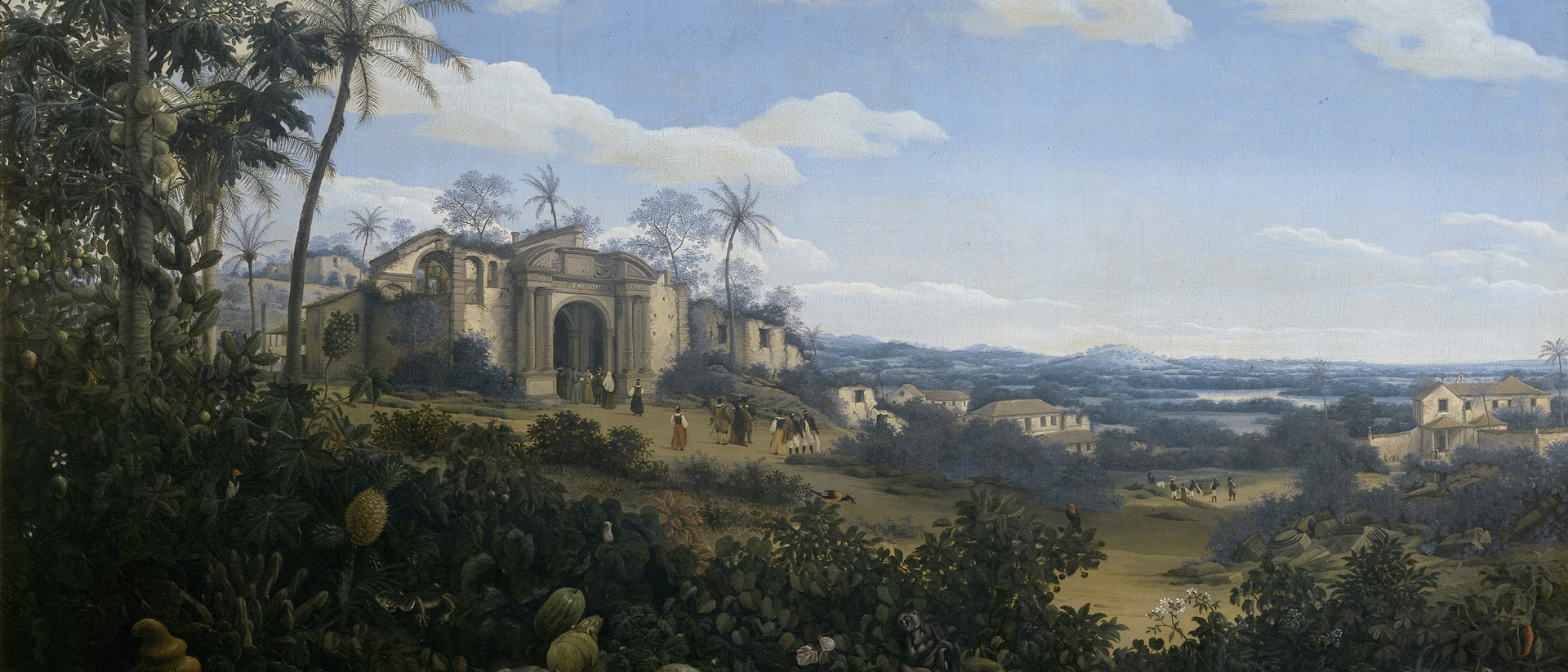

'View of Olinda' door de Haarlemse schilder Frans Post in opdracht van militair Johan Maurits, graaf van Nassau-Siegen, 1662.

De Gouden Eeuw staat bekend als dé bloeiperiode van Nederland. Maar wist je dat de Republiek der Verenigde Nederlanden De Republiek der Verenigde Nederlanden was tussen 1588 en 1795 een statenbond met trekken van een defensieverbond en een douane-unie. Ze besloeg grotendeels het grondgebied van het huidige Nederland. Wikipedia Republiek der Zeven Verenigde Nederlanden in grofweg diezelfde periode verantwoordelijk was voor 5 procent van alle handel in slaafgemaakten naar de Amerika’s?

Sterker nog: wist je dat Nederland tussen 1650 en 1675 de grootste handelaar in slaafgemaakten tussen West-Afrika en Zuid-Amerikaanse plantages was?


Tegenwoordig herinneren we ons in Nederland de zeventiende eeuw maar zelden als een periode van koloniale expansie. De aandacht gaat liever uit naar schilders, bestuurders en enkele zeehelden.

Als we het wel over de trans-Atlantische slavernij hebben, vertellen we onszelf graag dat Nederland hooguit de grootste van de kleintjes was, in een misdaad waarin iedereen deelde. De Britten, Fransen, Spanjaarden en niet te vergeten de tussenhandelaren en koninkrijken op de West-Afrikaanse kust speelden een veel grotere rol.

Dat verhaal is misschien geruststellend. Er is niets uniek gewelddadigs of racistisch aan wat onze voorgangers overzee uitspookten, denk je dan.

Internationaal denken historici daar toch een beetje anders over. De Nederlanders van de Gouden Eeuw waren niet alleen gewiekste tussenhandelaren, maar ze waren ook ontzagwekkend efficiënt als het ging om het organiseren van geweld overzee en het ronselen van (al dan niet vrije) werkkrachten. Historici spreken daarom zowel van een ‘Dutch primacy in world trade’ als van een ‘Dutch moment’ in de geschiedenis van het Atlantisch gebied. En dat zijn geen complimenten.

De verovering van overzeese gebieden in het Atlantisch gebied was een fundamenteel onderdeel van de internationale politiek van de Republiek. Het ‘Dutch moment’ was er een van handel, geweld en van slavernij. En doordat de West-Indische Compagnie (WIC) zich inliet met het verschepen van slaafgemaakten van West-Afrika naar plantages in ‘Brasiel,’ heeft Nederland een grote rol gespeeld in de vorming van wat nu Brazilië heet.


Braziliaans landschap met een arbeidershuis. Frans Post in opdracht van militair Johan Maurits, graaf van Nassau-Siegen, 1650-1675.


Wat Nederland in Brazilië deed

Het is misschien wel de onbekendste kolonie van Nederland: Brazilië. Nederland veroverde er de eerste plantagegebieden tijdens de slotakte van de Tachtigjarige Oorlog (1568-1648). Na een eerste aanval in 1624 drongen tussen 1630 en 1654 de troepen van de WIC diep door in de Portugese overzeese delen van het Habsburgse rijk. Dit rijk bestond uit zowel Spanje als Portugal, die destijds samen de Iberische Unie vormden. Portugese forten op de Afrikaanse kust en plantagegebieden in Brazilië werden door Nederlanders veroverd.

En daar werd zeker niet alleen gevochten en geplunderd. De forten in Afrika werden door de WIC gebruikt om mensen in te kopen om deze vervolgens op plantages in Brazilië te werk te stellen voor onder meer suikerproductie.

De Nederlandse activiteiten in Brazilië waren niet altijd zo onbekend. Sterker nog, in die tijd waren ze het gesprek van de dag. ‘Brazilië’ was zelfs ‘een van de meestbesproken nieuwsonderwerpen van de Nederlandse Gouden Eeuw.’

Brazilië sprak destijds erg tot de verbeelding van de zeventiende-eeuwse Nederlanders. Lang voor de eerste aanval waren boeken beschikbaar geweest die repten over het land met exotische dieren en zo mogelijk nog exotischere mensen, en nu was het in handen van de heldhaftige republiek, zo dacht men.


Braziliaanse granen, vruchten, groenten en pinda’s. Albert Eckhout in opdracht van militair Johan Maurits, graaf van Nassau-Siegen, 17e eeuw.


De eerste ronde: Nederland verplaatste zijn oorlog met Spanje naar de Amerika’s

De eerste aanval op Brazilië in 1624 was onderdeel van de Nederlandse oorlogsstrategie tijdens de Tachtigjarige Oorlog. Het plan was niet mals geweest. De WIC stelde ‘dat men de koning van Spanje […] van zijn jaarlijkse inkomsten behoorde af te snijden.’ Daarnaast was het plan om het strijdtoneel tussen de lage landen en Spanje te verplaatsen naar het wereldtoneel.

Het was op hun beurt de Spanjaarden niet ontgaan dat de opstandige Nederlandse provincies het op hun overzeese rijk hadden voorzien. De aanval van de Nederlanders in de Braziliaanse Allerheiligenbaai in 1624 provoceerde dan ook een grootscheepse Spaanse reddingsactie. Spanje stuurde 56 schepen en ruim twaalfduizend manschappen de oceaan over. Geen enkele trans-Atlantische troepenverplaatsing was groter geweest dan wat er op gang kwam om Brazilië voor de Habsburgers te behouden. Het is dan ook niet helemaal verwonderlijk dat Nederland snel de eerste veroveringen kwijtraakte.

Dat we dit uit ons collectieve geheugen hebben gewist, komt misschien wel door de nederlaag die snel op het eerste succes volgde. Maar dan nog is het niet terecht dat ‘Brazilië’ een verzwegen geschiedenis is geworden.
De tweede ronde: Nederland ging zich met handel in slaafgemaakten bezighouden

De tweede ronde van Nederlandse veroveringen in Brazilië begon in 1630 en was succesvoller. Het grotere plan van de WIC was om zowel plantagegebieden alsook forten in Afrika te veroveren. De bedoeling: greep krijgen op de handel in slaafgemaakten en de suikerproductie.
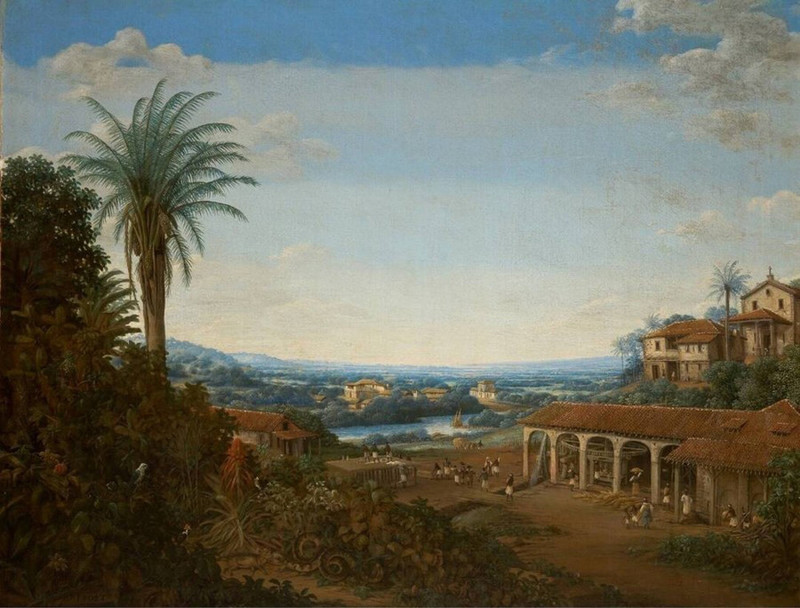


De suikerfabriek en de plantage van Engenho Real. Frans Post in opdracht van militair Johan Maurits, graaf van Nassau-Siegen, 1650-1675.


Dat de WIC zich begon in te laten met slavernij is eigenlijk verbazingwekkend. Het was alsof in een volledig op groene energie gebaseerde economie een groep ondernemers plotseling met het voorstel komt om een kolencentrale te openen. Ga maar na: in de steden van de Republiek was al in de middeleeuwen de slavernij afgeschaft. Een stad als Amsterdam was er bijvoorbeeld bijzonder trots op dat er binnen haar grenzen geen slavernij was.

En in de Lage Landen beschouwde men het eigen grondgebied in die tijd niet alleen als slaafvrije zone, men zag zichzelf zelfs als antislavernij: een slaaf die bijvoorbeeld naar Antwerpen of Amsterdam vluchtte, mocht zich beschermd weten tegen uitlevering. Iedereen was binnen die muren vrij.
Het was een systeem dat door de Portugezen was opgezet, en nu door de WIC werd overgenomen

Slavernij was, kortom, een achterhaalde en barbaarse activiteit, vonden veel mensen in Nederland. Het houden van slaven en het tot slaaf maken van krijgsgevangen werd destijds meer geassocieerd met de Osmaanse koninkrijken, met name op de kust van Algerije en Marokko waar Europese zeelieden werden gegijzeld.

Dat Spanje en Portugal zich inlieten met het tot slaaf maken van de inheemse bevolking van Amerika werd gezien als een katholieke dwaling, en niet als een activiteit waarmee de Republiek zich wilde inlaten.

Toch ging de WIC er nu zelf toe over deals te sluiten met koningen en tussenhandelaren in West-Afrika om mensen te leveren. De dienaren van de WIC sloten deze gevangenen op in de Nederlandse forten om ze vervolgens op zeilschepen naar Brazilië te vervoeren.

Het was een systeem dat door de Portugezen was opgezet, en nu door de WIC werd overgenomen.

Het vervoer van de tot slaaf gemaakte Afrikanen ging onder erbarmelijke omstandigheden. Vastgeketend en opeengepakt zat men enkele maanden gevangen op weg naar een onbekende bestemming. Velen overleefden door uitputting en ziekten de reis niet. De bemanning paste wrede onderdrukkingsmethodes toe om de controle over de gevangenen te houden.


Links: een Afrikaanse man. Rechts: een Afrikaanse vrouw met kind. Albert Eckhout in opdracht van militair Johan Maurits, graaf van Nassau-Siegen, 1641.


Hoe slavernij toch werd goedgepraat

Hoewel er altijd tegenstanders van de slavernij bleven bestaan, kozen de meeste bestuurders ervoor om de slavernij overzee te vergoelijken. Voorstanders gebruikten meestal twee argumenten.

Allereerst was slavernij volgens hen te verkiezen boven het doden van vijanden. Zo konden in een rechtvaardige oorlog rechtmatig slaven worden gemaakt. Dit argument verdween al snel naar de achtergrond, omdat dat niet was wat de WIC in Angola en Brazilië deed.

Het tweede argument werd dat Afrikanen de nazaten waren van Noahs vervloekte zoon Cham, wiens nazaten volgens de vloek gedoemd waren om ‘slaven van slaven’ te zijn. Deze lezing van het verhaal gaat er van uit dat Cham en zijn nakomelingen een donkere huidskleur hadden.

Het was een theologische innovatie die voorafgaand aan de bemoeienissen in de Atlantische wereld niet had bestaan, maar die nu als schaamlap voor een nog altijd verwerpelijk geachte activiteit werd gehangen.
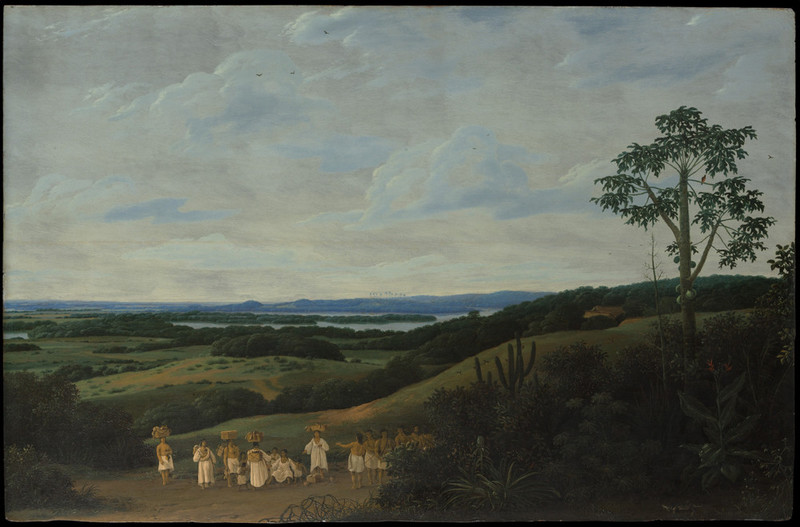


Een Braziliaans landschap. Frans Post in opdracht van militair Johan Maurits, graaf van Nassau-Siegen, 1650.


Zo werd de WIC verantwoordelijk voor de helft van de slaventransporten

Brazilië bleef uiteindelijk niet lang in Nederlandse handen. De Portugezen vochten terug en heroverden de plantages en steden een voor een. Met de verovering van de stad Recife door de Portugezen eindigde in 1654 de Nederlandse aanwezigheid in Brazilië. De kolonie ging verloren. Dat betekende echter niet het einde van de Nederlandse invloed.
Wat de Nederlanders hadden geleerd in Brazilië pasten ze nu toe in de rest van de Atlantische wereld

Sterker nog: na de definitieve Nederlandse nederlaag in 1654 transformeerde het land van oorlogsmachine tot een succesvol tussenhandelaar in slaafgemaakten. De eerdere schroom was volledig verdwenen.

Wat ze hadden geleerd in Brazilië werd nu toegepast in de rest van de Atlantische wereld. Zo werden Nederlandse slavenschepen tussen 1650 en 1675 verantwoordelijk voor maar liefst de helft van alle slaventransporten over de Atlantische oceaan.

Deze transporten gingen niet langer naar Brazilië, maar in plaats daarvan naar Curaçao en vervolgens verder naar de Spaanse koloniën in Zuid- en Midden-Amerika. Ook leverde men aan de nieuwe suikerplantages op het Engelse Barbados. Nederlandse ondernemers en bestuurders maakten in een cruciale fase van de geschiedenis het Britse en Franse rijk verslaafd aan suiker, plantages en slavenarbeid.


Aantal getransporteerde slaafgemaakten Tussen 1650 en 1675 over de Atlantische Oceaan N


Van Brazilië naar Suriname

Het verlies van Brazilië was in eerste instantie een traumatische gebeurtenis voor Nederland. Het maakte pijnlijk duidelijk hoe verdeeld de provincies in de Republiek der Verenigde Nederlanden onderling eigenlijk waren. De Zeeuwen wilden graag doorvechten, maar het berekenende Amsterdam kreeg haar zin. Het verlies werd genomen en de militaire versterking voor de door Portugezen belegerde WIC-troepen in Recife kwam er niet.

In Amsterdam wilde men zo snel mogelijk de schande van de nederlaag vergeten. Men ging zich bezighouden met een (niet lang daarna eveneens mislukte) kolonie in de Delaware en tussenhandel in de Atlantische wereld.

De Zeeuwen zinden nog wel op een revanche. Pleidooien voor een herovering waren tevergeefs, dus begon men te zoeken naar een ‘Tweede Brazilië.’

Eerst dachten Zeeuwse bestuurders dit op Tobago gevonden te hebben, maar in 1667 herkende men een Engelse kolonie aan de Surinamerivier als kanshebber. Toen de Zeeuwen van Holland geen steun kregen voor hun nieuwe koloniale plannen, veroverden de Zeeuwen op eigen houtje Suriname op de Engelsen.

Suriname werd daadwerkelijk een tweede Brazilië. Vluchtelingen uit Brazilië vonden er een veilig heenkomen om nieuwe plantages op te zetten. De handel in slaafgemaakten werd verder gereguleerd en algauw produceerde de kolonie miljoenen ponden suiker per jaar. De slavernij en suikerproductie werden op Braziliaanse leest geschoeid. Men kopieerde wat men in Brazilië had geleerd.


Links: een Tupiaanse vrouw met een plantage op de achtergrond. Rechts: een Mestiço man (een kind van een Europeaan en een inheemse). Albert Eckhout in opdracht van militair Johan Maurits, graaf van Nassau-Siegen, 1641.


Waarom we deze geschiedenis niet mogen vergeten

De herinnering aan het Nederlandse slavernijverleden wordt gedragen door Afro-Nederlandse nazaten van slaafgemaakten uit Suriname, Curaçao en de kleinere eilanden. Brazilië is in die herinnering een verborgen verleden. Er herinnert in Nederland maar weinig nog aan de periode die aan de Surinaamse slavernij voorafging.

We hebben de Atlantische geschiedenis van Nederland nodig om ons beeld van de Gouden Eeuw compleet te maken. Het was niet alleen de glorietijd van dynamiek, immigratie, wetenschap, kunst en ondernemerschap. Men vormde zich toen ook een beeld van de wereld buiten Europa, en men leerde het geweld, uitbuiting en toenemende ongelijkheid te vergoelijken. Slavernijgeschiedenis en koloniale geschiedenis vormen geen aparte afdeling van ons verleden, maar zijn er onlosmakelijk onderdeel van.

De Braziliaanse episode verdient het om aan de vergetelheid te worden ontrukt. Brazilië heeft immers een nawerking gehad die niet te onderschatten is.

Nog belangrijker dan dat is de culturele erfenis. Er ontstond een typisch Europees exotisme waarin Braziliaanse natuur en kunstschatten een belangrijke rol spelen, en de associaties van wit met ‘vrij’ en zwart met ‘onvrij’ stammen uit deze tijd. Deze associaties waren in die tijd nog niet zo kwaadaardig als ze tijdens de Verlichting zouden worden, maar we moeten de oorsprong ervan wel naar deze geschiedenis herleiden.

Dit verhaal is geschreven voor de Maand van de Verzwegen Geschiedenis van De Correspondent en The Black Archives. Ga naar de website van The Black Archives.


Met dank aan Correspondentlid en geschiedenisdocent Marijn Luijten voor het nalopen van de geschiedenisboeken.

21.07.2017

How Slavery Made the Modern World

Slavery was the flywheel on which America’s market revolution turned—not just in the United States, but in all of the Americas.

By Greg Grandin
February 24, 2014


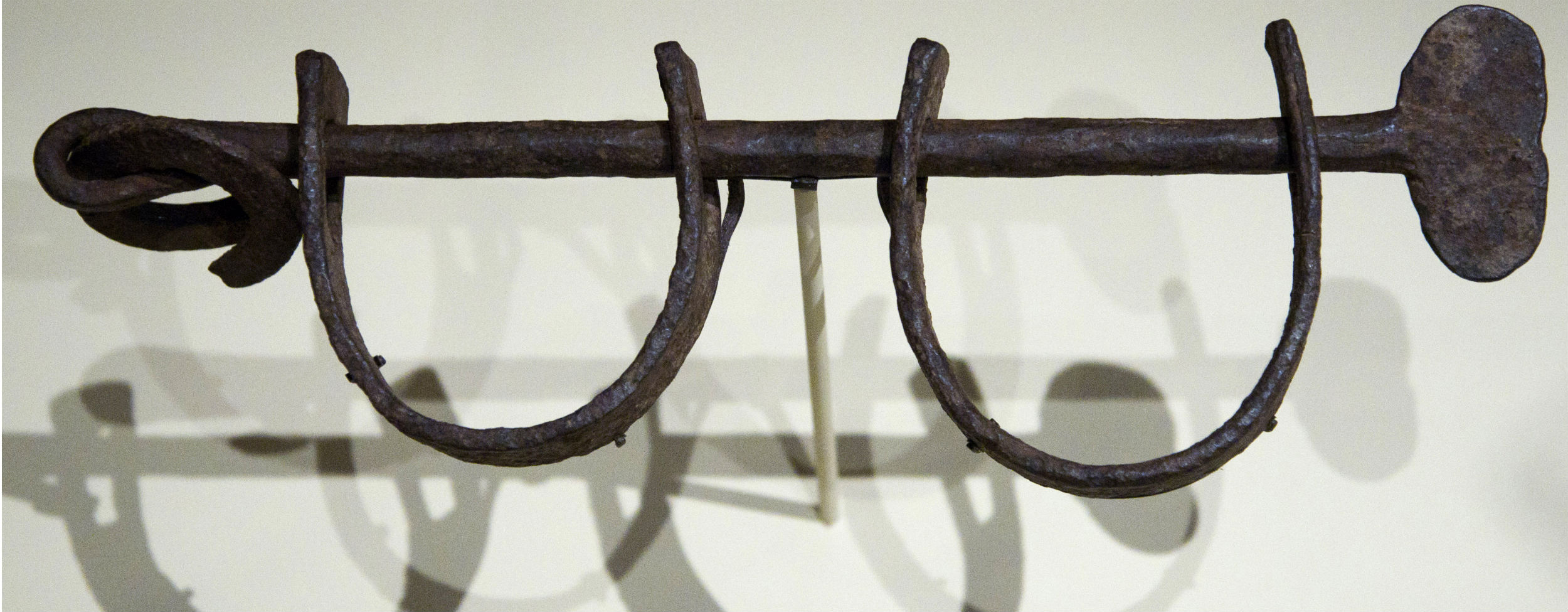
A nineteenth-century bilboes for an adult, typically found on slave ships. (AP Photo/Manuel Balce Ceneta)

Many in the United States were outraged by the remarks of conservative evangelical preacher Pat Robertson, who blamed Haiti’s catastrophic 2010 earthquake on Haitians for selling their souls to Satan. Bodies were still being pulled from the rubble—as many as 300,000 died—when Robertson went on TV and gave his viewing audience a little history lesson: the Haitians had been “under the heel of the French” but they “got together and swore a pact to the devil. They said, ‘We will serve you if you will get us free from the French.’ True story. And so, the devil said, ‘OK, it’s a deal.’”

A supremely callous example of right-wing idiocy? Absolutely. Yet in his own kooky way, Robertson was also onto something. Haitians did, in fact, swear a pact with the devil for their freedom. Only Beelzebub arrived smelling not of sulfur, but of Parisian cologne.

Haitian slaves began to throw off the “heel of the French” in 1791, when they rose up and, after bitter years of fighting, eventually declared themselves free. Their French masters, however, refused to accept Haitian independence. The island, after all, had been an extremely profitable sugar producer, and so Paris offered Haiti a choice: compensate slave owners for lost property—their slaves (that is, themselves)—or face its imperial wrath. The fledgling nation was forced to finance this payout with usurious loans from French banks. As late as 1940, 80 percent of the government budget was still going to service this debt.

In the on-again, off-again debate that has taken place in the United States over the years about paying reparations for slavery, opponents of the idea insist that there is no precedent for such a proposal. But there is. It’s just that what was being paid was reparations-in-reverse, which has a venerable pedigree. After the War of 1812 between Great Britain and the US, London reimbursed Southern planters more than a million dollars for having encouraged their slaves to run away in wartime. Within the United Kingdom, the British government also paid a small fortune to British slave owners, including the ancestors of Britain’s current Prime Minister, David Cameron, to compensate for abolition (which Adam Hochschild calculated in his 2005 book Bury the Chains to be “an amount equal to roughly 40 percent of the national budget then, and to about $2.2 billion today”).

12.11.2016

The Slave Ship: An Operative Architecture Responsible for the Abysmal Atlantic Crossing

info@thefunambulist.net
The Slave Ship: An Operative Architecture Responsible for the Abysmal Atlantic CrossingJanuary 8, 2016
Architecture & Design / History - By: Léopold Lambert


Above: La Marie-Séraphine (1770) / Excerpt from Bertrand Guillet, La Marie-Séraphine: Navire négrier, Nantes: Editions MeMo, 2009.


Writing about the open wound that the history of slavery constitutes is always a painful exercise. It is also doomed to fail making us fathom the formidable sustainability of violence that the three centuries of legalized slavery implemented — but would we ever recover from such a fathoming? This article is the fifth one about the abysmal Atlantic crossing and its architectural technology, the slave ship. While two of them were comparing (without ever equating) the Atlantic abyss with the current Mediterranean one (see “The Mediterranean Abyss: South Wall of Fortress Europe and Cemetery of the Poors” and “The Politics of Overpopulated Spaces“), two others focused on the historical crossing of the slave trade, citing the three Carribean authors C.L.R. James, Édouard Glissant, and Patrick Chamoiseau (see “The Slave Ship Is Architecture” and “Abysmal Atlantic: The Slave Ships’ Genocide“).
The argument of these articles in the broader context of the research exposed on this platform is simple: although architecture and design (and through them, architects and designers) cannot be held responsible for the founding logic of the genocide that constitutes the slave trade, the latter could simply have never existed without their active contribution and, as such, architecture is fundamentally responsible for the operativity of slavery. Here, more than ever, we need to forget any dissociation between the various scales of design: the plantation cabin is architecture, of course (see Clifton Ellis and Rebecca Ginsburg (eds), Cabin, Quarter, Plantation, New Haven: Yale University Press, 2010) but more broadly, any materialized form of whatever size or nature implementing the organization of bodies in space is also architecture. This includes the slave ship and its inherent tension between the fundamental cruelty of its design and the economization of life that its function requires vis-a-vis its “human cargo.”

15.08.2016

Suriname Slaves Origin, Ghana, Benin, Loango


Many Surinamese descendants of slaves often wonder where their ancestors came from. The short answer is mostly from Ghana, Benin and Loango, but also from many other parts of West Africa such as Gambia, Guinea, Senegal, Ivory Coast etc.
To delve deeper into this subject we have to briefly examine the history starting from the 17th century of the slave trade by both the English and the Dutch.
The first slaves which came to Suriname came to an English colony. English was the language of that day and as a matter of fact the same language which the slaves spoke then is still spoken today, Sranang Tongo. It is mostly an English derived language and not Dutch.
The Dutch got Suriname from the English by the treaty of Breda in 1667. At that time there were already 3000 slaves in Suriname, which was still very sparsely populated surrounded by a huge jungle. Many of the slaves took advantage of this and escaped to the jungle.
From the beginning of the 17th century until after the end of emancipation in 1863, the Dutch were in control of the Gold Coast trade in West Africa and had two main fortresses there from where they shipped Africans.
Fort Amsterdam – In Kromanti Ghana and Fort Elmina, in Elmina Ghana.
More about Kromanti, Ghana and the Suriname Caribbean connection
Learn about Kromanti language in Suriname and Jamaica 
Ghana & Loango(in present day Congo) was the source of most slave descendants in Suriname with a significant number from Dahomey(in present day Benin) but also from other parts of West Africa howbeit in smaller numbers.
Culturally it appears that the Acan(Ghana) culture was more dominant if we look at language, and religious practices which we call winti.
See also African words in daily use in Suriname
And
African Culture – Religion In Suriname
However there are also cultural influences from Loango, Benin and other parts of West Africa.

Here are some images to give you an idea of what those cities looked like where the slaves came from at the time, 16th & 17th century:

Kumasi – Ghana(center of Ashante, Acan kingdom):

7-Kumasi

Loango(currently Congo):

18-loango-africa-kongo-kingdom

Benin(Dahomey):

benin-pic-2
As you can see, these were well organized cities, with an obvious infrastructure of roads and defenses, contrary to what some Westerners would have you believe.

Share this:

14.01.2016

Chapter 4: The plantations and their products.

LIFE IN THE SHADOWS
THURSDAY, JULY 17, 2008

Chapter 4: The plantations and their products.

The layout of the plantations.


The Surinam agricultural system was shaped and dominated by the plantation and, since agriculture was the mainstay of the colony, so were the economical and social structures. One cannot maintain that Surinam was eminently suitable for plantation agriculture, but that was the onlyprofitable activity it was suitable for.

Eric Wolf and Sidney Mintz have sketched the general conditions necessary for plantations to flourish:
(1) a technology adequate for the creation of a surplus, that is to say, the possibility to profit from the economies of scale;
(2) a certain measure of class stratification, to keep the underprivileged from gaining access to production factors and to help diverting the surpluses solely to members of the elite;
(3) the possibility of production for an outside market: since the plantation was specialized in the production of a single commodity, it could not depend on the internal market of the colony, but had to produce firstly for the motherland and secondly for the international market;
(4) the ability to accumulate sufficient capital for the large investments plantation agriculture usually entailed;
(5) a political-legal system that supports the operations of plantations, which had three functions (a) to permit the planters to procure the land and workers they needed; (b) to establish a political and legal setting stimulating for the growth of the plantations; (c) to provide the means for transferring the surpluses.

In Surinam, most of these preconditions were adequately met initially. Because the Dutch had been instrumental in dispersing sugar technology all over the Caribbean, the Surinam plantations certainly met the prevailing standards. Since the colony was conquered territory and opted for slavery, the class stratification was introduced automatically. Holland provided an lucrative market for the products of the plantations and was even able to absorb much more than Surinam could produce (the colony never supplied more than 1/3 of the sugar and 1/2 of the coffee needed). The Dutch merchants were willing to invest the profits of their commercial ventures in colonial enterprises and furthermore, Surinam managed to draw wealthy immigrants who could finance the establishment of plantations with their own means. As property of the Society of Surinam, the whole political-legal system of the colony was geared to plantation agriculture. However, even though the conditions were ideal from this point of view, the expansion of the plantations was handicapped by a chronic lack of workers and a limited amount of fertile grounds (which often needed extensive water works, leading to high production costs). In the late 18th and 19th centuries, moreover, the conditions deteriorated considerably. Surinam lagged behind in technological innovation; capital investments were diverted to other colonies; the Dutch government showed little interest in facilitating plantation agriculture and the scarcity of workers became even more acute. No wonder that Surinam could no longer be a serious competitor in the world market and not even in the Dutch market.

In 1651, the English pioneers started from scratch. Nevertheless, the number of plantations grew fast (to 175) during the few years their hegemony lasted. It dropped dramatically (to 107) after the Zeelanders had taken over, but during the government of Cornelis van Aerssen, the plantations recouped their former territory and until the end of the 18th century, they steadily increased in number, although a good part of the old terrains had already been abandoned. The 19th century saw a process of decline and concentration.

The English did not experiment with small-scale subsistence farms, as they had done in Barbados, but started with laying out full-size plantations at once, although the less affluent pioneers limited themselves to provision grounds and tobacco farms. The Zeelanders inherited a plantation system almost bankrupted by the departure of most of the English planters and slaves and in their desperation to fill this void, they resorted to near anarchy in the distribution of grounds for cultivation. Once the Society of Surinam had taken over the rudder, however, the laying out of the plantations happened systematically and orderly.

Contrary to the situation in other mainland colonies, the way the plantations could expand in Surinam was severely limited by the peculiarities of the landscape. The plantations were depended upon the rivers to provide water power and transportation facilities and the land had to be divided under strict control to make sure everyone would get a fair share of the land along the riverbanks. In this sense, the view of Surinam as a ‘frontier society’ is not entirely accurate. Later arrivals could not get all the land they wanted and existing plantations were unable to expand freely. Nevertheless, a situation of 'open resources' had prevailed during the crucial period of initial colonization, when the economical and social foundations of the colony had been laid.

Plantations seeking additional terrains had to expand their operations further inland and so developed a rectangular shape. Aspiring planters were allowed to stake their claim wherever they found suitable soil. When they went looking for a desirable location, they preferred to go in “the most heavy Rainy Season when one has to wade through the forest with water coming up to the Waist Yes to the Neck because only then one can See which lands Stay above water [and] which Drown”.

The English were forced to limit their plantations to the higher sandy grounds along the upper part of the Suriname and Para rivers, because they did not know how to drain the swampy lowlands. The Dutch, on the contrary, encountered a familiar landscape there, that could be conquered with the proven technique of inpoldering, a craft they had thoroughly mastered in their homeland. This way, the Lower Suriname and Lower Commewijne divisions were added to the plantation area in the late 17th and early 18th centuries. In the middle of the 18th century, the Cottica and Orelane regions were incorporated, followed in later years by the districts of Matapicca and Warappa, between the Commewijne and the coast. Some planters in the highlands shifted the focus of their operations to the lowlands, but nevertheless retained their former estates, even though they were not productive anymore. These show up on the maps as well, so the number of functioning plantations may ocassionally have been overstated in archival sources.

On the initiative of Governor Friderici (1790-1802), the first grounds along the Saramacca River were given out in the 1790’s, beginning with his own plantations La Prevoyance and Catharina Sophia. However, this part of the colony never boasted the flourishing settlements he had hoped for: barely fifty years later, most of the plantations had been deserted and the projected town of Columbia had never materialized. The first plantations in the Nickerie district were established in 1797. Coronie (then called Upper Nickerie) followed in 1808. Many Scottish and Irish planters settled there and, after the abolition of slavery in the English colonies, planters form Barbados and other islands as well, giving these districts an atmosphere totally different from that of the old plantation area. Quintus Bosz found that a large part of the concessions given out between 1799 and 1802 had already been deserted by 1809, partly because the owners could not get sufficient slaves as a result of the English occupation.

13.01.2016

Vergessene Kolonialgeschichte


Das Wappen der Zunft zum Mohren hat eine Kontroverse ausgelöst. Für Historiker Bernhard C. Schär ist es Teil einer Geschichte über Rassismus und Sklaverei, vor der auch Bern seine Augen nicht verschliessen sollte. Bernhard C. Schär 29.12.2014
Wenige lokalpolitische Vorstösse haben dieses Jahr national so viel Wirbel aus­gelöst wie jener der beiden Stadtberner SP-Parlamentarier Halua Pinto de Magalhães und Fuat Köçer. Sie verlangen, die Anwesenheit zweier Figuren der Berner «Mohrenzunft» in der Altstadt zu überdenken. Niemand könne ernsthaft von Migranten, insbesondere afrikanischer Herkunft, verlangen, sich in ein Land zu «integrieren», dessen Kultur noch immer rassistische Symbole aus der Kolo­nialzeit beinhaltet. Um Integration zu ­ermöglichen, müsse auch die Mehrheit ihre Komfortzone verlassen; sich den Schattenseiten ihrer Vergangenheit zuwenden; und mit der Minderheit einen demokratischen Umgang damit suchen.

Eine «Attacke auf den Mohr»
Nicht nur aus Onlineforen und vonseiten der «Mohrenzunft» brandete dem ETH-Chemiker Pinto, der seinen Vorstoss erläuterte, eine Welle der Ablehnung entgegen. Schelte gab es auch aus der Universität. Der Berner Geschichts­professor André Holenstein kritisierte in der Sendung «Schweiz aktuell»: Wenn man derart durch «unsere Städte und unsere Gesellschaft geht, müsste man auf Schritt und Tritt kulturelle Objekte aus der Vergangenheit abreissen, streichen oder tabuisieren». Georg Kreis, ehemals Präsident der Eidgenössischen Kommission gegen Rassismus und emeritierter Professor an der Uni Basel, tadelte auf der Onlineplattform «Journal B»: «Die Attacke auf den Mohr bringt uns (im Kampf gegen Rassismus, Anmerkung des Autors) keinen Zentimeter weiter.» Sie sei lediglich «Symbolpolitik» und lenke von den «realen Diskriminierungsgefahren», den «wirklichen Problemen» ab. Das Spitzenpersonal aus Mohren- und Historikerzunft war sich einig, dass hinter den kritisierten Figuren keinesfalls «rassistische ­Absichten» steckten.
An dieser Argumentation sind zwei Dinge problematisch. Zum einen ist es falsch, dass die Mohrenfiguren nicht rassistisch seien. Zum anderen ist die Unterscheidung zwischen «symbolischem» und «realem Rassismus» irreführend.

Deutsche als Sklavenhalter? Christian Wilhelm Jamm aus Lahr im Schwarzwald und die Sklaverei auf KubaLiteratur zu Kolonialismus, Imperialismus und Postkolonialismus


Makro und Mikro in der zweiten Globalisierung: Kuba um 1850 und die Geschäfte des Christian Wilhelm Jamm aus Lahr
Michael Zeuske, Universität zu Köln

Original publiziert unter: Zeuske, „Christian Wilhelm Jamm und die Sklaverei auf Kuba, in: Geroldsecker Land. Jahrbuch einer Landschaft, Heft 45 (2003), S. 19-46 sowie unter: Zeuske: “Deutsche als Sklavenhalter? Christian Wilhelm Jamm aus Lahr im Schwarzwald und die Sklaverei auf Kuba“, in: Zeuske, Schwarze Karibik. Sklaven, Sklavereikulturen und Emanzipation, Zürich: Rotpunktverlag, 2004, S. 360-372
(vorliegende Version 2013 ist sehr erweitert; Ende 2013 nochmals erweitert um die Informationen zu Matthias Haberhoff/ Matias Averhoff)


Über Christian Wilhelm Jamm, den „Wohltäter“ der Stadt Lahr im Schwarzwald, ist schon viel geschrieben worden. Ich will hier keine biographischen Details oder andere Begebenheiten aus seinem Leben in Deutschland hinzufügen. Einiges aus seinem „kubanischen“ Leben ist allerdings seit jeher enigmatisch, rätselhaft geblieben. Wie hatte Jamm sein Geld, das viele Geld, das er 1875 zu großen Teilen der Stadt Lahr vermachte, verdient? Immerhin war Kuba die „Sklaveninsel“ par excellence der westlichen Hemisphäre. Selbst im Süden der USA war die Sklaverei infolge des Bürgerkriegs zwischen Norden und Süden 1862/65 verboten worden. Auf Kuba wurde die Aufhebung der Sklaverei erst 1886 proklamiert.


Steckt also „Sklavenblut im Stadtpark“ (Thorsten Mietzner) von Lahr? Ich will zur Beantwortung dieser komplizierten Frage kurz auf den Debattendiskurs und auf die wichtigste Argumentationsfigur darin, die vom “Sklavenblut“ (resp. “schmutziges Geld“) eingehen. Diese Argumentation und ihre rhetorischen Figuren sind fast wortwörtlich von Rübenzuckerproduzenten in Deutschland gegen die überseeische, meist auch kubanische Konkurrenz des „Sklavenzuckers“ benutzt worden.


Zweitens möchte ich den sozialen, politischen und wirtschaftlichen Hintergrund von Jamms „kubanischem“ Leben schildern, vor allem in Form einer Synthese der Geschichte Kubas und Havannas zwischen 1830 und 1860.


Drittens will ich gerne kurz die deutsche Kaufleute-Kolonie auf Kuba und in der Karibik vorstellen, um auf vor diesem Hintergrund das Problem der „Sklavengeschäfte“ Jamms endgültig zu klären – soweit das für einen Kuba- und Sklavereihistoriker möglich ist.

Das „Blut- und Sklavenargument“
Das Argument vom „Sklavenblut“-Anteil in einem bestimmten Produkt kam in Europa im 19. Jahrhundert zunächst im Zusammenhang mit einem, vielleicht dem, Massenkonsumgut der entstehenden Industriegesellschaft auf - Zucker.[1] Das scheint auf den ersten Blick nicht viel mit Jamm zu tun zu haben. Auf den zweiten Blick ergibt sich aber die logische Schlussfolgerung, dass er sein Geschäft und das Geld, welches er damit verdiente, vor allem das Geschäft mit Luxustextilien und Seidenstoffen, dem Reichtum einer kaufkräftigen Oberschicht in Havanna und Matanzas verdankte, die ihrerseits ihr Geld im Zucker gemacht hatte.

29.09.2015

Koloniale Eroberung und Sklavenschinderei

Die Schweiz hatte keine Kolonien, aber Welthandelshäuser


 Neue Recherchen zeigen, dass vor allem Basler Unternehmen am internationalen Sklavenhandel beteiligt waren. Die Geschichte eines Dreiecksgeschäfts. Von Ewald Billerbeck
Weisse Herren, schwarze Fracht
Wenn vom Kolonialwarenlädeli die Rede ist, kommt Gemütlichkeit auf. Die gute alte Zeit. Doch der Begriff Kolonialwaren ist historisch in einem reichlich ungemütlichen Umfeld angesiedelt: dem Sklavenhandel.
9.5.2004

Wenn vom Kolonialwarenlädeli die Rede ist, kommt Gemütlichkeit auf. Die gute alte Zeit. Doch der Begriff Kolonialwaren ist historisch in einem reichlich ungemütlichen Umfeld angesiedelt: dem Sklavenhandel.

Schauplatz Nantes, im 18. Jahrhundert. Die bretonische Atlantikstadt ist für die Grossmacht Frankreich wichtigster Hafenplatz im Überseehandel. Im vorgelagerten Paimbœuf wird ein Schiff mit teurer Ware beladen. Die Hafenarbeiter schleppen Ballen feinster Seide, verschiedene Baumwollstoffe und Indienne-Tücher unter Deck. Die leichten, mit farbiger Orientalornamentik bedruckten Indiennes aus Baumwolle sind gross in Mode. In Stückzahlen von mehreren Tausend kommen weitere europäische Güter hinzu, Scheren, Essbesteck, Krüge, Porzellanwaren; in Fässern oder Flaschen Branntwein, Likör und Weine. Auch Waffen in grosser Zahl werden an Bord gebracht, Dolche, Gewehre, Schiesspulver, Blei.

Für dieses Unternehmen mit kostbarer Ladung braucht der Reeder potente Teilhaber; solche, die bereit sind, die Risiken auf hoher See und fernen Märkten einzugehen. Mehrere Firmen partizipieren als Ausrüster und Financiers, zeichnen Anteilscheine und hoffen auf Gewinn. Mit Aufwand heuert der Kapitän eine zuverlässige Mannschaft an; sie ist grösser als üblich. Auch ein Chirurg befindet sich an Bord, als das Schiff in Nantes ablegt und mit Ziel Afrika ausläuft, wo sich in Cape Coast (im heutigen Ghana), in Vieux Calabar (Nigeria) und anderen westafrikanischen Küstengebieten grosse Sklavenmärkte befinden.
Kräftige, schöne Sklaven

In Afrika werden die Waren gegen Menschen eingetauscht. Die Händler betrachten es als ein Geschäft von Ware gegen Ware; die begehrten Tücher, die Waffen und anderen Schiffsgüter gegen die aus dem Hinterland angeschleppten, in Küstenforts gefangen gehaltenen und zwischengelagerten Schwarzen. Man begutachtet die Qualität der Männer, Frauen und Kinder für ihre künftige Verwendung. Gesundheit, kräftige Konstitution und Schönheit sind Kriterien bei der Preisgestaltung, sie bestimmen den Profit beim späteren Verkauf als Sklaven. Zur Geschäftsförderung beim Warentausch werden die Menschenhändler auf dem westafrikanischen Markt zusätzlich mit Geschenken aus Frankreich geködert; Gefälligkeiten helfen zudem gegen die Konkurrenz anderer Handelsschiffe vor Ort, namentlich jener unter englischer Flagge. Und jetzt nimmt auch der Chirurg seine Aufgabe wahr. Er untersucht die vorgeführten nackten Schwarzen, beriecht Schweiss und Urin, tastet mit den Fingern Geschlechtsteile, Brüste und After ab. Dann wird der Menschenware mit einem glühenden Eisen das Schiffszeichen am rechten Arm eingebrannt - unauslöschliches Zeichen für das Los der Sklaverei.

18.09.2015

The Influence of ‘Foreignness’: How Immigration and Imported Commodities affected England’s Cloth Industries and Consumer Habits, 1685-1755

http://www.vam.ac.uk/users/node/5590


Glossary 
Terms that appear in the text without explanation 
Alamode a thin, lightweight, glossy silk used for scarves and hoods 
Batiste a fine, even weaved linen. Also known as Cambric (the synonym of the French word) 
Bizarre a figured silk fabric, characterized by large-scale, asymmetrical patterns 
Bombazine dress material entirely of silk, later of silk and cotton 
Calendering the glazed finish given to calicoes 
Callicoe (Calico) a plain cotton which could be and often was printed 
Chintz From the Hindi word chint, meaning variegated. A printed or painted calico. A glazed printed cotton (the glaze perhaps not visible today) distinguished in the mid eighteenth century as a cotton printed with five or more colours, the pattern a little larger than usual and very colourful 
Damask a reversible figured fabric of silk, with a pattern formed by weaving 
Dimity a fine cotton, usually white, with a raised woven design, also white 
Flower’d (Flowered) was the generic term for a free pattern, since at this period such patterns were always composed from flowers. The weavers of ‘flowered’ silks formed a distinct branch of the industry. The same terminology was carried across to the newer calico-printing industry 
Holland became the generic term for a fine linen cloth 
Lawn/Long lawn a very fine linen. The term has not changed its meaning. ‘Long’ lawn may refer to the length of the piece in which it was woven 
Lorettos a silk material used for waistcoats 
Lustring a soft silk which might be either plain or flowered 
Muslin a general name for the most delicately woven cotton fabrics 
Paduasway (Paduasoy) an expensive, heavy, strong silk, often patterned or figured, made from the best quality silk. 
Persian a thin soft silk used most often for linings 
Sarsenet a very fine and soft silk material made both plain and twilled in various colors and used especially for linings and ribbons. 
Sateen: a cotton imitation of satin 5 
Satin a silk fabric with a glossy surface 
Taffeties a light thin silk of high luster used especially as a dress fabric 
Tambour embroidery using a basic chain stitch on the top of the fabric, using a specially made tambour needle 
Throwster a person involved in the process where silk that has been reeled into skeins, is cleaned, receives a twist and is wound onto bobbins. 


A Fashion for Abolition

www.common-place.org · vol. 14 · no. 1 · Fall 2013

Cybèle T. Gontar is a PhD candidate in American art at the Graduate Center, City University of New York. She has written for the Metropolitan Museum Journal, The Magazine Antiques, andCommon-place.
Cybèle T. Gontar
A Fashion for Abolition
Frédéric Etienne Joseph Feldtrappe's Traite des Nègres (ca. 1825)
Introduction

Today a gallery of the Nantes History Museum's Château des Ducs de Bretagne relates information about the transatlantic slave trade. Within stands a lit à la Duchesse, whose faded but once stylish toile ensemble reveals striking antislavery graphics (figs. 1, 2). One scene bears the title "Traite des Nègres"—Slave Trade—on a wooden sign printed in repeat across the fabric.

Toile, short for toile de Jouy (after the Oberkampf factory in Jouy-en-Josas, France), is cotton, linen, or silk printed with monochromatic scenes, often dyed in red, blue, or black. The word "toile," meaning cloth, derives from the Latin root tela, or web—an apt metaphor for the network of painters, engravers, and printmakers linked through Traite des Nègres. For example, while signed "E. Feldtrappe," Traite's scenery reflects contributions by six French and British artists inspired by the cause of abolition. Feldtrappe's cloth (circa 1825) re-disseminated imagery from late eighteenth-century abolitionist prints, underscoring their currency well into the nineteenth century as slavery persisted.

Seemingly deemphasized by their use for decorative upholstery patterns, Traite's vignettes, in fact, would have been difficult to miss, especially when draping windows or objects of repose, and hence viewed at close range. While private today, bedrooms were semi-public spaces for centuries, and bed draperies were among the most expensive and prestigious household possessions. Politically commemorative toiles were au courant material for entertainment and stimulating discussion within the personal yet open setting of the nineteenth-century bedchamber or parlor. Traite was printed to promote abolition, despite its inevitable use in households made wealthy by the trafficking it denounced.Made near Rouen, part of France's commercial slave-trading center, Traite is a symbol of the Atlantic world in which slaves labored over and were physically bartered for cotton.

This article will discuss how Traite des Nègres came to be produced, and will consider its use, meaning, and relationship to antislavery activity and related artworks. As will be shown, the cloth's scenes blend French, British, and American abolitionist expressions, characterized by Enlightenment ideals, romantic themes, and moralizing sentiment. Made near Rouen, part of France's commercial slave-trading center, Traite is a symbol of the Atlantic world in which slaves labored over and were physically bartered for cotton. Further, it is a material fragment of a vast global cloth trade—identified by Giorgio Riello as the effect of a progressive shift in the textile-manufacturing core from Asia to Europe, spurred by industrialization in France and Britain.

Traite, together with its sources, represents the interrelationship of the eighteenth- and nineteenth-century textile and slave trades with colonial racial identity and experience in Europe, Africa, and America. While its use is yet undocumented in North America, surviving mulberry-on-white lengths have been collected by the Metropolitan Museum of Art and Colonial Williamsburg Foundation, with a saffron-colored remnant at the Henry Francis du Pont Winterthur Museum. Other samples exist in at least seven other collections outside the United States, confirming the cloth's popularity and the quantity of its manufacture. While the only known "furniture cotton" devoted to abolition motifs, Traite des Nègres is akin to other historic toiles celebrating liberty, some manufactured for a post-Revolutionary American market. For example, L'Hommage de l'Amerique à la France ("America's homage to France," produced by Oberkampf around 1780) includes a kneeling slave holding up a leaflet before an allegorical figure of France.

1. Lit à la Duchesse (cherry wood) with Traite des Nègres hangings (ca. 1825) by Frédéric Etienne Joseph Feldtrappe (French, 1786-1849), signed "E. Feldtrappe"; roller-printed cotton, probably Canteleu or Manufacture Girard à Déville-lès-Rouen (Normandy). Bed: 46.2 x 48.2 x 47 in.; canopy is suspended 8.75 ft. © Château des Ducs de Bretagne—Musée d'histoire de Nantes, photo by Alain Guillard.

2. Detail of Traite des Nègres, ca. 1825, Frédéric Etienne Joseph Feldtrappe (French, 1786-1849), mulberry-on-white roller-printed cotton signed "E. Feldtrappe," 101 x 33 inches. The Metropolitan Museum of Art, Rogers Fund. Image source: Art Resource, New York. Click image to see full length of cloth in a new window.

Traite des Nègres

Read clockwise,Traite's four interlocking scenes begin in an Edenic Africa before the arrival of trade-seeking Europeans. Kind-hearted Africans rescue shipwrecked voyagers from drowning. Yet in the final scene, the welcomed Europeans (and a complicit African) have been transformed into brutal slave traders, one with a bludgeon and another with a branding iron at his feet. A native man is torn from his family, and another sits shackled in a rowboat. The menacing slave trader—an unlikely subject for bed linens—is included in other abolition-inspired stories and images. A figure with upraised baton is seen in Samuel Wood's 1805 broadside Injured Humanity, and in Charles-Émile Jacque's Un planteur entêté (An obstinate planter), ca. 1830, from La Caricature, a Parisian satirical magazine (figs. 3, 4). L'Histoire de Paul et Virginie, the iconic novel of 1788 by Jacques-Henri Bernardin de Saint Pierre set on the island of Mauritius, describes a confrontation with a cruel slave master. This scene was reproduced on fashionable Paul et Virginie toiles, including one designed by Favre, Petitpierre et Cie of Nantes, ca. 1795. But how did the printing of such scenery on furnishing fabrics come about?

The seventeenth-century "calico craze" for brightly colored, painted, and printed Indian cottons, exported mainly via the British East India Company, led to competitive embargoes in France. Resulting import substitution practices were also banned until 1759. An indienne (meaning "Indian") was a French fabric designed in emulation of the restricted fabrics. They were known also as toiles peints, or "painted cottons." Though prohibited, l'indiennage continued apace in Marseilles, Rouen, Nantes, and elsewhere in France.

10.09.2015

Kaurigeld

Kaurigeld ist eine historische Form von einfachem Geld (Primitivgeld), die in Afrika, Ost- und Südasien und der Südsee als vormünzliches Zahlungsmittel oder Naturalgeld (Warengeld aus Naturgegenständen) weit verbreitet war und stellenweise noch heute traditionell und rituell verwendet wird. Bestehend oder hergestellt aus den Gehäusen von Kaurischnecken, war Kaurigeld das nach Raum und Zeit am weitesten verbreitete Muschel- oder Schneckenhausgeld (in der Münzkunde auch als Molluskengeld bezeichnet). Die Kaurischnecken wurden meist auf Bastfäden gezogen und als Geldschnüre gehandelt, für noch größere Mengen gab es in manchen Gebieten korbförmige Hohlmaße. Kauris zirkulierten in Teilen Afrikas, in Indien, Afghanistan, Südostasien, China und vielen Inseln Melanesiens.[1]

In Afrika war es fast immer und ausschließlich Tausch- oder Handelsgeld.[2] Kaurigeld war das erste allgemeingültige Geld und spielte eine große Rolle im überregionalen Handel. Kaurigeld gab es bereits vor den Metallmünzen und in einigen Fällen war es parallel zu Metallmünzen in Gebrauch. Da Transport und Handel früher sehr einfach abliefen, wurden die Kaurischnecken umso wertvoller, je weiter sie ins Landesinnere transportiert wurden. Die Schneckengehäuse wurden vor allem auf den Malediven und rund um den Golf von Thailand gesammelt.[3]


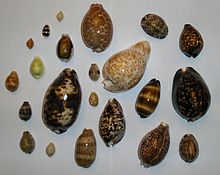
Elf Gehäuse der Ring-Kaurischnecke und Euro-Cent-Münzen – derartige Schnecken dienten als Kaurigeld, hauptsächlich als Kleingeld


Gehäuse verschiedener Kauri­schnecken­arten, von denen bisher 200 bekannt sind


Arabische Händler mit Kaurischnecken, die als Geld verwendet wurden (Druck von 1845)


Geld-Kaurischnecke (Monetaria moneta)


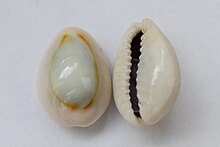
Ring-Kaurischnecke (Monetaria annulus)


Ring-Kaurischnecke von oben und unten


Die kleinen, eiförmigen, sehr stabilen Kaurischneckengehäuse mit ihren bunt gefärbten Schalen mit glänzendem Schmelzüberzug wurden etwa von 2000 v. Chr., also noch in der Bronzezeit, bis ins späte 19. Jahrhundert verwendet. Sie zirkulierten als fälschungssichere internationale „Währung“ auf dem halben Globus. Genaugenommen war Kaurigeld kein Geld im Sinn von Währung, denn es gab keine staatliche Aufsicht und kein Bankensystem dafür; Kaurigeld diente jedoch als Wertaufbewahrungsmittel. Zunächst fand das Kaurigeld Verbreitung in Südasien und Südostasien, China und Indien, später auch in Ostafrika, in Zentralafrika und im tropischen Westafrika, sowie in der Südsee. In vielen Regionen Asiens und Afrikas war die Kaurischnecke sowohl Handelsgut, als auch Zahlungsmittel.

Guinéailleries

diverser Kram, wie Spiegel, Klingeln, Glas- und Korallenperlen

22.08.2015

The Netherlands (Holland and Dutch) Slavers


Netherlands--The Netherlands despite being a small country, lacking in natural resources, was able in the 17th Century to become the centre for European overseas trade, including the trade in human beings. This 'Dutch Miracle' was a product of numerous innovations in navigation, manufacturing and finance, which allowed for slaves and slave produce to be transported at greater capacity and at lower cost. The first recorded trader sold 20 Africans to the colony of Virginia in North America in 1619, but the Dutch trade only really took off in response to labour shortage in the newly conquered sugar plantations of Northern Brazil in 1630. Wars with Portugal (1620-1655) left the Dutch in control of many of the slave depots on the West African coast, centred on modern Ghana, which by 1650 had dispatched 30,000 slaves to Brazil alone. After the return of the Brazilian colonies to Portugal in 1654, the Dutch traders were able to draw upon their network of forts to supply other European powers, dominating the supply to Spain until the 1690s. However the near constant warfare the Netherlands were waged in with other European nations, such as Spain, France and Britain, by Imperial Spain, did eventually sap its strength, and Dutch involvement in the trade declined in the 18th Century, and effectively ceased in 1795. When the final abolition of the trade and institution of slavery formally occurred in 1863, Dutch agents had brought 540,000 Africans to the Americas and cast the spectre of slavery east, from the Cape of Good Hope to the Indonesian archipelago.

more and more slavery sites ...