07.06.2017

Post­ko­lo­nia­lis­mus


http://www.schwarzweiss-hd.de/postkolonialismus/

18. Februar 2014 · in Allgemein

Post|ko|lo|ni|a|lis|mus, der; -, [post– Prä­fix + Kolo­nia­lis­mus; zu post­ko­lo­nial Adj.] Die Epo­che nach Auf­lö­sung der Kolo­nien; der kul­tu­relle Zustand einer post­ko­lo­nia­len Gesell­schaft; / kri­ti­sche Aus­ein­an­der­set­zung mit und intel­lek­tu­elle Los­lö­sung von den gesell­schaft­li­chen, ökono­mi­schen, poli­ti­schen Aus­wir­kun­gen des Kolo­nia­lis­mus.
Der Begriff Post­ko­lo­nia­lis­mus bezeich­net eine breit gefasste, nach dem Zusam­men­bruch des euro­päi­schen Impe­ria­lis­mus in den Jahr­zehn­ten nach dem Ende des Zwei­ten Welt­kriegs ein­set­zende intel­lek­tu­elle Strö­mung, in der eman­zi­pa­to­risch und ideo­lo­gie­kri­tisch ori­en­tierte und von Theo­rie­ent­wür­fen der Dis­kurstheo­rie und der Dekon­struk­tion beein­flusste Wis­sen­schaf­fende (oft selbst mit (post-)kolonialen Bio­gra­phien wie Talal Asad, Homi K. Bhabha, Frantz Fanon, Edward Said, Gaya­tri Spi­vak) began­nen, die kom­ple­xen Zusam­men­hänge zwi­schen ökono­mi­scher, mili­tä­ri­scher und poli­ti­scher Kolo­ni­sie­rung außer­eu­ro­päi­scher Gesell­schaf­ten und ihrer aka­de­mi­schen Erfor­schung auf­zu­ar­bei­ten. Mit Post­ko­lo­nia­lis­mus wird inner­halb die­ser Strö­mung dabei zum einen eine his­to­ri­sche Zäsur gesetzt: Die Benen­nung der Gegen­wart als post-, also nach–kolo­nial, betont Kolo­nia­lis­mus und die Befrei­ung von Kolo­nia­lis­mus und die damit zusam­men­hän­gende Grün­dung von Natio­nal­staa­ten aus der Kon­kurs­masse der ehe­ma­li­gen Kolo­nialim­pe­rien als für viele Gesell­schaf­ten im 20. Jahr­hun­dert zen­tra­les poli­ti­sches Ereig­nis. Zum ande­ren drückt Post­ko­lo­nia­lis­mus ein Oppo­si­ti­ons­ver­hält­nis aus: gegen Kolo­nia­lis­mus – und somit die kri­ti­sche Aus­ein­an­der­set­zung mit Rol­len­bil­dern und Macht­struk­tu­ren (ver­stan­den als eine kom­plexe Matrix von Macht und Macht­lo­sig­keit, Zen­trum und Peri­phe­rie, Herr­schen­den und Beherrsch­ten; sowie ökono­mi­sche, kul­tu­relle und poli­ti­sche Bezie­hun­gen zwi­schen Natio­nen, Eth­nien, Kul­tu­ren), die ihren Ursprung im Kolo­nia­lis­mus haben und bis heute fortwirken.

Post­ko­lo­niale Ansätze rich­ten ihren Blick einer­seits auf die Dekon­struk­tion kolo­nia­ler Denk­mus­ter als Recht­fer­ti­gungs­stra­te­gien für die euro­päi­sche Kolo­ni­al­herr­schaft, ande­rer­seits auf die durch den Kolo­nia­lis­mus aus­ge­lös­ten gesell­schaft­li­chen Trans­for­ma­ti­ons­pro­zesse sowohl in den Kolo­nien als auch in den Kolo­ni­al­staa­ten. Der Post­ko­lo­nia­lis­mus zieht seine eman­zi­pa­to­ri­schen Poten­tiale aus der Ein­sicht, dass die Wahr­heits­re­gime der kolo­nia­len Moderne nicht geschlos­sen sind, son­dern insta­bil, hete­ro­gen, in sich wider­sprüch­lich und mehr­deu­tig, was sie öffnet für Subversion[1] und unge­plante Umdeu­tun­gen, wie dies Homi K. Bhabha in sei­nen Arbei­ten zu Hybridität beschreibt. Aus die­sen Über­le­gun­gen und in enger Ver­knüp­fung mit herr­schafts­kri­ti­schen Pro­gram­men wie denen des Post­struk­tu­ra­lis­mus und Femi­nis­mus spei­sen post­ko­lo­niale Ansätze ihre Ver­su­che einer ele­men­ta­ren Desta­bi­li­sie­rung von Gesell­schafts­ord­nun­gen, der Stär­kung alter­na­ti­ver, mar­gi­na­li­sier­ter Posi­tio­nen und der Ent­wick­lung von Per­spek­ti­ven, die west­li­che Domi­nanz in Frage stel­len; d.h. an Wahr­hei­ten, die lange als unan­fecht­bar gal­ten, soll durch post­ko­lo­niale Kri­tik gerüt­telt werden.

Als para­dig­ma­tisch für diese For­men der Kri­tik gilt Edward SAIDs Stu­die Ori­en­ta­lis­mus (1978, dt. Übers. von Liliane Weiss­berg 1981). Von Ansät­zen des lin­gu­is­tic turn über die wirk­lich­keits­kon­sti­tu­ie­ren­den Poten­tiale von Kom­mu­ni­ka­tion und Fou­caults macht– und wahr­heits­kri­ti­schem Begriff des Dis­kur­ses aus­ge­hend, erar­bei­tete Said einen genea­lo­gi­schen Ansatz, der das Den­ken, Spre­chen und Han­deln euro­päi­scher Akteure im Kolo­nia­lis­mus trans­pa­rent machen sollte. Nach Said kann der „Ori­ent“ gewis­ser­ma­ßen als «euro­päi­sche Erfin­dung» gel­ten, die hier ein zen­tra­les Bild des „Ande­ren“ für Europa ent­wirft (SAID 1979: 1). Getra­gen wor­den sei das euro­päi­sche Ori­ent­kon­zept von einer Ideo­lo­gie, die Ori­ent und Okzi­dent als Gegen­satz­paar auf­baute und zur Grund­lage jeder Aus­ein­an­der­set­zung mit außer­eu­ro­päi­schen Gesell­schaf­ten machte. Wäh­rend euro­päi­sche bür­ger­li­che Eli­ten sich selbst als Trä­ger einer moder­nen, also, libe­ra­len, ratio­na­len, gerech­ten, huma­nis­ti­schen, fort­schritt­li­chen, dyna­mi­schen und oft auch säku­la­ren, über­le­ge­nen Zivi­li­sa­tion neu erfan­den und dadurch diese Kräfte inner­halb der euro­päi­schen Staa­ten affir­mier­ten, seien die Bewoh­ner des „Ori­ents“ mehr­heit­lich über Irra­tio­na­li­tät, Zeit­lo­sig­keit, Grau­sam­keit, Deka­denz und Unver­än­der­bar­keit defi­niert wor­den, also über Eigen­schaf­ten, deren Über­win­dung sich das Groß­bür­ger­tum in Europa als Leis­tung zuschrieb. Die west­li­che wis­sen­schaft­li­che Pro­duk­tion über die außer­eu­ro­päi­sche Welt sei immer als Teil eines Wissen-Macht-Regimes zu sehen, das auf einer essen­tia­li­sie­ren­den Pola­ri­sie­rung zwi­schen einem ratio­na­len Ich und einem irra­tio­na­len Ande­ren beruhe. Der irra­tio­nale Andere werde in einem hege­mo­nia­len Dis­kurs auf eine Art reprä­sen­tiert, die ihn sei­ner Selbst­er­klä­rungs– und Deu­tungs­kom­pe­tenz beraubt, diese in den Hän­den des Ori­en­ta­lis­ten mono­po­li­siert und so die beste­hen­den poli­ti­schen, ökono­mi­schen und intel­lek­tu­el­len Asym­me­trien naturalisiert.[2] Diese essen­tia­lis­ti­sche, kul­tu­ra­lis­ti­sche und im Wesent­li­chen ras­sis­ti­sche Alte­ri­sie­rung des „Ori­ents“, wel­che die soziale Rea­li­tät die­ser Gesell­schaf­ten über­schrieb, habe es dem Wes­ten mög­lich gemacht, Auto­ri­tät über den „Ori­ent“ zu legi­ti­mie­ren, Res­sour­cen dafür zu mobi­li­sie­ren und die Hege­mo­nie über ihn durchzusetzen.
Post­ko­lo­niale Ansätze ermög­li­chen auch eine Kri­tik an heu­ti­gen Macht­asym­me­trien, indem sie expli­zit dar­auf hin­wei­sen, wie diese sich aus kolo­nia­len Struk­tu­ren und Netz­wer­ken erst ver­fes­ti­gen und bis heute in poli­ti­schen, wirt­schaft­li­chen und kul­tu­rel­len Bezie­hun­gen über­dau­ern konn­ten. Ein Bei­spiel hier­für ist die Ideo­lo­gie, Bild­spra­che und Pra­xis der soge­nann­ten „Ent­wick­lungs­zu­sam­men­ar­beit“; hier knüp­fen oft nicht nur das Wer­be­ma­te­rial huma­ni­tä­rer Orga­ni­sa­tio­nen und die Medi­en­be­richt­er­stat­tung an eine kolo­niale Bild­me­ta­pho­rik der Hilfs­be­dürf­tig­keit, Kind­lich­keit und Bedro­hung an, son­dern auch huma­ni­täre Pro­jekte, die durch klare Dominanz-Abhängigkeitsverhältnisse cha­rak­te­ri­siert sind. In einer post­ko­lo­nia­len Les­art erschei­nen west­li­che Hilfs­pro­jekte also nicht mehr als Altru­is­mus, son­dern viel­mehr als eine Fort­füh­rung des Kolo­nia­lis­mus mit ande­ren Mit­teln. Der lange kolo­niale Schat­ten zeigt sich auch im „Krieg gegen den Ter­ror“ und den damit ver­bun­de­nen Welt– und Feind­bil­dern, wie Derek Gre­gory in The Colo­nial Pre­sent: Afgha­nis­tan, Palestine, Iraq (2004) her­aus­ar­bei­tet. All die­sen Bei­spie­len lie­gen kon­stru­ierte Wahr­hei­ten kolo­nia­ler Ste­reo­type zu Grunde, die ihre Wirk­macht erst durch stän­dige (Re-)Produktion erlan­gen konn­ten. Genau hier kön­nen post­ko­lo­niale Ansätze anknüp­fen, in dem sie die Kon­stru­iert­heit und Nor­ma­ti­vi­tät, aber auch die Brü­chig­keit solch ver­meint­lich unan­fecht­ba­rer Wahr­hei­ten sicht­bar machen, die hete­ro­gene Viel­falt kul­tu­rel­ler Deu­tun­gen aner­ken­nen und mar­gi­na­li­sierte, alter­na­tive Wis­sens­for­men abseits hege­mo­nia­ler Wahr­hei­ten begrüßen.


[1] Sub­ver­sion bedeu­tet die Bestre­bung, hege­mo­nia­len Ord­nungs­sys­te­men und Dar­stel­lungs­prak­ti­ken des Kolo­nia­lis­mus einen kri­ti­schen Gegen­dis­kurs ent­ge­gen­zu­stel­len, in dem die Deu­tungs­ho­heit über das Eigene zurück­ge­holt und in einem posi­ti­ven Umdeu­tungs­pro­zess ange­eig­net wird. Bei­spiel­haft dafür ist in der post­ko­lo­nia­len Lite­ra­tur das „Writing-back“-Paradigma (vgl. B. Ashcroft/G. Griffiths/H. Tif­fin, The Empire Wri­tes Back) oder Prak­ti­ken des „Rewri­t­ing“, die durch eine Erwei­te­rung der Per­spek­ti­ven, neue Inter­pre­ta­tio­nen der Geschichte und krea­tive Gegen­ver­sio­nen die zen­tra­lis­ti­sche Domi­nanz kolo­nia­ler Dis­kurse aufbrechen.


[2] Ronald Inden fasst die­sen Sach­ver­halt poin­tiert zusam­men: „The know­ledge of the Ori­en­ta­list […] has appro­pria­ted the power to rep­re­sent the Ori­en­tal, to trans­late and explain his (and her) thoughts and acts not only to the Euro­peans and Ame­ri­cans but also to the Ori­en­tals them­sel­ves“ (Inden 1986: 408).


Corinna Ass­mann, Dan­jiel Cube­lic, Diana Grie­sin­ger
Februar 2014

03.06.2017

Lisa Jardine’s discussion of Temptation in the Archives


A. L. Stoler: Along the Archival Grain / Buchrezensionen

Along the Archival Grain. Epistemic Anxieties and Colonial Common Sense
Rezensiert für H-Soz-Kult von  Minu Haschemi Yekani, Department of History and Civilization, European University Institute Florenz


Ereignisse strukturieren nicht selten historiographische Erzählungen. Michel Foucault hat das Ereignis – freilich gegen die klassische Ereignisgeschichte argumentierend – als einschneidende Einzigartigkeit definiert. Es sei durch keine Regierungszeit, keinen Vertrag oder keine Entscheidung markiert, sondern durch nichts weniger als durch „die Umkehrung eines Kräfteverhältnisses, den Sturz einer Macht, die Umfunktionierung einer Sprache und ihre Verwendung gegen die bisherigen Sprecher, die Schwächung, die Vergiftung einer Herrschaft durch sie selbst, das maskierte Auftreten einer anderen Herrschaft.“[1] Ann Laura Stoler verlegt in ihrem neuen Buch „Along the Archival Grain. Epistemic Anxieties and Colonial Common Sense“ – mit und gegen Michel Foucaults Arbeiten – das Ereignis in die (kolonialen) Archive.

Ganz den Dokumenten zur niederländischen Kolonialherrschaft in Indonesien verschrieben, definiert Stoler das archivarische oder „archivalisierte“ Ereignis als „moments that disrupt (if only provisionally) a field of force, that challenge (if only slightly) what can be said and done, that question (if only quietly) ‚epistemic warrant’, that realign the certainties of the probable more than they mark wholesale reversals of direction.“ (S. 51) Mit diesem Fokus ist es ihr Anliegen, auch die Geschichte hinter denjenigen Dokumenten zu beleuchten, die zum Beispiel nie realisierte Pläne diskutieren, Zeugnis von „Nicht-Ereignissen“ (S. 4) geben und damit in der Historiografie selten im Fokus stehen. Mit anderen Worten: Stoler widmet sich marginalisierten Geschichten, der „minor history“. Ihre Spuren, Wirksamkeit und Bedeutung zu belegen, kann als eines der (vielen) Anliegen dieses Buches aufgefasst werden.

Dokumente der Sammlung des niederländischen Kolonialministeriums (1814-1954) aus den Jahren 1830 bis 1930, die im Nationaal Archief, dem ehemaligen Algemenen Rijksarchief, in Den Haag archiviert sind, stellen den Hauptquellenkorpus der meisten Kapitel dar. Nur die langjährige Erfahrung und die genaue Kenntnis dieses Archivs – in Stolers Fall mindestens zwei Dekaden – ermöglichen es, ein solches Buch zu schreiben: Jeder Seite von „Along the Archival Grain“ ist die Virtuosität anzumerken, mit der Stoler die Archivalien liest, vergleicht, nach Lücken forscht, Auslassungen und Durchstreichungen untersucht, die schriftlichen Anordnungen, geheimen Sendschreiben, Rundschreiben, Berichte und persönlichen Briefe gegen das Licht hält, die scheinbar verborgenen „Wasserzeichen“ (S. 8) der Macht lesbar macht und „historische Negative“ (S. 107) entwickelt, wie sie es nennt.

Stolers Fokus richtet sich zudem, dies kennt man bereits aus ihren früheren Arbeiten, auf die Brüchigkeit, welche die Macht von innen heraus bedroht und gleichzeitig stabilisiert. In „Along the Archival Grain“ allerdings geht es weniger als in früheren Arbeiten um Fragen sozialer und kultureller Stratifizierung, als um die im Archiv dokumentierte brüchige (Un-)Einheitlichkeit des kolonialen common sense. Den „archival turn“ (S. 44) aufgreifend, dreht Stoler das (nicht nur) unter Kolonialhistoriker/innen beliebt gewordene Diktum, die Quellen „zwischen den Zeilen und gegen den Strich zu lesen“, um.[2] Stolers Kehrtwende besteht darin, innezuhalten und den Strich zunächst fein säuberlich freizulegen, zu entdecken und mit ihm zu lesen. Dieses Anliegen verbindet sich mit dem Ziel, etablierte Annahmen über Funktion und Funktionsweise der Wissensgenese des kolonialen Staates zu überprüfen und zu überdenken. Stoler verbindet diese Methode mit einem Nachdenken über den Zusammenhang von emotionaler Ökonomie, kolonialer Regierungskunst und dem Archiv, welches – nicht erst seit Jacques Derrida[3] – als Behausung der Macht gilt. Im kolonialen Staat spielte zudem Taxonomisierung eine besonders große Rolle: „The making of colonial categories shares this ambiguous epistemic space. New social objects were the archive’s product as much as subjects of them.“ (S. 43) Das Archiv wird in Stolers Interpretation als eine Sammlung von Aussagen und als ein Depot von Dokumenten verstanden, als ein Ort des Imaginären und der Institutionen, die Geschichte gestalteten. Nicht zuletzt verweise das Archiv auf die emotionale Ökonomie imperialer Projekte, als deren Unterbau sie fungiere. Stoler zweifelt am Konzept eines abgeschlossenen „Wahrheitsregimes“, welches sich in einem vermeintlichen common sense manifestiere: „This shaping of common sense, and the reigning of uncommon sense, together make up the substance of colonial governance and its working epistemologies.“ (S. 38)

Along the Archival Grain / Ann Laura Stoler


28.05.2017

Hekates Kräutergarten - ein Hexengarten


Hekates Kräutergarten - ein Hexengarten
Hekate hatte in Kolchis (= Georgien) am Fluss Phasis neben dem Palast des mythischen Königs Aietes, laut Diodor der Vater ihrer beiden Töchter Medea und Circe, einen großen Garten. Dieser war umgeben von einer 9 Klafter (~ 16 m ) hohen, unüberwindlichen Mauer und zusätzlich geschützt durch 7 Basteien und 3 ehernen Toren, die von der Göttin Artemis als Torhüterin und von flammenäugigen Hunden bewacht wurden. Nähern konnte man sich ihm nur durch Erbringen von Weihe- und Reinigungsopfern, wie Wacholderrauch und mit Kräutern gefüllten, rein-schwarzen Hündchen.

Warum der ganze Aufwand? - In diesem geschützten Garten zog Hekate in einer Art Permakultur die ihr wichtigen Pflanzen, die ihr bei Geburten, Erotik, Vergiftungen, Entgiftungen, zur Bewusstseinserweiterung, zur Heilung bei Frauenleiden und Verletzungen dienten und: Die Mitte des Gartens barg auf dem Ast der heiligen Eiche hängend einen großen Schatz, nämlich das von den Argonauten heißbegehrte Goldene Vlies, das zusätzlich bewacht wurde von einem schiffsgroßen, fürchterlichen Drachen. Hier wähnte es sein Besitzer, König Aietes, sicher. Nur Medea und Circe und deren Kusine Artemis, als deren Priesterin Medea fungierte, hatten ungehinderten Zugang zu Hekates Garten, den ersten Apothekergarten!
Wer Hekates duftenden, bunten Kräutergarten nachgestalten möchte, dem seien hier auf wildfind seine Pflanzen aufgezählt, die in interessanter, aber doch mühsamer Arbeit (Gartenarbeit eben ;) eruiert werden konnten.

Fündig wurden wir beim Lesen der Argonautensage in „Hesiods Werke und Orfeus der Argonaut“, Übersetzung J. H. Voss, 1817, S. 192 unten ff . Orfeus schildert darin den Diebstahl des Goldenen Vlieses, das ja streng bewacht im Zentrum von Hekates Garten glänzte und gleiste … Die Argonauten sind in Kolchis gelandet und betreten den Garten der Hekate:

"Hierauf folgt ein Hain im innersten Teil des Verschlosses,
Wo viel frisches Holz aufsteigt mit schattigen Wipfeln,
Lorbeerbäum und Kornellen und schlank erhabene Platanen.
Dort sind auch viel Kräuter, gewölbt um die niederen Wurzeln:
Klymenos, sammt dem edlen Asfodelos, und Adiantos,
Aristeron, zart von Gewächs, und Kypeiron mit Thyron,
Kyklamis, gleich der Viol’, und Erysimon, sammt Horminon,
Stöchas, Paeonia dann, vom Busch Polyknemon umwuchert,
Polion dann, Mandragoras auch, und fahles Diktamnon,
Krokos von süssem Geruch, und Kardamom, neben dem Kemos,
Smilax, dunkler Mohn und niedere Chamaemelon,
Panakes und Alkeja, mit Karpason und Akoniton.
Auch viel andere noch der schädlichen stiegen von Grund auf.
Mitten ragt zu den Wolken ein Eichstamm über die Waldung,
Welcher sich weit ausdehnt, mit laubigen Ästen umdunkelt.
Siehe, daran hängt leuchtend von Gold, an dem langen Gezweig hin
Rings verbreitet, das Vließ; und rasch mit den Augen bewacht es
Jener entsetzliche Drache, das unaussprechliche Scheusal. …"

Die aufgezählten Pflanzen sind Pflanzen mit starken pharmazeutischen Wirkungen! Es finden sich darunter Frauenkräuter, Wundkräuter, Kräuter, die aphrodisierend, schmerzstillend, narkotisch, bewusstseinserweiternd oder auch tödlich wirken, und Kräuter, die als Gegengift verwendet wurden.
Sie können mit Pflanzennamen wie Aristeron, Stöchas, Alkeja usw. nicht allzu viel anfangen? Auf den beiden nächsten Seiten finden Sie, eingeteilt in Giftpflanzen und Heilpflanzen der Hekate , die Übersetzungen der Pflanzennamen und dazu passende Fotos!

Pflanzen der Hekate, Teil I

Heilpflanzen der Hekate

Bei der Identifizierung der Pflanzen in Hekates Garten orientierte sich Wildfind an Dr. Johann Heinrich Dierbach, 1833, „Flora Mythologica oder Pflanzenkunde in Bezug auf Mythologie und Symbolik der Griechen und Römer“  und an  Wikipedia.

Zu Hekates Heilpflanzen dürfen auch ihre  Giftpflanzen gezählt werden, sofern sie dem Arzneimittelbuch entsprechend schulmedizinisch oder homöopathisch richtig dosiert und angewendet werden.

Folgende Heilpflanzen, den meisten wird eine aphrodisierende Wirkung nachgesagt, gediehen in Hekates Kräutergarten:

21.05.2017

Suzanne Césaire / Afro-Surrealismus

Suzanne Césaire [Roussi] (11 August 1915 to 16 May 1966) was born in Martinique, and was a French-speaking writer, poet, scholar, post-colonialist, and Surrealist.
In 1936 she married Aimė Cėsaire, with whom she had six children.
Raised and educated in an assimilationist French culture - she met her husband while finishing her education in Paris - Suzanne was a pioneer in the search for an alternative cultural framework to that provided for Martinique by colonial discourse. With her husband, she set up the magazine Tropiques, in an early edition of which she attacked both the aping of traditional French styles of poetry by West Indian writers, and 'The Happy Antilles' view of the island promoted by official French culture. Her poem of 1941, Misère d'une poésie, condemned what she termed "Littérature de hamac. Littérature de sucre et de vanille. Tourisme littéeraire" [Literaure of the hammock, of sugar and vanilla. Literary tourism].[1]
Her encounter with André Breton opened the way for her development of Afro-Surrealism[2] - her use of surrealist concepts to illuminate the colonial dilemma.[3] Her dictum - "La poésie martinique sera cannibale ou ne sera pas" [Cannibal poetry or nothing][4] - pointed the way to a re-capture of the Caribbean roots of her culture, as opposed to a force-fed Europeanism.
While largely overshadowed in her lifetime by her husband and his clear-cut, if theoretical doctrine of Nėgritude,[5] Suzanne's repudiation of simple idealised answers - whether assimilationist, Africanist, or creole - to the ambiguities of the West Indian situation has proved increasingly influential in later postcolonial studies.[6]


---
Afro-Surrealism
From Wikipedia, the free encyclopedia

Afro-Surrealism or Afrosurrealism is a literary and cultural aesthetic that is a response to mainstream surrealism in order to reflect the lived experience of people of color. First coined by Amiri Baraka,[1] this movement focuses on the present day experience of African Americans. Much of Afro-Surrealism is based on the manifesto written by D. Scot Miller, in which he says, "Afro-Surrealism sees that all 'others' who create from their actual, lived experience are surrealist..." Afro-Surrealism can be seen in music, photography, film, the visual arts and poetry. Notable practitioners of Afro-Surrealism include Bob Kaufman, Krista Franklin, Kool Keith, Samuel R. Delany, Roman Bearden and Deana Lawson.

Contents

    1 Influence
    2 Development
    3 Themes
        3.1 The Future-Past
        3.2 The everyday lived experience
        3.3 Haunting
        3.4 Present day realism
    4 Examples of Afrosurrealist Works
        4.1 Zong!, M. NourbSe Philip and Setaey Adamu Boateng
        4.2 Beloved, Toni Morrison
    5 References

Influence

Afro-Surrealism came about after the initial rise in surrealism in the mid-1920s, after André Breton wrote the Surrealist Manifesto. Similar to the mainstream version of surrealism, Afro-Surrealism was not a single movement or style. Rather, it incorporated aspects of the Harlem Renaissance, Négritude and magical realism. Aspects of Afro-Surrealism can be traced to Martiniquan Suzanne Césaire’s discussion of the “revolutionary impetus of surrealism” in the 1940s.[2]

Marvelous Realism, coined by the Haitian novelist Jacques Stephen Alexis, can be seen as a precursor to Afro-Surrealism. In his 1956 essay for Présence Africaine, he wrote, "What, then, is the Marvellous, except the imagery in which a people wraps its experience, reflects its conception of the world and of life, its faith, its hope, its confidence in man, in a great justice, and the explanation which it finds for the forces antagonistic to progress?”[3] In his work, Alexis is seen to have an acute sense of reality that is not dissimilar to traditional surrealism. Suzanne Césaire, a Martinique writer, similarly wrote about the surreality of living away from the Caribbean yet having ties to it.
Development

Afro-Surrealism was coined by Amiri Baraka in his 1988 essay on Black Arts Movement avant-garde writer Henry Dumas.[2] Baraka notes that Dumas is able to write about ancient mysteries that were simultaneously relevant to the present day. This idea that the past resurfaces to haunt the present day is a crucial to Afro-Surrealism.

Cinematographer Arthur Jafa expanded the field of Afro-Surrealism by experimenting with film. Jafa introduces the idea of "the alien familiar," in order to represent the Black experience and its innate surreal characteristics. "I want it to have something that I and my friends call 'the alien familiar.' If a work succeeds in a way or is able to conjure what a Black cinema would be or what this hypothetical manifestation of this particular tradition in the cinematic arena might be, it should be both alien because you’ve never seen anything quite like it, and at the same time, it should be familiar on some level to Black audiences."[4] This focus on the alien aspect of the Black experience, and on Black folk culture, are what separate Afro-Surrealism from magical realism and surrealism.

A Manifesto of Afro-Surreal was written by D. Scot Miller's and was published in 2009.[1] The manifesto delineates Afro-Surrealism from Surrealism and Afro-Futurism. The manifesto also declares the necessity of Afro-Surrealism, especially in San Francisco, California. The manifesto lists ten tenants that Afro-Surrealism follows including how "Afro-Surrealists restore the cult of the past," and how "Afro-Surreal presupposes that beyond this visible world, there is an invisible world striving to manifest, and it is our job to uncover it."
Themes
Deana Lawson, Emily and Daughter, 2002
The Future-Past

[5] Unlike Afro-Futurism which speculates on black possibilities in the future, Afrosurrealism, as Scot describes, is about the present. Rather than speculate on the coming of the four horseman, Afrosurrealists understand that they rode through too long ago. Through Afrosurrealism, artists expose this form of the future past that is "RIGHT NOW." Most Afrosurrealists reject the study of the future pushing themselves to focus on the present, the future that has already past.
The everyday lived experience

Much of Afro-Surrealism is concerned with the everyday life because it is said that there is nothing more surreal than the Black experience. An example of this would be a photo by Deana Lawson called Emily and Daughter. According to Terri Francis, "Afrosurrealism is art with skin on it where the texture of the object tells its story, how it weathered burial below consciousness, and how it emerged somewhat mysteriously from oceans of forgotten memories and discarded keepsakes. This photograph figures Afrosurrealism as bluesy, kinky-spooky."[6]
Haunting

Afro-Surrealism is often described as having a sense of a haunting welcoming. As Francis describes it, there is a sense of disruption from the past in an otherwise ordinary or comfortable situation. An example of Afro-Surrealism seen as haunting can be seen in Toni Morrison's Beloved, in that the dead baby comes back to haunt Sethe.[3] The past resurfacing in the present is key aspect of Afro-Surrealism.
Present day realism

Afro-Surrealist scholar Rochelle Spencer identifies at least three different subgenres of black speculative art, and Spencer argues that Afro-Surrealism is the most present-focus, though it is not devoid of technology and may include allusions to modern technology.[7] According to Francis, the juxtaposition between the old and the present day is what makes Afro-Surrealism so unique. As Francis puts it, "Surrealism here, the Afro-surreal, like the marvelous discussed above, is actually a realism so real, so contrary to the norms of publicized blackness, that it represents a rupture, a radical break from ordinary understanding such that the old feels new—because it was never known."[3] Although this movement is related to Afrofuturism, it is different in that instead of focusing on the future, Afro-Surrealism focuses more on the present day.

Examples of Afrosurrealist Works
Zong!, M. NourbSe Philip and Setaey Adamu Boateng

In [8]Zong!, M. NourbSe Philip crafts a powerful counter-narrative surrounding the events of the Zong massacre. Utilizing the words from the legal decision to build her poetry, Philip rejects the idea of an archival past. Instead Philip looks to the present moment to understand how to read this legal decision and understand the case. Following the footsteps of Toni Morrison’s Beloved, Philip presupposes the notion of a past that is not past allowing these past artifacts to haunt the present moment. Rather than organize the fragments, Philip allows the fragments to tell themselves. This is not to say that Philip gives the fragments voices, but instead gives them space. The space in the poem allows Philip’s audience to hear the silence of these voices, to truly understand the missing narratives form the past and the role that has on the present.

Beloved, Toni Morrison

As mentioned earlier, Toni Morrison’s [9]Beloved remains an important milestone for Afrosurrealists. Here, Morrison imagines a narrative of a slave women grieving the death of her baby daughter, Beloved. With no trace of a past, Beloved reappears of on the steps of 124, confused and looking for her mother. Following this moment, the novel crafts a haunting tale of a woman seeking to understand the sudden reappearance of her daughter and the scars left behind from slavery. In Beloved, Morrison attempts to come to grip with the legacies left by slavery, challenging the notion that these legacies exits only from the past. From the epigraph, “Sixty Million and more,” Morrison presupposes there is no way to count those affected from slavery and additionally, that the number is ever-growing into the present. In her award-winning novel, Morrison expands the idea of the past, attempting to demonstrate the past is ever present and moreover, that the past is RIGHT NOW.
References

D. Scot, Miller. "Call it Afro-Surreal". San Francisco Bay Guarian. Retrieved 8 December 2015.
"Editor's Notes". Black Camera. 5 (1): 1–2. 2013-01-01. ISSN 1947-4237.
Francis, Terri (2013-01-01). "Introduction: The No-Theory Chant of Afrosurrealism". Black Camera. 5 (1): 95–112. ISSN 1947-4237.
Arthur Jafa, “The Notion of Treatment: Black Aesthetics and Film, based on an interview with Peter Hassli and additional discussions with Pearl Bowser,” in Oscar Micheaux and His Circle: African-American Filmmaking and Race Cinema of the Silent Era, ed. Pearl Bowser et al. (Bloomington: Indiana University Press, 2001), 18.
Miller, D. S. "Afrosurreal Manifesto: Black Is the New black—a 21st-Century Manifesto." Black Camera, vol. 5 no. 1, 2013, pp. 113-117. Project MUSE, muse.jhu.edu/article/525948.
Francis, Terri (2013-01-01). "Meditation". Black Camera. 5 (1): 94–94. ISSN 1947-4237.
"Why Black Science Fiction Studies Matter". www.themarysue.com. Retrieved 2015-12-16.
Philip, Marlene Nourbese. Zong! Middletown, Conn.: Wesleyan University Press, 2008. Print.
Morrison, Toni. Beloved: A Novel. New York: Knopf : Distributed by Random House, 1987. Print.

Delgado, Martín Morúa (1856-1910)


Martin Morua Delgado with Daughters Arabella and Vestalina.
Image Courtesy of Manuscripts, Archives and Rare Books Division,
Schomburg Center for Research in Black Culture,
The New York Public Library, Astor, Lenox and Tilden Foundations

Born in 1856, Martín Morúa Delgado gained prominence as an Afro-Cuban writer and Cuba’s first black Senate president after the country’s war for independence against Spanish rule in the 1890s.  Son of an African-slave mother, Ines Delgado, and Spanish father, Francisco Morúa, Martín Morúa Delgado espoused both anti-slavery sentiments and exemplified ideas of success through meritocracy among Afro-Cubans.
Unable to obtain a formal education because of economic demands, Morúa Delgado was thrust into the work force and became a self-taught Cuban.  He became a prolific reader and was fluent in several languages.  Beginning his literary career in 1878, Morúa Delgado published a newspaper, El Pueblo.  Through it, he opposed slavery and sought the integration of blacks into mainstream Cuban society and culture.
In 1880, Delgado left Cuba for Key West, Florida in the United States where he spent the next ten years working as a literary critic and translator and publishing his magazine Revista Popular.  While in the United States he wrote the essays "Duty Calls" and "Cuba and the Colored Race."  While the former is a brief account of Cuba’s social history and call for revolution against the Spanish, the latter focuses on the historical plight of Afro-Cubans and their desire for freedom from slavery.
Upon returning to Cuba, Morúa Delgado published two novels, Sofia and The Unzuazu Family.  Again, he explored issues of the cruelty of slavery and its subsequent psychological impact not just on individual Afro-Cubans but also on Cuban society as a whole.   He focused especially on the complex interpersonal relationships among Cubans, which had been often built on a foundation of mixed-race relationships.
Becoming a major political figure in post-independence Cuba, Morúa Delgado was one of two men of color elected to the country’s constitutional assembly under United States occupation.  In 1901 he became the country’s first elected Afro-Cuban senator (1901).
As part of the Afro-Cuban intellectual/political elite, Delgado symbolized a social mobility that very few black Cubans were able to achieve because of social and legal barriers.  Although a believer in racial equality, Morúa Delgado opposed independent, black civil rights organizations.  Instead he worked through his political party, the Liberal Party, in establishing patronage networks among Afro-Cubans.  As the first black President of the Cuban Senate (1909), Morúa Delgado introduced a bill that banned black political parties because they discriminated against white Cubans.  The Morúa Amendment would later be cited as inciting Cuba’s “Race War of 1912.”  Morúa Delgado would go on to become Minister of Agriculture, passing away in 1910 while serving in that office.
Sources:
Jorge Cantera and Carolina Hospital, A Century of Cuban Writers in Florida: Selected Prose and Poetry (Sarasota: Pineapple Press, Inc., 1996); Aline Helg, “To be Black and to be Cuban: The Dilemma of Afro-Cubans in Post-independence Politics,” in Darien J. Davis, eds., Beyond Slavery: The Multilayered Legacy of Africans in Latin America and the Caribbean (Lanham: Rowman & Littlefield Publishers, Inc., 2007); http://www.historyofcuba.com/history/race/Delgado.htm.
Contributor(s):
Escamilla, Luis
University of Washington
- See more at: http://www.blackpast.org/gah/delgado-martin-morua-1856-1910#sthash.0X0zzdf6.dpuf

Sofía von Martín Morúa Delgado

Delgado, Martín Morúa (1856-1910)

   
Martin Morua Delgado with Daughters Arabella and Vestalina.
Image Courtesy of Manuscripts, Archives and Rare Books Division,
Schomburg Center for Research in Black Culture,
The New York Public Library, Astor, Lenox and Tilden Foundations
Born in 1856, Martín Morúa Delgado gained prominence as an Afro-Cuban writer and Cuba’s first black Senate president after the country’s war for independence against Spanish rule in the 1890s.  Son of an African-slave mother, Ines Delgado, and Spanish father, Francisco Morúa, Martín Morúa Delgado espoused both anti-slavery sentiments and exemplified ideas of success through meritocracy among Afro-Cubans.
Unable to obtain a formal education because of economic demands, Morúa Delgado was thrust into the work force and became a self-taught Cuban.  He became a prolific reader and was fluent in several languages.  Beginning his literary career in 1878, Morúa Delgado published a newspaper, El Pueblo.  Through it, he opposed slavery and sought the integration of blacks into mainstream Cuban society and culture.
In 1880, Delgado left Cuba for Key West, Florida in the United States where he spent the next ten years working as a literary critic and translator and publishing his magazine Revista Popular.  While in the United States he wrote the essays "Duty Calls" and "Cuba and the Colored Race."  While the former is a brief account of Cuba’s social history and call for revolution against the Spanish, the latter focuses on the historical plight of Afro-Cubans and their desire for freedom from slavery.
Upon returning to Cuba, Morúa Delgado published two novels, Sofia and The Unzuazu Family.  Again, he explored issues of the cruelty of slavery and its subsequent psychological impact not just on individual Afro-Cubans but also on Cuban society as a whole.   He focused especially on the complex interpersonal relationships among Cubans, which had been often built on a foundation of mixed-race relationships.
Becoming a major political figure in post-independence Cuba, Morúa Delgado was one of two men of color elected to the country’s constitutional assembly under United States occupation.  In 1901 he became the country’s first elected Afro-Cuban senator (1901).
As part of the Afro-Cuban intellectual/political elite, Delgado symbolized a social mobility that very few black Cubans were able to achieve because of social and legal barriers.  Although a believer in racial equality, Morúa Delgado opposed independent, black civil rights organizations.  Instead he worked through his political party, the Liberal Party, in establishing patronage networks among Afro-Cubans.  As the first black President of the Cuban Senate (1909), Morúa Delgado introduced a bill that banned black political parties because they discriminated against white Cubans.  The Morúa Amendment would later be cited as inciting Cuba’s “Race War of 1912.”  Morúa Delgado would go on to become Minister of Agriculture, passing away in 1910 while serving in that office.
Sources:
Jorge Cantera and Carolina Hospital, A Century of Cuban Writers in Florida: Selected Prose and Poetry (Sarasota: Pineapple Press, Inc., 1996); Aline Helg, “To be Black and to be Cuban: The Dilemma of Afro-Cubans in Post-independence Politics,” in Darien J. Davis, eds., Beyond Slavery: The Multilayered Legacy of Africans in Latin America and the Caribbean (Lanham: Rowman & Littlefield Publishers, Inc., 2007); http://www.historyofcuba.com/history/race/Delgado.htm.
Contributor(s):
Escamilla, Luis
University of Washington
- See more at: http://www.blackpast.org/gah/delgado-martin-morua-1856-1910#sthash.0X0zzdf6.dpuf

„The Rebellion of the Girls: Reflections for an Embodied Decolonization“

Nadia Celis

Die Literaturwissenschaftlerin Nadia Celis hielt im Rahmen des SoCaRe Nachwuchsworkshops am 23.03.2013 einen Keynote-Vortrag mit dem Titel „The Rebellion of the Girls: Reflections for an Embodied Decolonization“. In ihrem Vortrag ging Nadia Celis der Frage nach, wie die karibische Kolonialgeschichte als eine verkörperlichte Erfahrung verstanden werden kann. Widerstand und Körperbewusstsein, so ihre These, müssen in diesem Kontext jenseits eines Butler’Schen Symbolismus zusammengedacht werden.


27.04.2017

Helvetische Color Line


Im Herbst 2007 erschien ein vielbeachteter Artikel in der britischen Zeitung The Independent, der den Titel „Switzerland: Europe’s Heart of Darkness?“ trug. Er reagierte auf eine Kampagne der Schweizerischen Volkspartei (SVP), die eine Initiative „Für die Ausschaffung krimineller Ausländer“ lanciert hatte. Die Plakate zeigten weisse Schafe, die ein schwarzes Schaf aus dem Territorium der Schweiz kicken. Der Independent übertrug Joseph Conrads berühmte Kritik der europäischen Kolonialherrschaft im Kongo provokativ auf das Land, das sich seit jeher ausserhalb kolonialer Geschichte wähnt. In der Schweiz des 21. Jahrhunderts, so die Pointe des Artikels, herrscht ein öffentlicher Umgang mit dem Erbe der Kolonialzeit vor, der andernorts schon lange als kolonial, rassistisch und politisch inakzeptabel gilt.

Mit der NZZ zurück in die Vergangenheit

"Brownfacing im Schweizer Fernsehen: Victor Giacobbo als Rajiv Prasad", (Quelle SRF)
Brownfacing im Schweizer Fernsehen: Victor Giacobbo als Rajiv Prasad, Quelle: SRF
Interessanterweise nimmt nun die aktuelle Ausgabe von NZZ Geschichte mit ihrer Titelgeschichte „Herr Ständerat im Herzen der Finsternis“ nicht nur Joseph Conrads Titel auf, sondern bestätigt damit auch die Kritik des Independent. Denn der NZZ geht es keineswegs darum, die Effekte des Kolonialismus auf die gegenwärtige Schweiz zu untersuchen. Vielmehr diskreditiert der Verfasser des Hauptartikels Forschungen zur postkolonialen Schweiz, die solchen Fragen seit vielen Jahren nachgehen, in einer Randspalte als „Wettbewerb der nachträglichen Selbstkasteiung“ und verweist dafür nicht zufällig auf zwei Beispiele von nicht-weissen Forschern und Politikern. In der Tat zeigte der Sozialanthropologe Rohit Jain in seiner Analyse von „Rajiv Prasad“, einer von Victor Giacobbo im Schweizer Fernsehen gespielten Comedyfigur, dass diese aus einem Arsenal von kolonialen Stereotypen zusammengesetzt ist. Die Popularität der Figur erklärt er damit, dass sie einem links-liberalen weissen Publikum, das sich selber gerne als anti-rassistisch versteht, die Möglichkeit bietet, mit gutem Gewissen gegen die sogenannte Political Correctness aufzubegehren und auch mal über das Fremde zu lachen. Dadurch würde jedoch, so Jain, die Fremdenfeindlichkeit der Rechten verstärkt. Denn die nicht-weisse Schweiz bleibe sowohl von der Produktion als auch vom Konsum dieses spezifisch weissen Humors ausgeschlossen.

Beim zweiten Fall, den die NZZ Geschichte ins Lächerliche zieht, handelt es sich um die Kritik der beiden Politiker Halua Pinto de Magalhães und Fuat Köçer an der Statue und am Wappenzeichen der sogenannten Mohrenzunft in der Berner Altstadt. Über „Integration“ könne nicht sinnvoll diskutiert werden, so argumentieren sie, solange im öffentlichen Raum weisse Überlegenheit und schwarze Minderwertigkeit inszeniert würden. Die beiden verlangen keinesfalls eine Entfernung der rassistischen Objekte, wie die NZZ Geschichte behauptet. Sie fordern vielmehr eine öffentliche Debatte über den Zusammenhang zwischen kulturellem Rassismus im öffentlichen Raum und dem strukturellen Rassismus, der sich hierzulande nicht nur in der systematischen Untervertretung der Migrationsbevölkerung in politischen Behörden, in Verwaltung, Wissenschaft, Kultur und Medien zeigt, sondern auch in der Banalisierung alltäglicher Rassismuserfahrungen.

Dass ein NZZ-Journalist diese Argumente nicht nachvollziehen kann und will, veranschaulicht das Problem und bestätigt zugleich Einsichten der jüngeren postkolonialen Forschung. In der Schweiz, so die Politologin Noémi Michel, werde die Bedeutung der kolonialen Vergangenheit für die postkoloniale Gegenwart kontinuierlich in Abrede gestellt. Dies habe paradoxerweise zur Folge, dass Individuen, welche die Erfahrung machen, dass ihre Körper, Namen und Biographien kontinuierlich rassifiziert werden, gleichzeitig nicht als legitimiert gelten, in der Öffentlichkeit über Rassismus zu sprechen.

Die ‚color line‘


Zunft zum Mohren, Zunftshaus, Bern: Quelle: flickr.com
In der pauschalen Verwerfung postkolonialer Forschung durch NZZ Geschichte ist offenbar eine nicht-artikulierte, zugleich aber sozial und epistemisch wirksame ‚color line‘ am Werk: Weiss-Sein ist eine unsichtbare oder genauer, unsichtbar-gemachte Kategorie der Gesellschaftsorganisation. Ähnlich wie Männlichkeit (deren Wirkmächtigkeit der kurze Text ebenfalls eindrücklich vor Augen führt; denn namentlich erwähnt werden darin nur Männer, obwohl die Debatte zur postkolonialen Schweiz wesentlich von Forscherinnen initiiert wurde) strukturiert Weiss-Sein die Linien der Zugehörigkeit, der Autorität, der Legitimität und der Opportunität. Konkret hat dies zur Folge, dass die NZZ Geschichte das Thema Schweiz und Kolonialismus auf eine Art lancieren kann, bei der alle sonst gültigen Regeln akademischer und journalistischer Redlichkeit gebrochen werden: Keine einzige beitragende Person gehört zum Feld der Expertinnen und Experten, welche die Geschichte und Gegenwart der Schweiz seit Jahren aus einer Perspektive analysieren, die von nicht-weissen, nicht-westlichen Denkerinnen und Denkern entwickelt wurde, der Perspektive der postkolonialen Theorie. Das Wissen von nicht-weissen Forschenden und solches, das in einer nicht-weissen Theorietradition steht, wird kurzerhand als illegitim oder irrational dargestellt oder schlicht ignoriert.

Diese ‚color line‘ durchzieht auch den Hauptartikel des Heftes, der von Martin Beglinger verfasst wurde. Es geht darin um die Geschichte des grossbürgerlichen Luzerner Politikers Edmund von Schumacher, der um 1900 im Auftrag des belgischen Königs in den Kongo reiste, um die Gräueltaten an der Bevölkerung zu untersuchen. Die Geschichte ist nicht neu. Der Historiker Lukas Vogel hat sie weit reflektierter bereits vor einigen Jahren in einem lesenswerten Artikel erzählt. Beglinger übernimmt zwar einige narrative Elemente und Argumente des Historikers, nicht aber dessen Arbeitsinstrument – die Quellenkritik. So schildert Beglinger die Geschichte einseitig aus der Perspektive seines Helden und übernimmt auch dessen Sprache unkritisch: Die koloniale Rede von „Häuptlingen“ etwa, wie auch Schumachers Auslassungen über den „Kannibalismus“ oder die angebliche Angst der „Eingeborenen“ vor der Kamera, die ihre Seele stehlen würde. In unzähligen Studien wurden solche Mythen als Teil kolonialer Ideologien entlarvt, welche die Sichtweisen, Strategien und Handlungen von kolonisierten Menschen ausblenden und von den vielfältigen Formen der europäischen Gewaltausübung in den Kolonien ablenken.

Das finstere Herz der populären schweizerischen Geschichtskultur

Kurzum: Dieser Artikel fällt Jahrzehnte hinter jeden Forschungsstand zurück und wäre eigentlich nicht der Rede wert, wenn er nicht in einem namhaften Heft erschienen und öffentlich unwidersprochen geblieben wäre. So erlaubt er uns als Phänomen einer Geschichte der Gegenwart einige aufschlussreiche Einsichten ins finstere Herz der populären schweizerischen Geschichtskultur. In der anekdotischen Abhandlung der Kolonialgeschichte lässt sich erstens eine Abwehrhaltung erkennen, die zum Ausdruck bringen will, dass diese für uns heute nicht mehr relevant ist. Damit steht sie dem Projekt einer postkolonialen Forschung diametral entgegen, welche verstehen will, wie wir hier und heute noch vom Kolonialismus gezeichnet sind.

Es ist zweitens eine Geschichte, welche versucht, vom Mythos des schweizerischen Sonderfalls zu retten, was noch zu retten ist. „Wir Nachgeborenen“ sollten „unsere Vorfahren“ nicht vorschnell „verurteilen“, mahnt etwa Redaktionsleiter Peer Teuwsen im Vorwort des Heftes. Entsprechend fällt Beglingers Darstellung seines Helden im Hauptartikel aus: Der grossbürgerliche Luzerner „Ständerat im Herzen der Finsternis“ verkörpert gleichsam die Ehre der Schweiz im kolonialen Kontext. Zwar vertritt er durchaus rassistische Sichtweisen und legt eine irritierende Loyalität gegenüber dem mit brutaler Gewalt herrschenden belgischen König zutage. „Doch was zählt“ ist in den Worten von Redaktionsleiter Teuwsen etwas anderes: Der Schweizer im Kongo habe letztlich „zur Verbesserung der Zustände“ und zum Ende der Gewaltherrschaft beigetragen. Hier erleben wir also die Reinszenierung des ramponierten Mythos der neutralen und humanitären Schweiz auf der Bühne der Kolonialgeschichte, die in Fortführung einer langen imperialen Denktradition ausschliesslich von weissen Akteurinnen und Akteuren bespielt wird. Denn was zurecht an Conrads „Herz der Finsternis“ kritisiert wurde, gilt auch für Beglinger: Die koloniale Geschichte des Kongos erscheint als Auseinandersetzung zwischen weissen (und zumeist männlichen) Europäern. Den kolonisierten Menschen wird dabei lediglich die Rolle von anonymen Statistinnen und Statisten im Hintergrund zugestanden. Ihr Widerstand gegenüber der europäischen Macht wird verschwiegen, und der Übergang vom Gewaltregime des belgischen Königs zur belgischen Staatskolonie als exklusives Werk europäischer Philanthropinnen, Aktivisten und Politiker inszeniert.

Die dritte Beobachtung zu dieser Art der Geschichtsvergegenwärtigung lässt sich anhand des Titelbildes erläutern: Dieses zeigt den Helden der Geschichte – Ständerat Edmund von Schumacher – umrahmt von vier kolonisierten Frauen. Wie sich beim Durchblättern des Heftes zeigt, handelt es sich bei dieser Illustration um eine Montage aus Fotografien aus dem Nachlass von Schumachers. Die zentrale Vorlage ist ein Foto, auf dem der Schweizer einer jungen kongolesischen Frau den Arm um die Schulter legt und auf ihre nackten Brüste blickt. Was auf der Fotografie als eigenartige Mischung von Unbeholfenheit und Lüsternheit des helvetischen Akteurs erscheint, der zugleich die Macht über die Inszenierung innehat, wird in der kolorierten Zeichnung des NZZ Geschichte-Titels in eine Aura staatsmännischer Seriosität umgewandelt: Von Schumacher blickt darauf ernsthaft und besonnen in die Kamera, während die von kolonialer Gewalt gezeichneten Frauen dadurch zu seinen Schützlingen zu mutieren scheinen. Die vielschichtigen Erfahrungen von Rassismus und Sexismus, die sich in den Fotografien aus der Kolonialzeit eingeschrieben haben, sollen derart aus dem Coverbild getilgt werden. Das gespenstische und surreale Szenario, das dabei entsteht, hält auf eindrückliche Weise fest, wie die weisse Seite der helvetischen ‚color line‘ sich gegenwärtig gegen die stetig lauter werdende Kritik der postkolonialen und migrantischen Schweiz zu immunisieren versucht: mit dem Mythos der unschuldigen Schweiz.

Literaturhinweise:
Daniel Kurjaković, Franziska Koch, Lea Pfäffli (Hg.), The Air Will Not Deny You. Zürich im Zeichen einer anderen Globalität, Zürich/Berlin (diaphanes) 2016.
Noémi Michel (im Erscheinen), „Sheepology: The Postcolonial Politics of Raceless Racism in Switzerland“, in: Postcolonial Studies.
Rohit Jain, „Die Comedyfigur Rajiv Prasad in Viktors Spätprogramm - post_koloniales Phantasma und die Krise des ‚Sonderfalls Schweiz‘‘‘, in: Purtschert, Patricia; Lüthi, Barbara; Falk, Francesca (Hg.): Postkoloniale Schweiz. Formen und Folgen eines Kolonialismus ohne Kolonien, Bielefeld 2012, S. 175–200.
Patricia Purtschert, Harald Fischer-Tiné (Hg.), Colonial Switzerland. Rethinking Colonialism from the Margins, London (Palgrave Macmillan) 2015.
Lukas Volgel, „Andenken, Abenteuer, Anklage. Gedanken zu einem Fotoalbum aus dem Kongo 1904/05“, in: Menrath, Manuel (Hg.), Afrika im Blick. Afrikabilder im deutschsprachigen Europa, 1870-1970, Zürich 2012, S. 169–188.
Bernhard C. Schär, „Berns vergessene Kolonialgeschichte“, in: Der Bund, 29.12.2014, S. 19, online: http://bit.ly/1z2Y78A
Paul Vallely, „Switzerland. Europe’s Heart of Darkness?“, in: The Independent, 7.9.2007.

17.04.2017

blackness, mathematics, fabulation: speculation


Posted on September 27, 2014 by keguro

A recent issue of The Black Scholar, edited by Alexander Weheliye, explores the relationship between black studies & black life. As many of the contributors argue, this relationship is about the knowledge structures and practices central to the ongoing problem of how to frame, understand, and engage the world we’ve inherited as modern, the world “modernity made.” We might describe this as the world that made blackness by unmaking black life, the world that created blackness as a speculative form: to be speculated upon and to speculate on its own life-making possibilities. Different kinds of imaginative leaps meet in speculation, and while “speculation” is not one of the key terms of the issue, it assembles and orients many of the articles, especially those by Tavia Nyong’o, Katherine McKittrick, C. Riley Snorton, and Denise Ferreira da Silva. I’m especially interested in articles by Nyong’o and McKittrick, because they press on one of my ongoing questions about what McKittrick terms, “origin stories”: simply, what are the genealogies of blackness? Where do we start? How do we start? And, once we’ve started, how do we proceed?

To answer these questions, McKittrick turns to the black archival presence found in “documents and ledgers”: “the list, the breathless numbers, the absolutely economic, the mathematics of the unliving.” It is a formula-generating mathematics that creates “historic blackness” for the New World—the world modernity made—a history that is, simultaneously, an unhistory (the Negro has no history), an unmaking served by economic attachment: “belongs to, bequeathed to, to be sold to.” As McKittrick writes, “New world blackness arrives through the ordinary, proved, former, certified, nearly worn worn-out archives of ledgers, accounts, price tags, and descriptors of economic worth and financial probability.” The commodity that speaks—this commodity that Marx made unspeakable.

What kind of origin story is this?


The brutalities of transatlantic slavery, summed up in archival histories that give us a bit of (asterisked-violated) blackness, put meaningful demands on our scholarly and activist questions. While the tenets and the lingering histories of slavery and colonialism produced modernity as and with and through blackness, this sense of time- space is interrupted by a more weighty, and seemingly truthful (truthful and truth-telling because iterated as scientific, proven, certified, objective), underside—where black is naturally malignant and therefore worthy of violation; where black is violated because black is naturally violent; where black is naturally unbelievable and is therefore naturally empty and violated; where black is naturally less-than-human and starving to death and violated; where black is naturally dysselected, unsurviving, swallowed up; where black is same and always and dead and dying; where black is complex and difficult and too much to bear and violated. The tolls of death and violence, housed in the archive, affirm black death. The tolls cast black as impossibly human and provide the conditions through which black history is currently told and studied. The death toll becomes the source.

How, given this unmaking work of the numbers archive, can black life, black survival, black being be narrated or imagined from such sources? Or, as McKittrick asks, “How do we ethically engage with mathematical and numerical certainties that compile, affirm, and honor bits and pieces of black death?”

At a historical moment when, to cite Simone Browne, humans are being turned into data, a moment when the logics and practices of the ledger and fungibility have found new opportunities in the bio-cataloguing of human life known as “biometrics”—recall, here, that Nigeria has partnered with Mastercard to issue “new” biometric identification documents—the “bits and pieces” of “black death” return garbed in bio-technological management. The logics and practices that unmade/unmake black life—the “mathematics” of modernity—return to “secure” what can only be the persistent unmaking of black life. As McKittrick puts it more elegantly, “it is challenging to think outside the interlocking data of black erasure, un-freedom, and anti-black violence,” especially as so many claims for justice today depend on assembling data on “black erasure, un-freedom, and anti-black violence.” How might black studies think with the mathematics of black life without reproducing the violent production of blackness as and through mathematics?
What if we trust the lies—she says she was born free—and begin to count it all differently?
—K. McKittrick

McKittrick meets Nyong’o at “the lie,” at the moment when the speculative logic of slavery meets the speculative leap into black life forms. In “Unburdening Representation,” Nyong’o reclaims the “gap” between the two meanings of representation—to depict and to stand for—as a space of “fabulation,” and, more specifically, “Afro-fabulation.” “A fabulist,” argues Nyong’o, “is a teller of tales, but he or she also discloses the powers of the false to create new possibilities.” A “teller of tales,” a storyteller and a liar, one who disrupts “the hostile and constraining conditions” of “emergence into representation.” “Possibility,” for Nyong’o is found at the “seam” or “joint,” the place Brent Edwards terms décalage, between the two forms of representation:


This misalignment of political and artistic representation is exploited by Afro-fabulation, which is thus not properly speaking solely an aesthetic strategy, or a political one, but a tactic for taking up the time and space between them.

“taking up the time and space between them.” One recalls that the archives that produce blackness in the New World deny that those termed black can represent—Phyllis (misspelled last name) cannot be a poet, declares Jefferson, and black figures cannot stand for those who can be citizens: I’m time-sliding to write this—themselves and others. Within the field of representation—within the oscillating meaning of that term—blackness will always have been a negation, an impossibility, what cannot stand “as” and “for” us. (Here, one might think about the African rejection of blackness as “not us.” The impossible chasm of blackness.)

Mining the gap (note the labor metaphor), Afro-fabulation “is always seeking to cobble something together, to produce connections and relations, however much the resultant seams show.” I want to think with Nyong’os metaphors here—I really should call him Tavia, but since I used McKittrick, protocol applies—of “cobbling,” and “connections and relations,” and “seams.” Of the various economies of motion and mobility (cobblers, shoes, the obsession with shoes in Toni Morrison’s A Mercy); and food, the cobbler as an assemblage of excess fruit, a sweetener, a palate cleanser, an act of love; “connections and relations,” the languages of invented kinship, fabulated genealogy, geographical assemblage (Glissant, Brand); and seams, which always lead me to clothing, the gorgeousness of Harryette Mullen’s Trimmings, the labor of the clothed and the unclothed slave body, the joins and joints of black labor, the uneven, the sutured, the knitted, the broken, that which enables “motion.” The seam that shows—the labor that refuses invisibility. The “lie” that refuses the truth-owning of data-production.

Speculation returns again, as that which joins McKittrick’s “mathematics” to Nyong’o’s “fabulation,” as part of the “demonic ground” where narrative does not supplant or unmake mathematics. Instead, the “speculative” becomes part of the asymptotic narration, the gap in representation—the gap in the archive, the gap in the lie, the gap that is the lie—through which and into which black life finds an “origin story” within life-unmaking blackness. Speculation, or the speculative, might be a method that reads into and past the data-affirming archive to see what black life forms might emerge, what acts of making and unmaking, what ways the human might emerge and undo the regime of Man.

Speculation is also a mode of being-present where one is impossible. It is the acts of appearance and disappearance, the haunting and the spook, the resistant object to cite Fred Moten, that inhabits what Christina Sharpe terms being “in the wake.” #staywoke, we say on twitter: remain conscious, aware, inhabit the insomnia that might (this is always speculative) save a black life, give a black life new form.

Learning from McKittrick and Nyong’o, I want to imagine “speculation” as a term central to black life and black studies, foundational to blackness as negation and possibility, a leap across and into the asymptote. 

La Borinquena - Superhero

15.04.2017

BLACK ATLANTIC, QUEER ATLANTIC

Queer Imaginings of the Middle Passage
Omise'eke Natasha Tinsley

What would it mean for both queer and African diaspora studies to theorize that the black Atlantic has always been a queer Atlantic? What new geography—or better, oceanography—of sexual, gendered, transnational, and racial identities might emerge through a queer reading of transoceanic dislocations between Africa and the Caribbean? This article examines canonical African diaspora and queer theoretical texts in dialogue with recently published creative texts that imagine queer relationships between African kidnapees in slave ships' holds. These creative texts, I argue, more expansively theorize conceptual space both to rethink submerged sexual, racial histories and to comment on the intersections between African diaspora and queer experiences in a contemporary era of Haitian refugees, transnational Dominican laborers, and international West Indian “gay” activists. Texts examined include Paul Gilroy's Black Atlantic (1993), Judith Butler's Gender Trouble (1990), Ana-Maurine Lara's Erzulie's Skirt (2006), and Dionne Brand's Map to the Door of No Return (2001).

04.04.2017

Jacqueline Bishop / Jamaica / Quilts / Untold Stories / Women's Art

 Untold Stories – Interview with Jacqueline Bishop – Part 1
September 4, 2016 veerlepoupeye2 Comments

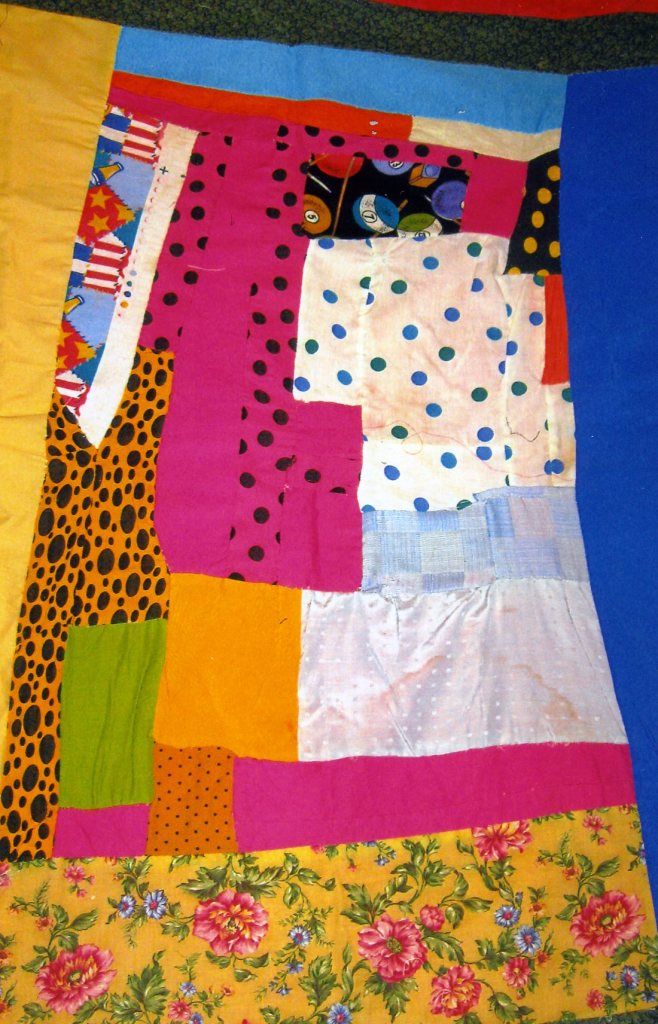
Patchwork by Celeste Walker, great grandmother of Jacqueline Bishop

In November 2015, I conducted an interview with Jacqueline Bishop, coming out of our conversations about the “Explorations IV: Seven Women Artists” exhibition at the National Gallery. That exhibition, among other things, asked why there is so little consideration, in the (art-)historical and material record, for the material creative production of Jamaican women, other than what has been consecrated as “fine art.” And what has been so consecrated is constrained by narrow definitions of art and, closely related to that, a myopic, class-based view of who is an “artist.” This somehow seems to affect women’s creative production more than men’s — almost all the artists who have been recognized as “Intuitives” are men, for instance, in part because they more typically work in media that can be recuperated as “fine art” such as “painting” and “sculpture.” Another reason is that women’s social roles have traditionally been defined differently across the class spectrum, with little space or recognition given to creative expressions of lower class women. This is a very rich, complex and barely explored topic that needs to be explored further and I intend to make other contributions on this blog. Not surprisingly, what should have been a short interview for publication in a newspaper became a lengthy conversation – some fourteen pages of copy in all – that could not be edited down easily. Jacqueline and I have decided to share the interview with you, in two parts – both of them still long for a blog, but we hope that you will find it a rewarding read, which will inspire you to ask further questions and perhaps even to delve into your own family history. Enjoy!

VP: Jacqueline, some time ago we had a conversation about the untold stories in art in Jamaica, particularly with regards to women’s contributions, and your family’s quilt-making history came up. Please tell me about this family tradition and how you became involved?

JB: When I was growing up in Jamaica, I would be sent to the country for the summer holidays. In the country were my great grandparents and my grandmother, as well as numerous aunts, uncles and cousins. I could sleep at one of two houses: I could stay with my great grandparents in Nonsuch or with my grandmother a mile and a half away in Cambridge. This is in the parish of Portland.

In Nonsuch my great grandmother would be sewing together these pieces of cloth to make patchworks, but at the time I did not know it as art. My great grandmother, whose name was Celeste, would just be sewing together these things and using them on beds in her house. I have been conducting oral history interviews with my family members and what I have found out in doing these interviews is that sewing was integral to the women in our family — my grandmother, my great grandmother and such. My grandmother’s sister, Aunt Theresa, tells me that sewing was one skill that was passed down from one generation to another in my family, and even my Uncle Moses tells me that my great grandmother would have him — a boy child — making patchworks and beautiful multi-coloured mats made from small bits of fabric drawn through crocus bag/burlap sack. So I think that patchwork making and mat-making was something that was passed down for generations in my family. Now I have patchworks that my great grandmother made, patchworks from my grandmother, and there are several that I have made in response to these quilts. Altogether there are now 35 quilts from my family, and I feel just so happy to have them. Quilt by Jacqueline Bishop

I can locate the exact moment that I became interested in this family tradition. It was during my junior year in college when I went abroad to live in Paris. In France I started reading the works of, among others, the writer Alice Walker who wrote an essay called “In Search Of Our Mother’s Garden.” In that essay Walker venerated the African American quilts that her mother and other women around her was making in Georgia. She wrote of these quilts as being a vernacular art form that partly answered the question of just what was the art that oppressed African American women had made? For Walker, and eventually for myself too, these quilts were a large part of the answer to that question. Indeed as I read Walker’s essay I was transported back to Nonsuch, to these things that my great grandmother had made. And that was when my interest in the patchworks that my great grandmother had made became very important for me.

In time as I went to graduate school to become an artist I would harken back to these quilts of my great grandmother’s and I would make quilts in conversation with my great grandmother’s patchworks. As I started showcasing these quilts in exhibitions in several countries this provoked questions about my great grandmother that I did not then have answers to. I turned to my grandmother Emma to answer these questions, and eventually she got interested in making patchworks too, as she had grown up with her mother making these things and her mother had shown her how to make these patchworks and that is how I come to have in my possession a collection of patchworks from my great-grandmother and my grandmother. Patchwork by Emma Chin-See – grandmother of Jacqueline Bishop