29.06.2015

Sally Hemings


Sarah “Sally” Hemings (circa 1773- 1835) was a mixed race slave owned by the third President of the United States, Thomas Jefferson.
“As in President Thomas Jefferson‘s household, the presence of lighter-skinned slaves as household servants was not merely an issue of skin color. Sometimes planters used mixed-race slaves as house servants or favored artisans because they were their own children or other relatives. Several of Jefferson’s household slaves were the grown children of his father-in-law John Wayles and the enslaved woman Betty Hemings, who were brought to the marriage by Jefferson’s wife. In turn, the widower Jefferson had a long relationship with Wayle’s and Betty’s daughter Sally Hemings. She was much younger than Jefferson, an enslaved woman who was mostly of white ancestry and half-sister to his late wife, a legitimate daughter of Wayles. The Hemings children grew up to be closely involved in Jefferson’s household staff activities; one became his chef. Two sons trained as carpenters. Three of his four surviving mixed-race children by Sally Hemings passed into white society as adults.”

Black Venus Project (Stereotyping) by Maxim Vakhovskiy


Maxim Vakhovskiy


23.06.2015

Verhalen van vrijheid

Koto Museum: koto’s en herleving van herinneringen

De kotomisi’s zijn voor altijd thuis en vanaf komende week weer te bewonderen in het nieuw onderkomen van het Koto Museum. Behalve hun eigen verhalen vertellen ze ook die over de eeuwenoude Surinaamse gebruiken, taferelen en gewoontes. “Als je binnenstapt leer je niet alleen over de kotomisi, maar meer nog over het gewone en dagelijkse leven in Suriname,” vertelt curator Christine van Russel-Henar. “Menig bezoeker haalt hier jeugdherinneringen op en voelt zich voor even weer ‘thuis’. Voor andere is het een Eyeopener.” koto museum1


22.06.2015

Amelioration Act 1798


From Wikipedia, the free encyclopedia

The Amelioration Act 1798[1] (sometimes referred to as the Melioration Act or the Slavery Amelioration Act) was a statute passed by the Leeward Islands to improve the conditions of slaves in the British Caribbean colonies.

It introduced financial compensation for slaves, and therefore penalties for owners, for instances of cruelty or serious neglect. The Act prohibited marriages between slaves according to Christian religious ceremony. The Act was effectively repealed by the Slave Trade Act 1807, which made it illegal to trade in slaves in any British territory. The Act applied in all of the British Leeward Island colonies in the Caribbean up until its implied repeal by the Slavery Abolition Act 1833. The Act is most often noted for its provisions for financial penalties for inflicting cruel and unusual punishments on slaves. It also made provisions for basic entitlements of slaves to clothes, food and rudimentary education. However, the Act was somewhat eclectic in effect; it also prohibited marriages between slaves being sanctified by religious ceremony.

The Act is sometimes portrayed as an example of extending basic human rights to slaves. Whilst that may be correct, it is also probable that the Act had considerably less altruistic purposes. Agitation amongst slaves was increasing in the region at the time, and slave rebellions were becoming increasingly frequent. Trying to moderate the conduct of the worst slave owners was partly a measure to control these outbreaks of violence. It has also been suggested that the Act served an economic function; anticipating the abolition of the slave trade (which in fact subsequently happened pursuant to the Slave Trade Act 1807). It has been argued that the Act sought to preserve the well-being and encourage the breeding of existing slave populations to preserve the labour basis upon which the Caribbean's plantation economies were based.

Slave Power


From Wikipedia, the free encyclopedia
(Redirected from Slave power)

The terms "Slave Power" and "slaveocracy" were used by antislavery campaigners in the U.S. in the 1840s and 1850s, in reference to what they saw as the disproportionate political power held by slave owners in the national government. The argument was that this small group of rich slave owners had seized political control of their own states and were trying to take over the national government in an illegitimate fashion in order to expand and protect slavery. The argument was widely used by the Republican Party that formed in 1854-55 to oppose the expansion of slavery.

The main issue expressed by the phrase was distrust of the power of slave-owning oligarchs. Such distrust was shared by many who were not abolitionists; those who were motivated more by a possible threat to the political balance or the impossibility of competing with unwaged slave labor, than by concern over the treatment of slaves. Those who differed on many other issues (such as hating blacks or liking them, denouncing slavery as a sin or promising to guarantee its protection in the Deep South) could unite to attack the "slaveocracy."[1] The "Free Soil" element emphasized that rich slave owners would move into new territory, use their cash to buy up all the good lands, then use their slaves to work the lands, leaving little opportunity room for free farmers. By 1854 the Free Soil Party had largely merged into the new Republican party[2]

The term was popularized by antislavery writers such as John Gorham Palfrey, Josiah Quincy III, Horace Bushnell, James Shepherd Pike, and Horace Greeley. Politicians who emphasized the theme included John Quincy Adams, Henry Wilson and William Pitt Fessenden. Abraham Lincoln used the concept after 1854 but not the term. They showed through a combination of emotive argument and hard statistical data that the South had long held a disproportionate level of power in the United States. Historian Allan Nevins contends that "nearly all groups...steadily substituted emotion for reason.... Fear fed hatred, and hatred fed fear."[3]

Plantocracy


From Wikipedia, the free encyclopedia
Further information: Slave Power

A plantocracy, also known as a slavocracy,[1] is a ruling class, political order or government composed of (or dominated by) plantation owners.

A number of early European colonies in the New World were largely plantocracies, usually consisting of a small European settler population relying on a predominantly West African chattel slave population (as well as smaller numbers of indentured slaves, both European and non-European in origin), and later, "freed"-Black and poor-white sharecroppers for labour. These plantocracies proved to be a decisive force in the anti-abolitionist movement. One prominent organization largely representing (and collectively funded by) a number of plantocracies was the "West Indies Lobby" in the British Parliament. It is credited (or conversely, discredited) in constituting a significant impetus in delaying the abolition of the slave trade from taking place in the 1790s to being implemented in 1806-1808; and likewise, with respect to prospects of emancipation being proclaimed in the 1820s (instead, a policy known as "Amelioration" was formally adopted throughout 1823-1833), to it being implemented in 1834-1838.
References

Bicheno, Hugh (2003). Rebels and Redcoats: The American Revolutionary War. London: Harper Collins. pp. assim. ISBN 0-00-715625-1.
Sources
B.W. Higman. "The West India Interest in Parliament," Historical Studies (1967), 13: pp. 1-19.
See the historical journal: Plantation Society in the Americas for a host of pertinent articles.
Steel, Mark James (PhD Dissertation). Power, Prejudice and Profit: the World View of the Jamaican Slaveowning Elite, 1788-1834, (University of Liverpool Press, Liverpool 1988).
Luster, Robert Edward (PhD Dissertation). The Amelioration of the Slaves in the British Empire, 1790-1833 (New York University Press, 1998).

Pro-Slavery Lobby

Narratives from the Collection on the Pro-Slavery Lobby

"[This is] a trade to the most advantage to this kingdom of any we drive, and as it were all profit, the first cost being little more than small matters of our own manufactures, for which we have in return, gold, elephant’s teeth, wax and negroes, the last whereof is much better than the first, being indeed the best traffic the kingdom hath, as it doth occasionally give so vast an employment to our people both by sea and land."
John Cary, Bristol merchant
By the 18th century, slavery was seen as essential to Britain’s economy and power, and therefore accepted as the norm. The profits had given merchants and planters involved enough wealth and power to found banks and other financial institutions, and acquire immense political power. Between 1787 and 1807 all the Mayors of Liverpool were involved in the slave trade and 50 or 60 MPs represented slave plantations. They were able to build stately homes, marry into the aristocracy, and invest in industrial enterprises. William Beckford, twice Lord Mayor of London and owner of a 22,000 acre estate in Jamaica, left his son one million pounds and £100,000 a year in his will.
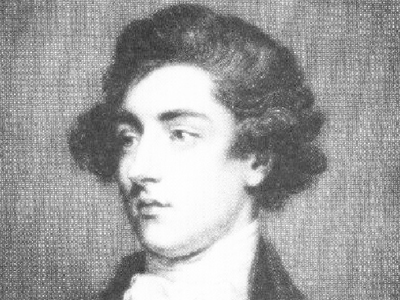
William Beckford by Sir Joshua Reynolds, engraved by T.A. Dean


The trade helped strengthen Britain’s domestic economy, with 150,000 guns each year being exported to Africa from Birmingham alone. As well as making a fortune in the trading of Africans, Birmingham also dominated copper manufacture, as this metal was highly valued by Africans and was used for trade. The custom duties on slave grown imports were an important source of government income. The Church also had plantations, for example the Society for the Propagation of the Gospel owned the Codrington estate in Barbados.
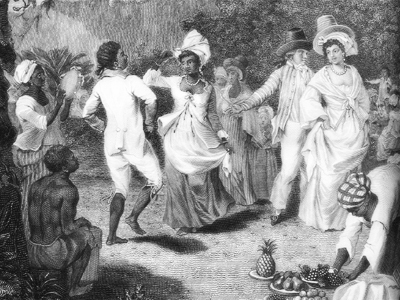
'A Negro Festival Drawn from Nature in the Island of St. Vincent', depicting slavery as a life of leisure, taken from the pro-slavery book
'The History of the British Colonies in the West Indies' by Bryan Edwards, 1797.
© Anti-Slavery International

21.06.2015

SCHWEIZER KOLONIALGESCHÄFTE IN ALGERIEN – ALGERISCHE MIGRATION IN DIE SCHWEIZ

Michael Schmitz, Dalila Ghodbane und Karim Khider | 11. Juni 2015 | 7/2015 | Keine Kommentare


Über hundert Jahre lang betrieb eine Genfer Gesellschaft in Sétif/Algerien ein profitables Kolonialgeschäft. Es beruhte auf Usurpation von Land. Wenn heute jedoch Algerier_innen in die Schweiz kommen, nicht um Land zu beschlagnahmen, sondern um Arbeit zu suchen, gilt das illegal.

von Michael Schmitz
Kommentar Legalität ist eine Frage der Macht, von Dalila Ghodbane und Karim Khider


Aktie der Compagnie genevoise des colonies suisse de Sétif (aus: campus Nr. 91)

Mit 37 000 Mann landet am 14. Juni 1830 die französische Armee an der algerischen Küste,um das Land zu erobern und zu kolonisieren. Schon bald fallen wichtige Städte an die Invasoren, und der Aufbau einer Kolonialverwaltung, die Besiedlung und die Ausbeutung von Mensch und Natur beginnt. Es wird noch fast hundert Jahre dauern, bis der Widerstand der Einheimischen gebrochen ist.

Während die französische Armee Krieg führt und Aufstände niederschlägt, sehen sich unter anderen auch Schweizer Geschäftsleute nach Profitmöglichkeiten um. 1853 gründen Genfer Geschäftsleute unter der Führung von François-Auguste Sautter die Compagnie genevoise des Colonies suisses de Sétif und erhalten per Dekret des französischen Kaisers Napoleon III 20 000 Hektaren Land in der Nähe von Sétif. Dies entspricht etwa achtzig Prozent der Fläche des Kantons Genf. Damit wird die Compagnie zu einem der grössten privaten Grundbesitzer in Algerien. Der Historiker Claude Lützelschwab hat die Geschichte dieser schweizerischen Kolonialunternehmung untersucht. Auf seine Forschung stützt sich dieser Artikel.


Die grossen Konzessionen im Departement Constantine, Karte: Dalila Ghodbane

Ein erstes Projekt der Compagnie, das auch eine Besiedlung durch Schweizer Emigrant_innen vorsah,1 scheitert bald an den Schwierigkeiten bei der Rekrutierung und an finanziellen Problemen. Bei der Rekrutierung ist übrigens auch der spätere Gründer des Roten Kreuzes, Henri Dunant, als Agent beteiligt. Einem zweiten Projekt ist einige Jahre später mehr Erfolg beschieden. Ein Teil der nun 15 000 Hektaren wird vermietet, ein anderer an Einheimische und Europäer_innen verpachtet. Das Kolonialisierungsprojekt der Compagnie genevoise greift massiv in die lokale Realität ein. Gemäss Lützelschwab löst sich das traditionelle System auf, die indigene Wirtschaft und Gesellschaft werden durcheinandergebracht und der ansässige Stamm wird enteignet. Ein Teil von dessen Mitgliedern darf als Pächter_innen auf dem angestammten Land bleiben. Der andere Teil wird umgesiedelt. Die Compagnie beschäftigt zur Aufsicht indigene Führer und will sie dadurch im Glauben wiegen ihre Autorität behalten zu können. Gleichzeitig werden sie aber auf den Status von Angestellten reduziert. Es kommt vor, dass Stammesführer wegen der Unterdrückung durch die Compagnie Sétif verlassen wollen, die Mitglieder es aber vorziehen zu bleiben. So bringt die Politik der Schweizer Firma Stammesführer und -mitglieder gegeneinander auf. Allgemein leidet die Solidarität innerhalb des Stammes.

Gert Oostindie: Postcolonial Netherlands


Slavenelend hinterm Stuck


18.06.2015

Why Women of Color in the 1800s Were Banned From Wearing Their Hair in Public

by Cassandre – July 7, 2014


Portrait of a Creole. Note the tignon here that identifies her as such. Her gaze at the view is inviting and demands respect, although there is perhaps sexuality in her eyes and the light smile.  Really, a beautiful piece although it remains possible that her complexion was lightened for this painting. That could always be a factor in the appearances of wealthy Creoles who would not want to see their darker-hued selves.

“Did you know that in late 18th century Louisiana, black and multiracial women were ordered to cover their hair in public?” My sister asked me.

“WOW. Really?” I replied.

I’d probably heard of this in one of my black studies classes in undergrad, but who remembers everything they’ve been taught? Besides, this information felt instantly relevant and I was absolutely intrigued.

It wasn’t unusual for me to feel myself gaining brain cells while in conversation with my sisters, but by the time I caught my racing thoughts so I could ask her some questions, it was time to take care of my baby girl. I knew, however that this was a topic worth visiting again.

With a little digging I found that there was in fact a “law” of sorts that demanded women of color in Louisiana to cover their hair with a fabric cloth starting in 1789 as a part of what was called the Bando du buen gobierno (Edict for Good Government). What these rules were meant to do was try to curtail the growing influence of the free black population and keep the social order of the time. The edict included sections specifically about the changing of certain “unacceptable” behaviors of the free black women in the colony including putting an end to what he and others believed to be the overly ostentatious hairstyles of these ladies which drew the attention of white men, and the jealousy of white women. These rules are called the “Tignon Laws” A tignon (pronounced “tiyon”) is a headdress.

Anarchic Aesthet - William Morris

Das Verschwinden der Frauen von Mara Hvistendahl


victoria station, mumbai, juni 2015


08.06.2015

postkarten / kotomisis

Dolly met Roosje op den arm, staand poserend in kotomisi, Théodore van Lelyveld, 1895 - 1898


27.05.2015

Harriet Ann Jacobs


Harriet Ann Jacobs

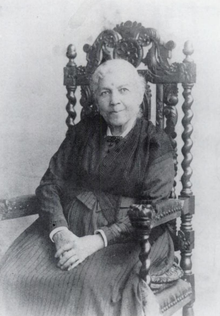
Jacobs in 1894
Born February 11, 1813
Edenton, North Carolina
Died March 7, 1897 (aged 84)
Washington, D.C.
Resting place Mount Auburn Cemetery
Occupation Writer, nurse and abolitionist speaker
Genre Autobiography
Subject Harriet Ann Jacobs
Notable works Incidents in the Life of a Slave Girl (1861)
Partner Samuel Sawyer
Children Joseph, Louisa


Harriet Ann Jacobs (February 11, 1813 – March 7, 1897) was an African-American writer who escaped from slavery and was later freed. She became an abolitionist speaker and reformer. Jacobs wrote an autobiographical novel, Incidents in the Life of a Slave Girl, first serialized in a newspaper and published as a book in 1861 under the pseudonym Linda Brent. It was a reworking of the genres of slave narrative and sentimental novel, and was one of the first books to address the struggle for freedom by female slaves, and to explore their struggles with sexual harassment and abuse, and their effort to protect their roles as women and mothers.

After being overshadowed by the Civil War, the novel was rediscovered in the late 20th century, when there was new interest in minority and women writers. One scholar researched the novel, identifying Harriet Jacobs as the author and documenting many events and people in her life that corresponded to this fictionalized, autobiographical account. The novel has been the subject of many academic studies, as Jacobs challenged prevailing ideas about slavery and womanhood in her work.


Reward notice issued for the return of Harriet Jacobs

Harriet Jacobs was born into slavery in Edenton, North Carolina, in 1813.[1] Her father was Elijah Knox, an enslaved biracial house carpenter owned by Andrew Knox. Elijah was said to be the son of Athena Knox, who was enslaved, and a white farmer, Henry Jacobs.[2] Harriet's mother was Delilah Horniblow, an enslaved black woman held by John Horniblow, a tavern owner. Under the principle of partus sequitur ventrem, both Harriet and her brother John were born into slavery, as their mother was enslaved. Their likely European-American paternity did not alter their status. Harriet lived with her mother until Delilah's death around 1819, when Harriet was six.[3] Then she lived with her mother's mistress, Margaret Horniblow, who taught Harriet to read, write and sew.

Coco Fusco: Observations of Predation in Humans

From the Archives
February 12, 2015 Written by admin
From the Archives – Coco Fusco: Observations of Predation in Humans at the Studio Museum in Harlem

Today, from the archives, we bring you Lia Wilson‘s review of Coco Fusco’s Observations of Predation in Humans, originally performed at the Studio Museum of Harlem in December 2013 for Radical Presence, a survey of performance work by black visual artists. This month, Fusco will be resuming her role as the legendary female chimpanzee psychologist Dr. Zira at Participant Inc., as part of the Performing Franklin Furnace exhibition, which showcases the historical import that Franklin Furnace and its founder Martha Wilson played in fostering avant-garde and activist art practices in New York City. This article was originally published on January 7, 2014.
Coco Fusco. Observations of Predation in Humans: A Lecture by Dr. Zira, Animal Psychologist (study), 2013. Photo: Noah Krell.

Critical distance can be an ambitious aspiration for an artist, particularly if her practice strives to directly engage complex economic, environmental, or social justice issues. How can traditionally partisan discourses be avoided? Can a political viewpoint be communicated without merely contributing to a staunchly divisive cultural dialogue that is easy to tune out? There is no single strategy or formula for this challenge. Coco Fusco’s recent performance at the Studio Museum in Harlem deftly employed science fiction to gain some critical space. Her successful approach afforded her a new viewpoint and a platform—from a whole species away.

For Observations of Predation in Humans (2013), her contribution to the exhibition Radical Presence: Black Performance in Contemporary Art, Fusco revived and fully embodied the character of Dr. Zira, the female chimpanzee animal psychologist from the 1968–71 Planet of the Apes films. With a Skyped-in introduction from Donna Haraway, an esteemed commentator on hominoid interrelations, it was explained that despite the narrative of the third film, Escape from Planet of the Apes, which portrayed the character’s assassination by the U.S. government, Dr. Zira had actually survived and had been in hiding in an isolated cabin in the Midwest for more than twenty years. Over the course of this seclusion, she had been observing human behavior via the Internet and television. It wasn’t until the 2012 Cambridge Declaration, in which brain scientists concluded that non-human animals do have consciousness, that Dr. Zira felt safe enough to resurface as a public intellectual and present her findings on human predation.


Thus a crowd gathered in the basement of the Studio Museum in Harlem to listen to a female chimpanzee psychologist from the future lecture on the destructive and unsustainable human alpha-male proclivity for profit and punishment. Using the classic academic presentation software PowerPoint, Dr. Zira clicked through a multitude of examples of human aggression she collected from our visual culture, from news clips and soap operas to social media and Hollywood films. She discussed her observation of alpha males of the Homo genus as being “overly self-confident,” always “passing off their compulsive behavior as goal oriented.” An initial illustration of this dynamic, paired with the slide title “human alpha male assertion of dominance,” was a snippet from independent trader Alessio Rastani’s 2011 interview with BBC News: “Most traders don’t care about how to fix the economy. They want to know how to make money from it. Personally, I go to bed at night and dream about another recession.”[1]


Coco Fusco. Observations of Predation in Humans: A Lecture by Dr. Zira, Animal Psychologist (study), 2013. Photo: Noah Krell.

Das Grabtuch der Hl. Viktoria