20.07.2015

Fractals and Indigenous Textiles


\//// Textiles and Digital Spaces \//// /////////////////////////////
//////////Sharing some explorations between textiles and digital mediums//////////
« Generated knitted patterns
https://xxxclairewilliamsxxx.wordpress.com/2014/12/22/fractals-and-indigenous-textiles/


The idea of constructing a pattern or textile structure using recursion as a rule is something that can be seen in traditional textiles throughout the world. Theorized by Benoît Mandelbrot in 1974, fractals are a geometric object infinitely fragmented where the details can be observed at any random scale. They are created by repeating a simple process over and over in an ongoing feedback loop. Driven by recursion, fractals are images of dynamic systems. Fractals and recursion can be observed in nature as in trees, rivers, coastlines, mountains, clouds, seashells, hurricanes, etc.Fractals are widely used in biology, economy and computer science using iterative algorithms executed by computers.

African Fractals


We can find fractals in African crafts and architecture. They reflect a spiritual relationship between the living and the ancestors in some of the African culture. In opposite to an euclidean way of constructing a structure or pattern, African fractals appear to have indeed a mythical meaning through iterative construction. In weaving, pleating or folding and stitch dying resist for example, this could also be related to the textile technique being used which naturally influences the way you construct a pattern inside a textile grid specific to the chosen technique.

09.07.2015

Racial Classifications in Latin America


In the history of Latin America over the last 500 years or so, the relationships among three races have been a key factor.  In the beginning, there were the various indigenous groups.  Then came the European colonizers, who later brought black slaves from Africa.  The relationships among these racial groups have at times been tumultuous --- war, slaughter, subjugation, slavery, exploitation, miscegenation, ...  
The administration of the vast colonies was placed in the hands of nationals of the European empires.  These administrators were rewarded estates for their efforts, and naturally inheritance rights became a significant issue.  As a male may have multiple children with multiple women, the rights of these apparent heirs have to be defined, particularly when some of the mothers were not pure Europeans.  Under Spanish rule, the following detailed caste system was instituted in Mexico at one time.
  1. Mestizo: Spanish father and Indian mother
  2. Castizo: Spanish father and Mestizo mother
  3. Espomolo: Spanish mother and Castizo father
  4. Mulatto: Spanish and black African
  5. Moor: Spanish and Mulatto
  6. Albino: Spanish father and Moor mother
  7. Throwback: Spanish father and Albino mother
  8. Wolf: Throwback father and Indian mother
  9. Zambiago: Wolf father and Indian mother
  10. Cambujo: Zambiago father and Indian mother
  11. Alvarazado: Cambujo father and Mulatto mother
  12. Borquino: Alvarazado father and Mulatto mother
  13. Coyote: Borquino father and Mulatto mother
  14. Chamizo: Coyote father and Mulatto mother
  15. Coyote-Mestizo: Cahmizo father and Mestizo mother
  16. Ahi Tan Estas: Coyote-Mestizo father and Mulatto mother
To us, this does seem to be a obsessive-compulsive behavior of an extreme sort.  Today, the overt caste systems have been overturned by legislation, but that does not mean that social prejudices and economic exploitation are not present.  Even though overt racial oppression is no longer permissible by law, people may still hold personal opinions about members of other races based upon preconceived notions.
Now much of this is premised upon one's ability to classify people into the appropriate racial categories based upon physical appearances.  Unfortunately, this is difficult as there is not a clear-cut situation when any individual can be unambiguously classified into one (and only one) of a short list of racial classes.  A simple classification scheme based upon color --- white, black, brown and yellow --- ignores the various shades.
One way to derive a classification system is through self-definition, which presumably applies to others too.  In 1976, the Brazilian Institute of Geography and Statistics (IBGE) conducted a study to ask people to identify their own skin color.  Here are the 134 terms, listed in alphabetical order:
  1. Acastanhada (cashewlike tint; caramel colored)
  2. Agalegada
  3. Alva (pure white)
  4. Alva-escura (dark or off-white)
  5. Alverenta (or aliviero, "shadow in the water")
  6. Alvarinta (tinted or bleached white)
  7. Alva-rosada (or jamote, roseate, white with pink highlights)
  8. Alvinha (bleached; white-washed)
  9. Amarela (yellow)
  10. Amarelada (yellowish)
  11. Amarela-quemada (burnt yellow or ochre)
  12. Amarelosa (yellowed)
  13. Amorenada (tannish)
  14. Avermelhada (reddish, with blood vessels showing through the skin)
  15. Azul (bluish)
  16. Azul-marinho (deep bluish)
  17. Baiano (ebony)
  18. Bem-branca (very white)
  19. Bem-clara (translucent)
  20. Bem-morena (very dusky)

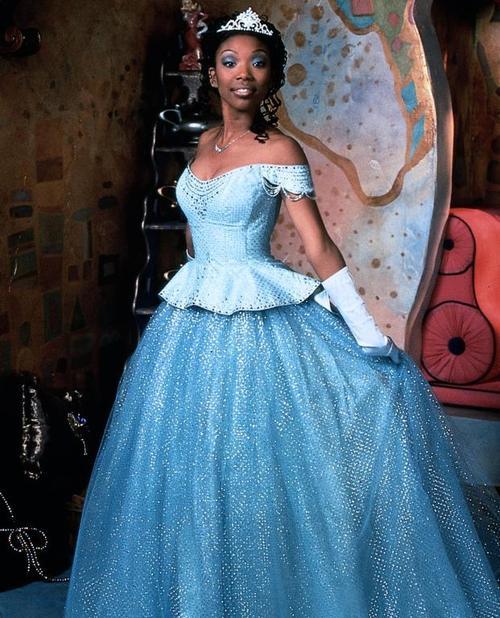
Black Cinderella

I’m against putting POC characters in tales of European origin, because, y’know, historical and ethnic accuracy is an actual thing. It’s folklore and it comes from this or that European culture so, yes, accuracy IS a thing.
BUT. I’m all for making more movies based on mythology and folklore of other cultures, for example, African or Native American ones. This I support, it would be a great thing. Because, in all honesty, no one needs Black or Asian Cinderella, that’s just stupid (and, yes, inaccurate). but everyone needs more tales about a child lost in the forest meeting spirits and forest gods. Or at least lets make a movie using an Asian variant of Cinderella fairy tale, there’s more than one, y’know? Because I’m all for accuracy and I’m all for representing more than one dominant culture in multicultural society.

Are you for real? I bolded the above statements because you know what?


*I* needed a Black Cinderella. And I bet a lot of readers here did, too. We still do.

Because of colonialism, most of us have been force-fed European history, mythology, fairy tales, and Medievalism; told it’s the best, the highest, the only. It’s everywhere we look: movies, cartoons, books, tv shows, and we’re told that this is something you are required to learn, and in some cases, the only context you’re allowed for your imagination, but it’s not really for you. It’s not about you. Because you aren’t “Historically Accurate.”

That can go to hell and so can you. Because you know what? Our histories, once again, because of colonialism, kidnapping, enslavement, genocide, are marginalized, misunderstood, and misrepresented. They’re stolen from us and given to white people considered “more qualified” to tell them, and they make millions of dollars off of those misrepresentations. Entire libraries and histories were purposely, methodically burned in order to disempower people of color. These stories, when they survive, are made illegal to teach, specifically because they empower people of color! People of color are removed from their own stories and their own contexts and replaced with white people, because Ridley Scott “can’t mount a film of this budget, where I have to rely on tax rebates in Spain, and say that my lead actor is Mohammad so-and-so from such-and-such.I’m just not going to get it financed.”

Nicki Minaj as Marie Jeanne Bécu, contesse du Barry, 2011, styled by artist Francesco Vezzou


Nicki Minaj as Marie Jeanne Bécu, contesse du Barry, 2011, styled by artist Francesco Vezzou


Marie Jeanne Bécu, comtesse du Barry by Francois-Hubert Drouais

Casta (Das lateinamerikanische Kastensystem)

Casta (Lateinamerika)
Casta (span./port. für Kaste) war eine Bezeichnung in lateinamerikanischen Ländern für die Nachkommen von Verbindungen unterschiedlicher Bevölkerungsgruppen, hauptsächlich aus Nachfahren von Afroamerikanern, Europäern und indigenen Ethnien.
Die zum Teil sehr komplizierten Unterscheidungen sind Ausdruck einer ebenso feinen sozialen Abstufung, die in der Regel mit sozialer und rechtlicher Diskriminierung verbunden war, vor allem je größer die indigenen oder afroamerikanischen Anteile in der Verwandtschaft waren. Dementsprechend haben die Bezeichnungen der „castas“ in der Regel auch herabsetzenden Charakter. Rechtlich waren sie etwa in Mexiko den Indios untergeordnet, deren Rechte geschützt wurden. Heute sind diese Bezeichnungen kaum noch gebräuchlich. Sie spiegeln das soziale Gefüge der Gesellschaften Lateinamerikas wider, wie es bis weit ins 20. Jahrhundert hinein bestand.
Heute wird der Ausdruck „Mestize“ (wenn überhaupt) für die Bezeichnung von Menschen benutzt, die entweder nicht ausschließlich europäische oder nicht ausschließlich indigene Vorfahren haben.
Das lateinamerikanische Kastensystem

Charles Cordier African Venus France (1851)


Charles Cordier : African Venus , France (1851) . Bronze, 39.5 cm.
The Walters Museum:
Cordier submitted a plaster cast of the bust of an African visitor to Paris to the Salon of 1848, and two years later he again entered it as a bronze (Walters 54.2664). A young African woman served as the model for this companion piece in 1851. Regarded as powerful expressions of nobility and dignity, these sculptures proved to be highly popular: casts were acquired by the Museum of National History in Paris and also by Queen Victoria. The Walters’ pair were cast by the Paris foundry Eck and Durand in 1852. These bronzes were esteemed by 19th-century viewers as expressions of human pride and dignity in the face of grave injustice. One of the things I love most about this piece is that you get something new from almost every single angle.
It is stunning, I wonder who the woman was, where she was from, what did she think of the world?
I’ve learned since that the woman who posed for this amazing work was named Seïd Enkess. She was a Frenchwoman originally from southern Sudan, who had been enslaved as a child, but worked as model in Paris as an adult.
According to Cordier: A superb Sudanese appeared in the studio. Within a fortnight, I made this bust. With a comrade, I carried it into my room, by my bed […] I coveted the artwork […] I had it cast and sent it to the Salon […]. It was a revelation for the whole artistic world. […] My genre had the novelty of a new subject, the revolt against slavery, anthropology at its birth…

Saint Iphegenia


Anonymous Portuguese Artist
Saint Iphegenia
Portugal (c. 1760s)
Polychrome Wood, 100 cm.
Setubal, Igreja de Nossa Senhora de Carmo.
The Image of the Black in Western Art Research Project and Photo Archive, W.E.B. Du Bois Institute for African and African American Research, Harvard University.

HISTORY RE-IMAGINED | PHOTOGRAPHS BY MAXINE HELFMAN

Black London (free downloaod)

West Indian Flower Girl


Print after Agostino Brunias
West Indian Flower Girl
England (1759, 1810)
Original Oil Painting

08.07.2015

Dressing gown, ca. 1880. Japanese for Western market.


1. Dressing gown, ca. 1880. Japanese for Western market. Quilted blue silk.

2. Dressing gown, late 1880s. Japanese for Western market. Quilted brown silk.
In the nineteenth century, Japan produced prodigiously for its new Western market. Economic initiative spurred the creation of consumer items exclusively for the export market. At the same time, Japan began a massive consumption of Western goods, chiefly in the sectors of heavy industry and engineering. Quilted dressing gowns like these are for an occasion and of a style that would never have been operative in Japan. For the European customer, the pattern of late-spring flowers, insects, and lotuses evoked exotic origins, mitigated by accommodations to Western style.
-Metropolitan Museum of Art

Laura, the Black Model Who Graced the Art of 19th-Century France

Image of the Week: Little is known about Laura’s real life, but in her role as nursemaid or servant, she brought vibrancy and life to her portrayals on canvas.
Posted:
 
feyen.childlike_kiss.1865.the_root.3.5mb
Jacques-Eugène Feyen, Le baiser enfantin (“The Childlike Kiss”), 1865. Oil on canvas, 110 by 152 cm.  Palais des Beaux-Arts, Lille, France
This image is part of a weekly series that The Root is presenting in conjunction with the Image of the Black Archive & Library at Harvard University’s Hutchins Center for African and African American Research.
No more self-assured statement of middle-class domesticity could be imagined than this charming tableau of maternity and childhood bliss set within a peaceful, enclosed garden. Behind its facade of bourgeois tranquillity, however, the highly accomplished painting reveals much more about the great diversity of people living in mid-19th-century France than the artist could have intended.
Jacques-Eugène Feyen was a fashionable painter of picturesque views of the Brittany coast of northern France, as well as portraits and genre scenes. At least two of his works contain a black servant working in a white bourgeois household. After being exhibited at the prestigious Paris Salon of 1865 and then at a regional exposition in Lille, The Childlike Kiss was acquired by that city’s Palais des Beaux-Arts, where it hangs today.
The two women, a white mother and her black nursemaid, are seated on a ledge backed by a trellis. In the left background appears the faint image of a group statue of a classically robed woman and an adolescent child, included no doubt to reinforce the primary motive of the family group. The young mother holds up her youngest child, an infant girl, so that she can affectionately embrace her older brother. The black woman has swung the boy across her lap, her prominently visible left hand holding her charge firmly around the waist.
The relationship of the two women to the children is conveyed by the skillful use of contrasting body language. The suave form of the white mother arches over her children in a maternal gesture both protective and loving. The black nurse, though she smiles indulgently at the affecting moment, leans away from the mother and her children. Her voluminous skirt seems to spill out of the lower-right edge of the canvas, a visual metaphor of her more tentative relationship to the family. As will be seen, these women inhabit completely different spheres of the same world.
The black woman’s role of caregiver to a family of privilege is underscored by the costumes worn by both women. The mother is dressed in an outfit typical of Alsace, a region located on either side of the Rhine River. This rich agricultural area had long been claimed by both France and Germany and uniquely combined the cultural ambient of both countries. The truly defining element of her costume is the dark, ribboned cap on her head. Its form and color are typical of the Protestant north of Alsace, where the dark cap is traditionally worn by married women.
Although the artist presents his subjects with great fidelity to nature, it is the black nurse who appeals the most for her candor of expression and dynamic posture. By comparison, the white mother and her children fade behind their air of saccharine conventionality. Through her candid expression, the nurse seems to reveal more of her inner personality to the viewer. Dazzling in its colored components, her attire consists of a few simple elements. She wears a full-length blue dress over a white blouse edged by a crisp, narrow collar. The simple garment is draped by a long red shawl.
The ensemble, unlike her mistress’s costume, does not seem typical of the Alsace region. Its distinctive yet basic appearance resembles a kind of uniform, clearly indicating her status as a domestic servant. Her yellow head wrap and gold pendant earrings add an exotic touch to her outfit. Along with the relatively simple lines of her dress and shawl, these adornments also seem allusive to her life in service. Specifically, they stress the association in France at that time of the black nursemaid with the nation’s West Indian colonies.
On the other hand, the key to the personal identity of the smiling black woman in Feyen’s painting is found within the Parisian art scene itself. Sources of the time refer to her as Laura, a popular artist’s model whose face and figure appear in several works by modernist painters of the 1860s. Much speculation exists concerning her origin, with most positing some connection with Africa or the Caribbean, like that of the woman she represents in the painting.

Natives of Arrakan sell slaves to the Dutch East India Company


Natives of Arrakan sell slaves to the Dutch East India Company at Pipely/Baliapal (in Orissa, India), Jan. 1663From ‘Wouter Schouten’s travels into the East Indies’, 2nd ed
Netherlands (1708)
[Source]
This is especially interesting because the folks from “Arrakan” are actually from what we’d now call Rakhine state in Burma.
We don’t feature enough Burmese stuff on this blog!

The Dutch of the VOC, while drinking from a well, are attacked by mad women

C. Decker and J. Kip.
Bad encounter: The Dutch of the VOC, while drinking from a well, are attacked by mad women in Gentynen, Coromandel, 1661
Printed in  'Wouter Schouten’s travels into the East Indies’, 2nd ed.
Netherlands (1708)
[Source]
The Coromandel Coast is in southern India. Where Gentynen is I have no idea.

Guidoccio Cozzarelli The Libyan Sybil


Italy (late 1400s to early 1500s)
Cathedral of Santa Maria Assunta, Siena; left nave, mosaic floor 148.
[Source]

mosaic of the Sibylla Lybica (Libyan Sybil), floor of the Duomo di Siena.
“The Libyan Sibyl, named Phemonoe, was the prophetic priestess presiding over the Zeus Ammon Oracle (Zeus represented with the horns of Ammon) at Siwa Oasis in the Libyan Desert.
The word Sibyl comes (via Latin) from the ancient Greek word sibylla, meaning prophetess. There were many Sibyls in the ancient world, but the Libyan Sibyl, in Classical mythology, Lamia, foretold the "coming of the day when that which is hidden shall be revealed.”
In Pausanias Description of Greece, the sibyl names her parents in her oracles:
I am by birth half mortal, half divine;
An immortal nymph was my mother, my father an eater of grain;
On my mother’s side of Idaean birth, but my fatherland was red
Marpessus, sacred to the Mother, and the river Aidoneus.
(Pausanias 10.12.3)“
The Greeks say she was the daughter of Zeus and Lamia, a Libyan queen loved by Zeus. Euripides mentions the Libyan Sibyl in the prologue of the Lamia. The Greeks further state that she was the first woman to chant oracles, she lived most of her life in Samos, and that the name Sibyl was given her by the Libyans.
Serapion, in his epic verses, says that the Sibyl, even when dead ceased not from divination. And he writes that, what proceeded from her into the air after her death, was what gave oracular utterances in voices and omens; and on her body being changed into earth, and the grass as natural growing out of it, whatever beasts happening to be in that place fed on it exhibited to men an accurate knowledge of futurity by their entrails. He thinks also, that the face seen in the moon is her soul”
(wikipedia)

other portraits of black women

Wenceslas Hollar
Portrait of a Young Woman
Bohemia (c. 1645)
Etching, 62 x 47 mm.
The British Museum


Wenceslaus Hollar  Head and Shoulders of a Black Woman
Bohemia/Czech Republic (1645)
Etching on paper, 60 mm. x 46 mm.
[source]

Portrait of black woman (dutch painters)


Peter Paul Rubens  Portrait of a woman
Netherlands (c. 1580s)
pastels, chalks; 484 mm x390 mm
Head and shoulders of a black woman; wearing a yellow head-dress decorated with pearls, head turned three-quarter to left and tilted slightly to right. Bodycolour, heightened with white, over black chalk.


Franz Von Mieris
Portrait of a Black Woman
Netherlands (c. 1650s)
Drawing, black chalk on paper
66 x 66 mm.
The British Museum


Westernized: Prince Dom Nicolau


Kongo prince, Dom Nicolau, Westernized Nicolau I of Kongo (Also known as Nicolau I Misaki mia Nimi), (Ruled 27 August 1752–post 1758)
It says, roughly translated:“Prince Dom Nicolau, son of Enrique II, King of Congo, with occasion of the visit that the prince himself did to her majesty the queen of Portugal in November 1845.”
http://www.omarviktor.com/#!project-diaspora/ca7g


07.07.2015

"Half the story has never been told" Kulturgeschichtliche Aspekte der Sklaverei in Jamaika

von Christof Schmidt

"But if I don't get my desire, then I'll set the plantations on fire"
Gregory Isaacs: Slave Master

"Rationalisierungen hat es (...) auf den verschiedenen Lebensgebieten in höchst verschiedener Art in allen Kulturkreisen gegeben. Charakteristisch für deren kulturgeschichtlichen Unterschied ist erst: welche Sphären und in welcher Richtung sie rationalisiert wurden"
Max Weber: Vorbemerkung zu den "Gesammelten Aufsätzen zur Religionssoziologie"

In der wirkungsmächtigen Tradition des bürgerlichen Humanismus wird die Plantagensklaverei in der Karibik oftmals nicht als historischer Prozeß gedacht, sondern vielmehr als ein Zustand, der diese Gesellschaften gewaltsam vor dem Eindringen der Geschichte abgeschirmt hat. Mit diesem eurozentrischen Begriff der Moderne können die historischen Dynamiken und Determinanten der Sklavereigesellschaften ebenso wenig begriffen werden wie die Prozesse, die in diesen Gesellschaften nach der Sklaverei stattfanden. Das Bild von der Sklaverei als irrationaler Gegenwelt zu dem (bürgerlichen) Konzept der Freiheit war vielmehr die ideologische Grundlage für die Sicherung der Kolonialherrschaft über die Sklaverei hinaus und legitimierte die Expansion des britischen Empires im 19. Jahrhundert im Namen der Freiheit.

Die Sklaverei erlebte ihren Aufschwung in Jamaika im 18. Jahrhundert mit der Ausbreitung des Plantagensystems. Mit dem Beginn des exportorientierten Zuckeranbaus auf großflächigen Plantagen erhöhte sich die Einfuhr afrikanischer Sklaven drastisch[1]. Die Entwicklung dieses Plantagensystems läßt sich grob in zwei Phasen einteilen: Die Aufbau- und Wachstumsphase, in Jamaika ca. zwischen 1730 und 1780, und die Konsolidierungsphase, die bis zur Emanzipation 1833 andauerte. In der ersten Phase waren die Lebensumstände der Sklaven überwiegend katastrophal. Nach dieser Aufbauphase und mit dem Erreichen der Produktionskraft nahm der Anteil der Kreolen an der Sklavenbevölkerung langsam zu und die Kluft zwischen Mortalität und Fertilität und zwischen der Anzahl männlicher und weiblicher Sklaven wurde langsam geringer, was mit den steigenden Sklavenpreisen am Ende des 18. Jahrhunderts und schließlich der Abolition des Sklavenhandels durch die Briten (1807) zunehmend im Interesse der Plantagenbesitzer lag, die in der Regel nicht in Jamaika lebten, sondern als ›absentee landowners‹ mit der ›Westindian Interest‹ eine einflußreiche Lobby in Großbritannien bildeten. Zurück blieben die schlecht bezahlten und mit der Betriebsführung beauftragten weißen Angestellten, die für ihre Brutalität und Inkompetenz von den Abolitionisten, aber auch von vielen Plantagenbesitzer kritisiert wurden, die mit dem Verbot des transatlantischen Sklavenhandels und dem Widerstand der Sklaven, den sie angesichts der Sklavenrevolution in St.-Domingue/Haiti mehr denn je fürchteten, die Zukunft und Rentabilität ihrer Besitzungen in Gefahr sahen. Die sich verändernden Faktoren verlangten nach politischen Maßnahmen, die in die Formierung lokaler Staatlichkeit und verschiedener moderner Institutionen mündeten, ebenso wie nach natürlichem Bevölkerungswachstum, einer geregelten Betriebsführung, technischen Verbesserungen und der Ausbildung von Sklaven für qualifizierte Arbeiten.

Eine enorme Flexibilität des Plantagensystems zeigte sich jedoch vor allem in der Frage der Lebensmittelversorgung. Bereits in den 1720ern verfügte die Mehrheit der Sklaven über eigene Hausgärten (kitchen garden) und Versorgungsfelder (provision ground), die sie über Generationen in Besitz behielten, da sie vererbbar waren, obwohl Sklaven offiziell gar kein Eigentum haben konnten. Die Bereitstellung von Boden für die Sklaven, die 1792 in den ›Consolidated Slave Acts of Jamaica‹ schließlich gesetzlich vorgeschrieben wurde, hatte Vorteile für Sklaven und ihre Herren: Die Sklaven konnten sich ihre Nahrungsversorgung sichern und teilweise sogar Überschüsse produzieren, die Herren hatten dagegen ein kosten- und planungsintensives Problem weniger und konnten mit der Bereitstellung von Boden zudem Fluchten vorbeugen. Normalerweise, d.h. außerhalb der Erntezeit, standen den Sklaven der Sonntag und z.T. der Samstagnachmittag zur freien Verfügung. Zu Beginn des 19. Jahrhunderts wurden den Sklaven alternative Samstage zugestanden, sog. ›Negro days‹, an denen die Sklaven sich um die Bewirtschaftung ihrer Felder kümmern konnten, die, am Rande der Plantage gelegen, zumeist nicht besonders fruchtbar und schwerer zu kultivieren waren. Trotzdem gelang es den Sklaven, vor allem durch die Arbeitsteilung innerhalb von Sklavenfamilien und -haushalten sogar Überschüsse zu erwirtschaften, wobei diese ›domestic groups‹ oftmals nicht an reale Verwandtschaftsverhältnisse gebunden waren und mehrere Haushalte umfassen konnten. 1832 machte der Lebensmittelanbau der Sklaven auf Jamaika, der zunehmend auch die Grundlage für die Ernährung der Freien vor allem in den Städten geworden war, 27% der gesamten landwirtschaftlichen Produktion aus. Einige Sklaven konnten auch Kleinvieh und sogar Rinder in Gemeinschaftsbesitz halten. Es muß jedoch auch erwähnt werden, daß nicht alle Sklaven an dieser internen Ökonomie partizipierten und auch die Größe der Felder z.T. stark variierte.