
21.06.2015

18.06.2015
Why Women of Color in the 1800s Were Banned From Wearing Their Hair in Public
by Cassandre – July 7, 2014

“Did you know that in late 18th century Louisiana, black and multiracial women were ordered to cover their hair in public?” My sister asked me.
“WOW. Really?” I replied.
I’d probably heard of this in one of my black studies classes in undergrad, but who remembers everything they’ve been taught? Besides, this information felt instantly relevant and I was absolutely intrigued.
It wasn’t unusual for me to feel myself gaining brain cells while in conversation with my sisters, but by the time I caught my racing thoughts so I could ask her some questions, it was time to take care of my baby girl. I knew, however that this was a topic worth visiting again.
With a little digging I found that there was in fact a “law” of sorts that demanded women of color in Louisiana to cover their hair with a fabric cloth starting in 1789 as a part of what was called the Bando du buen gobierno (Edict for Good Government). What these rules were meant to do was try to curtail the growing influence of the free black population and keep the social order of the time. The edict included sections specifically about the changing of certain “unacceptable” behaviors of the free black women in the colony including putting an end to what he and others believed to be the overly ostentatious hairstyles of these ladies which drew the attention of white men, and the jealousy of white women. These rules are called the “Tignon Laws” A tignon (pronounced “tiyon”) is a headdress.
Portrait of a Creole. Note the tignon here that identifies her as such.
Her gaze at the view is inviting and demands respect, although there is
perhaps sexuality in her eyes and the light smile. Really, a beautiful
piece although it remains possible that her complexion was lightened for
this painting. That could always be a factor in the appearances of
wealthy Creoles who would not want to see their darker-hued selves.
“Did you know that in late 18th century Louisiana, black and multiracial women were ordered to cover their hair in public?” My sister asked me.
“WOW. Really?” I replied.
I’d probably heard of this in one of my black studies classes in undergrad, but who remembers everything they’ve been taught? Besides, this information felt instantly relevant and I was absolutely intrigued.
It wasn’t unusual for me to feel myself gaining brain cells while in conversation with my sisters, but by the time I caught my racing thoughts so I could ask her some questions, it was time to take care of my baby girl. I knew, however that this was a topic worth visiting again.
With a little digging I found that there was in fact a “law” of sorts that demanded women of color in Louisiana to cover their hair with a fabric cloth starting in 1789 as a part of what was called the Bando du buen gobierno (Edict for Good Government). What these rules were meant to do was try to curtail the growing influence of the free black population and keep the social order of the time. The edict included sections specifically about the changing of certain “unacceptable” behaviors of the free black women in the colony including putting an end to what he and others believed to be the overly ostentatious hairstyles of these ladies which drew the attention of white men, and the jealousy of white women. These rules are called the “Tignon Laws” A tignon (pronounced “tiyon”) is a headdress.


08.06.2015
postkarten / kotomisis
 |
| Dolly met Roosje op den arm, staand poserend in kotomisi, Théodore van Lelyveld, 1895 - 1898 |


27.05.2015
Harriet Ann Jacobs
Harriet Ann Jacobs
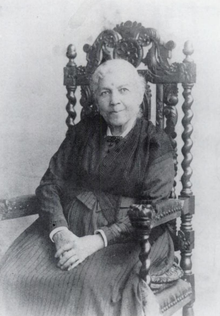
Jacobs in 1894
Born February 11, 1813
Edenton, North Carolina
Died March 7, 1897 (aged 84)
Washington, D.C.
Resting place Mount Auburn Cemetery
Occupation Writer, nurse and abolitionist speaker
Genre Autobiography
Subject Harriet Ann Jacobs
Notable works Incidents in the Life of a Slave Girl (1861)
Partner Samuel Sawyer
Children Joseph, Louisa
Harriet Ann Jacobs (February 11, 1813 – March 7, 1897) was an African-American writer who escaped from slavery and was later freed. She became an abolitionist speaker and reformer. Jacobs wrote an autobiographical novel, Incidents in the Life of a Slave Girl, first serialized in a newspaper and published as a book in 1861 under the pseudonym Linda Brent. It was a reworking of the genres of slave narrative and sentimental novel, and was one of the first books to address the struggle for freedom by female slaves, and to explore their struggles with sexual harassment and abuse, and their effort to protect their roles as women and mothers.
After being overshadowed by the Civil War, the novel was rediscovered in the late 20th century, when there was new interest in minority and women writers. One scholar researched the novel, identifying Harriet Jacobs as the author and documenting many events and people in her life that corresponded to this fictionalized, autobiographical account. The novel has been the subject of many academic studies, as Jacobs challenged prevailing ideas about slavery and womanhood in her work.

Reward notice issued for the return of Harriet Jacobs
Harriet Jacobs was born into slavery in Edenton, North Carolina, in 1813.[1] Her father was Elijah Knox, an enslaved biracial house carpenter owned by Andrew Knox. Elijah was said to be the son of Athena Knox, who was enslaved, and a white farmer, Henry Jacobs.[2] Harriet's mother was Delilah Horniblow, an enslaved black woman held by John Horniblow, a tavern owner. Under the principle of partus sequitur ventrem, both Harriet and her brother John were born into slavery, as their mother was enslaved. Their likely European-American paternity did not alter their status. Harriet lived with her mother until Delilah's death around 1819, when Harriet was six.[3] Then she lived with her mother's mistress, Margaret Horniblow, who taught Harriet to read, write and sew.
Coco Fusco: Observations of Predation in Humans
From the Archives
February 12, 2015 Written by admin
From the Archives – Coco Fusco: Observations of Predation in Humans at the Studio Museum in Harlem
Today, from the archives, we bring you Lia Wilson‘s review of Coco Fusco’s Observations of Predation in Humans, originally performed at the Studio Museum of Harlem in December 2013 for Radical Presence, a survey of performance work by black visual artists. This month, Fusco will be resuming her role as the legendary female chimpanzee psychologist Dr. Zira at Participant Inc., as part of the Performing Franklin Furnace exhibition, which showcases the historical import that Franklin Furnace and its founder Martha Wilson played in fostering avant-garde and activist art practices in New York City. This article was originally published on January 7, 2014.

Critical distance can be an ambitious aspiration for an artist, particularly if her practice strives to directly engage complex economic, environmental, or social justice issues. How can traditionally partisan discourses be avoided? Can a political viewpoint be communicated without merely contributing to a staunchly divisive cultural dialogue that is easy to tune out? There is no single strategy or formula for this challenge. Coco Fusco’s recent performance at the Studio Museum in Harlem deftly employed science fiction to gain some critical space. Her successful approach afforded her a new viewpoint and a platform—from a whole species away.
For Observations of Predation in Humans (2013), her contribution to the exhibition Radical Presence: Black Performance in Contemporary Art, Fusco revived and fully embodied the character of Dr. Zira, the female chimpanzee animal psychologist from the 1968–71 Planet of the Apes films. With a Skyped-in introduction from Donna Haraway, an esteemed commentator on hominoid interrelations, it was explained that despite the narrative of the third film, Escape from Planet of the Apes, which portrayed the character’s assassination by the U.S. government, Dr. Zira had actually survived and had been in hiding in an isolated cabin in the Midwest for more than twenty years. Over the course of this seclusion, she had been observing human behavior via the Internet and television. It wasn’t until the 2012 Cambridge Declaration, in which brain scientists concluded that non-human animals do have consciousness, that Dr. Zira felt safe enough to resurface as a public intellectual and present her findings on human predation.
Thus a crowd gathered in the basement of the Studio Museum in Harlem to listen to a female chimpanzee psychologist from the future lecture on the destructive and unsustainable human alpha-male proclivity for profit and punishment. Using the classic academic presentation software PowerPoint, Dr. Zira clicked through a multitude of examples of human aggression she collected from our visual culture, from news clips and soap operas to social media and Hollywood films. She discussed her observation of alpha males of the Homo genus as being “overly self-confident,” always “passing off their compulsive behavior as goal oriented.” An initial illustration of this dynamic, paired with the slide title “human alpha male assertion of dominance,” was a snippet from independent trader Alessio Rastani’s 2011 interview with BBC News: “Most traders don’t care about how to fix the economy. They want to know how to make money from it. Personally, I go to bed at night and dream about another recession.”[1]

Coco Fusco. Observations of Predation in Humans: A Lecture by Dr. Zira, Animal Psychologist (study), 2013. Photo: Noah Krell.
February 12, 2015 Written by admin
From the Archives – Coco Fusco: Observations of Predation in Humans at the Studio Museum in Harlem
Today, from the archives, we bring you Lia Wilson‘s review of Coco Fusco’s Observations of Predation in Humans, originally performed at the Studio Museum of Harlem in December 2013 for Radical Presence, a survey of performance work by black visual artists. This month, Fusco will be resuming her role as the legendary female chimpanzee psychologist Dr. Zira at Participant Inc., as part of the Performing Franklin Furnace exhibition, which showcases the historical import that Franklin Furnace and its founder Martha Wilson played in fostering avant-garde and activist art practices in New York City. This article was originally published on January 7, 2014.
Coco Fusco. Observations of Predation in Humans: A Lecture by Dr. Zira, Animal Psychologist (study), 2013. Photo: Noah Krell.
Critical distance can be an ambitious aspiration for an artist, particularly if her practice strives to directly engage complex economic, environmental, or social justice issues. How can traditionally partisan discourses be avoided? Can a political viewpoint be communicated without merely contributing to a staunchly divisive cultural dialogue that is easy to tune out? There is no single strategy or formula for this challenge. Coco Fusco’s recent performance at the Studio Museum in Harlem deftly employed science fiction to gain some critical space. Her successful approach afforded her a new viewpoint and a platform—from a whole species away.
For Observations of Predation in Humans (2013), her contribution to the exhibition Radical Presence: Black Performance in Contemporary Art, Fusco revived and fully embodied the character of Dr. Zira, the female chimpanzee animal psychologist from the 1968–71 Planet of the Apes films. With a Skyped-in introduction from Donna Haraway, an esteemed commentator on hominoid interrelations, it was explained that despite the narrative of the third film, Escape from Planet of the Apes, which portrayed the character’s assassination by the U.S. government, Dr. Zira had actually survived and had been in hiding in an isolated cabin in the Midwest for more than twenty years. Over the course of this seclusion, she had been observing human behavior via the Internet and television. It wasn’t until the 2012 Cambridge Declaration, in which brain scientists concluded that non-human animals do have consciousness, that Dr. Zira felt safe enough to resurface as a public intellectual and present her findings on human predation.
Thus a crowd gathered in the basement of the Studio Museum in Harlem to listen to a female chimpanzee psychologist from the future lecture on the destructive and unsustainable human alpha-male proclivity for profit and punishment. Using the classic academic presentation software PowerPoint, Dr. Zira clicked through a multitude of examples of human aggression she collected from our visual culture, from news clips and soap operas to social media and Hollywood films. She discussed her observation of alpha males of the Homo genus as being “overly self-confident,” always “passing off their compulsive behavior as goal oriented.” An initial illustration of this dynamic, paired with the slide title “human alpha male assertion of dominance,” was a snippet from independent trader Alessio Rastani’s 2011 interview with BBC News: “Most traders don’t care about how to fix the economy. They want to know how to make money from it. Personally, I go to bed at night and dream about another recession.”[1]
Coco Fusco. Observations of Predation in Humans: A Lecture by Dr. Zira, Animal Psychologist (study), 2013. Photo: Noah Krell.


Boulanger Gustave Clarence Rudolphe The Slave Market

Boulanger Gustave Clarence Rudolphe The Slave Market, 1886
25.05.2015
Figur-Grund-Flimmern
Anfang der weitergeleiteten Nachricht:Von: christian huebler <huebler@sunrise.ch>Betreff: Textstelle bei fullerDatum: 25. Mai 2015 13:17:40 MESZAn: yvonne wilhelm <yw@krcf.org>die passt gut zu deiner aktuellen videoaesthetik:Figur-Grund-FlimmernEin Angelpunkt der Artikulation, ein Grenzübergang in der Ästhetik ist die Beziehung zwischen Figur und Grund. Sie entscheidet darüber, ob etwas aus seinem Umfeld herausgezeichnet oder darin eingelassen wird, gebündelt oder als Einzelgestalt auftritt, Fluchtgeschwindigkeit erreicht oder sich auflöst, starr bleibt oder ein Geschehen zwischen BeobachterIn und Beobachtetem entstehen lässt.Die „Cheshire Cat“ aus Alice im Wunderland, ihr Grinsen, der Ort, an dem dieses Grinsen erscheint, die Luft, in der es schwebt, das, worin es verschwindet, setzt bekanntlich Gesicht und Körper als Hintergrund für das grinsende Maul und die Umgebung als seinen rekursiven Rahmen ein, der sich dann auf haarsträubende Weise neu zusammenfügt, wobei keines von beiden dem anderen notwendig vorausgeht. Spannung liegt in der Luft, und da ist ein Schwanz. Ein Kopf taucht vielleicht auf, ein Grinsen. Und wie sich erweist, lässt sich ein Kopf, der ohne Verbindung zu einem Körper auftaucht, nicht mit dem Fallbeil richten.[i]In einer Textpassage bei Daniil Kharms wird diese Beziehung noch ein Stück weiter getrieben: Darin wird eine Person beschrieben, ein rothaariger Mann, von dem sich herausstellt, dass er keine Haare hat, auch sonst nicht viele konkret aufzählbare Körperteile. Seine Körperteile und Eigenschaften werden eins ums andere angeführt, um schließlich festzustellen: „Wir wissen gar nicht, worüber wir sprechen“ und „(...) wir sprechen gar nicht mehr über ihn“[ii]. Eine Abfolge von Wörtern wird aufgeboten, um zu offenbaren, dass nichts beschrieben ist als das von den Wörtern selbst Erzeugte; Vordergrund und Hintergrund, Figur und Grund greifen nicht einfach ineinander, sondern sind ein Effekt von Wörtern, ihrer Anordnung in Zeilen und ihrer Verbindung zu den Gehirnen, die etwas in sie hineinlesen. Die säuberlich rings um eine Person angeordneten Prädikate geraten zu einer Möbiusschleife, nicht in strenger Reihenfolge ihres Verschwindens, sondern insofern, als der Mechanismus, durch den sie erscheinen – die Sprache – sich selbst ins Sein hievt, und zwar in erster Linie als Nichts.Macbeth endet damit, dass der Wald von Birnam nach Dunsinane kommt, womit sich die Prophezeiung der Hexe erfüllt: Ein im Hintergrund verwurzeltes Ding setzt sich unmöglicherweise in Gang, wird zur Figur. Wenn Dinge, Personen, Kreaturen, Prozesse, die als funktionales Subsystem gelten – als Hintergrundprogramm, um das sich Lakaien, Reinigungskräfte, SouschefInnen, Portiers, Unterprogramme, AssistentInnen kümmern – anfangen, den Vordergrund einzunehmen, dann fangen die Struktursysteme selbst an, sich zu verändern. Was denn da bedient wird, verschwimmt oder ergibt – aus bestimmten Perspektiven, zumal solchen des Ungehorsams – jetzt erst allmählich Sinn.
24.05.2015
Viviane Sassen
Pikin Slee at ICA London
3 Feb 2015 – 12 Apr 2015
The ICA is delighted to present a solo exhibition of recent work by Viviane Sassen, a photographer who has garnered parallel critical acclaim as a fashion photographer and in the context of contemporary visual art. The content of the exhibition focuses predominantly on a body of work that Sassen made in Pikin Slee, Suriname in 2013. Pikin Slee is the second-largest village on the Upper Suriname River, deep within the Surinamese rainforest. The exhibition consists of black and white and colour works shot on an analogue camera.
In her first visit to Pikin Slee in the summer of 2012, Sassen was intrigued by the village and its inhabitants. Her eye was caught by the overwhelming natural beauty and the Saramacca’s very traditional way of living, combined with the more mundane objects which seemed to seep through daily life. The Saramacca community are isolated from the outside world, living without running water, electricity, roads or the internet. The only way to access the village is by canoe, a journey of about three hours up-river. They grow their food on small agricultural plots, producing cassava bread, pressed maripa palm oil and dried coconut.
Shot mainly in black and white and of contained format, Sassen’s series of abstract compositions and elusive subjects are an exploration of the beauty of the everyday, an investigation of the sculptural qualities of the ordinary.


09.05.2015
Sozietät von Suriname

Die Direktoren der Sozietät hatten ihren Sitz im Voetboogdoelen-Gebäude, drittes von links, an der Singel. Hier befindet sich heute das moderne Hauptgebäude der Universitätsbibliothek.

Wappen der Sozietät im Giebel des ehemaligen Gouverneurs-Palais in Paramaribo, das in Auftrag von Gouverneur Friderici angebracht wurde.
Die Sozietät von Suriname (nl: Geoctroyeerde Sociëteit van Suriname) wurde am 21. Mai 1683 als neue Eigentümerin der Kolonie Suriname gegründet. Diese Gesellschaft bestand aus drei Teilhabern, der Westindien-Kompanie (WIC), der Stadt Amsterdam und Cornelis van Aerssen van Sommelsdijk (auch: Sommelsdijck, Angehöriger der Familie van Aerssen, die zu dieser Zeit noch zu einer der reichsten in den Niederlanden gezählt wurde). Nach der vertraglichen Übereinkunft partizipierten die Sozietätsmitglieder zu je einem Drittel sowohl am Gewinn als auch an den Kosten der Kolonie. Grundlage für die Verwaltungsorganisation Surinames blieb das von den Generalstaaten (nl: Staten Generaal) der Republik der Sieben Vereinigten Niederlande ursprünglich für die WIC erlassene Handelspatent vom 23. September 1682. Dieses Oktroi- oder Charta von Suriname regelte in 32 Artikeln u. a. die Verwaltungsorganisation und das Verhältnis zur Republik. Es sollte mit Änderungen bis zur Aufhebung der Sozietät von Suriname im Jahre 1795 Bestand haben.
05.05.2015
Voltaire's Candide and Cacambo meeting a maimed slave near Suriname


Abonnieren
Posts (Atom)